


Want more birds and butterflies in your yard? You don’t need fancy feeders or expensive bird baths to attract them. The best part? You don’t have to buy anything at all! You just need to get a little muddy. Leaving a muddy puddle in your yard will help support birds and pollinators.

The Camera Feeder We Use In Our Own Backyard
See Today's PriceWhy Mud Matters Right Now
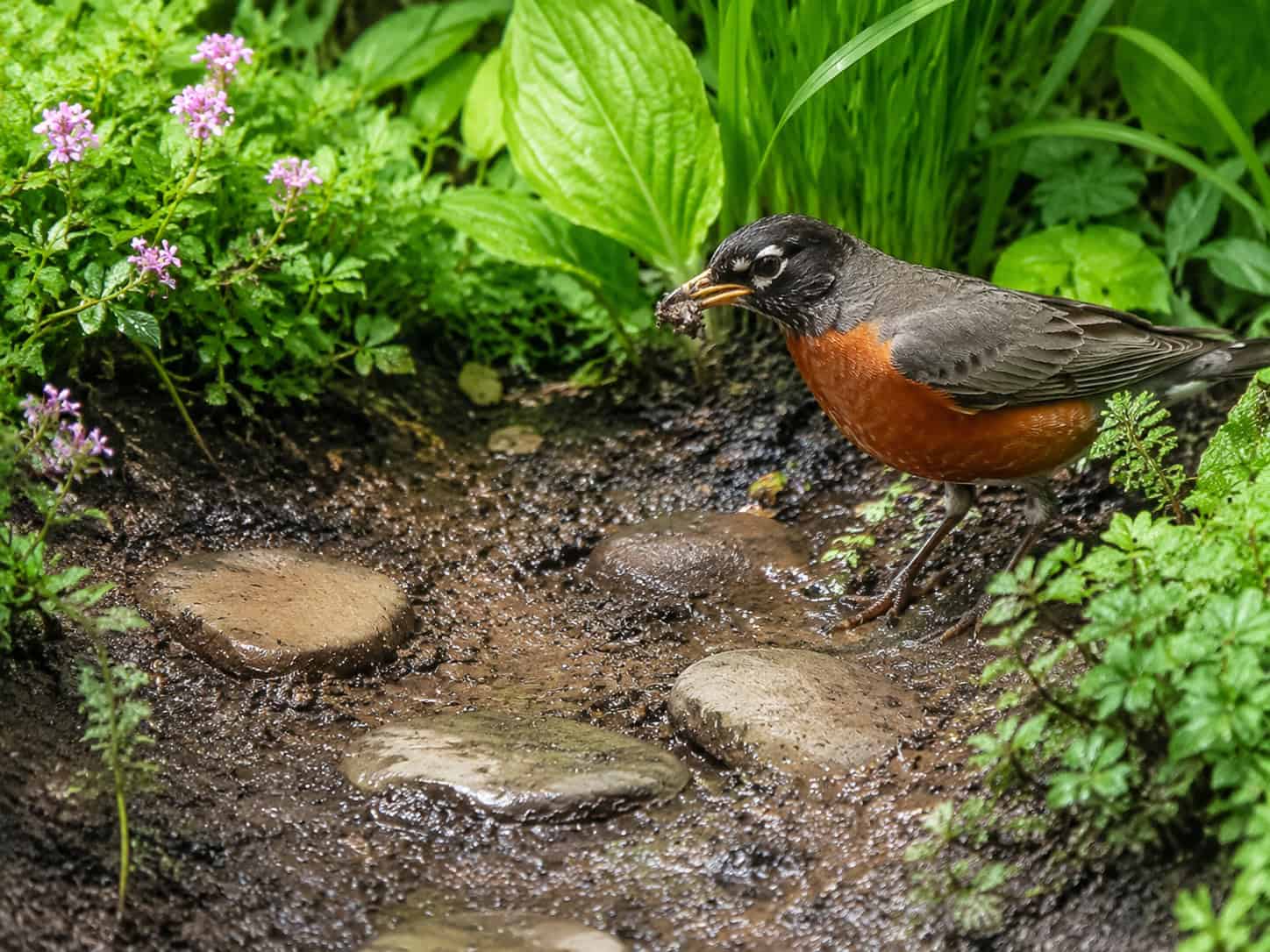
When participating in backyard birding, timing is essential. Early summer is a time when a lot of birds build nests. Mud is a resource used as a natural glue to stick together different materials like twigs and grass. Because robins, barn swallows, and eastern phoebes use mud to build their nests, they needs to look for suitable mud sources. If they can’t find mud, they have to waste a lot of energy to build their nests by flying long distances.
Save this article for later so you don't lose it. Enter your email and I'll send it to you now—plus you'll get my favorite backyard birding tips delivered to your inbox.
Mud is important for your pollinator garden too! Butterflies have an interesting behavior called puddling. They collect on moist soil, which allows them to collect important minerals that they cannot obtain from flower nectar. This is especially important for male butterflies as these nutrients are vital for mating. Just having a small patch of wet soil can transform your yard into a butterfly paradise.
Choosing the Perfect Corner
You don’t need to destroy your beautiful lawn to assist the birds. All you need is a location that sees little to no traffic. Try to find a corner in your garden or a bare patch of soil close to the native plants.
To avoid muddy tracks into your house, keep the puddle away from your patio and main walkways. An area that has a combination of sun and shade is ideal. The sun will warm the butterflies as they drink, and the shade will prevent the puddle from drying too quickly on warm afternoons.
Get our free Hummingbird Attraction Guide! Plus, we'll send you our best tips for attracting more birds to your yard.
How to Create Your Puddle
There are no special tools needed to make a mud puddle, and it takes less than five minutes to make one.
To begin, clear a small section of the ground (about the size of a dinner plate). Remove any thick mulch, dead leaves, or grass, so you can see the bare soil.
Next, add water. Use a watering can or your garden hose to soak the dirt. You want the soil to feel squishy and wet like a sponge.
Finally, keep it shallow. You do not want deep pools of standing water. Birds and butterflies just need access to some mud in the shallow water.
Mosquito Prevention Checklist
Nobody wants to deal with breeding mosquitoes and this is a concern first time pollinator gardeners face. The good news is a managed mud puddle does not attract pests. Mosquitoes need to have deep water that is not moving to lay their eggs. They will not breed in a puddle.
To ensure the wildlife safety and for the overall ecological value, please follow the checklist below:
Safe Puddle Checklist
- It should be kept damp and just a wet sponge-like texture maybe some areas may be a little more wet than others but there shouldn’t be any deep puddles or standing water.
- Puddle Drying: Make sure to let the puddle dry completely every three to four days. Mosquito larvae in standing water take one week to hatch, and a dry spell will stop the larvae from hatching.
- Add flat landing stones: Place a few flat rocks directly in the mud. This gives butterflies a clean, safe place to land and drink without getting their wings stuck.
- Just give the area a quick sprinkle from your watering can when the soil looks a little dry and the dirt starts to look light brown and crumbly.
Grab Your Watering Can
Gardening and bird-watching can be simple. You also don’t need to spend a lot to make a positive impact on local wildlife. Just by devoting a small patch of your yard to a muddy puddle, you create and provide critical nesting materials for birds and food sources for butterflies. So grab your watering can and muddy up a patch, then sit back and enjoy the new visitors to your yard.

Fasmov 1-Gallon Plastic Watering Can Green
Check Price📷 Show us your feeder setup! Share a few photos of your feeders and you might be featured on Wild Bird Scoop. Share your setup →





