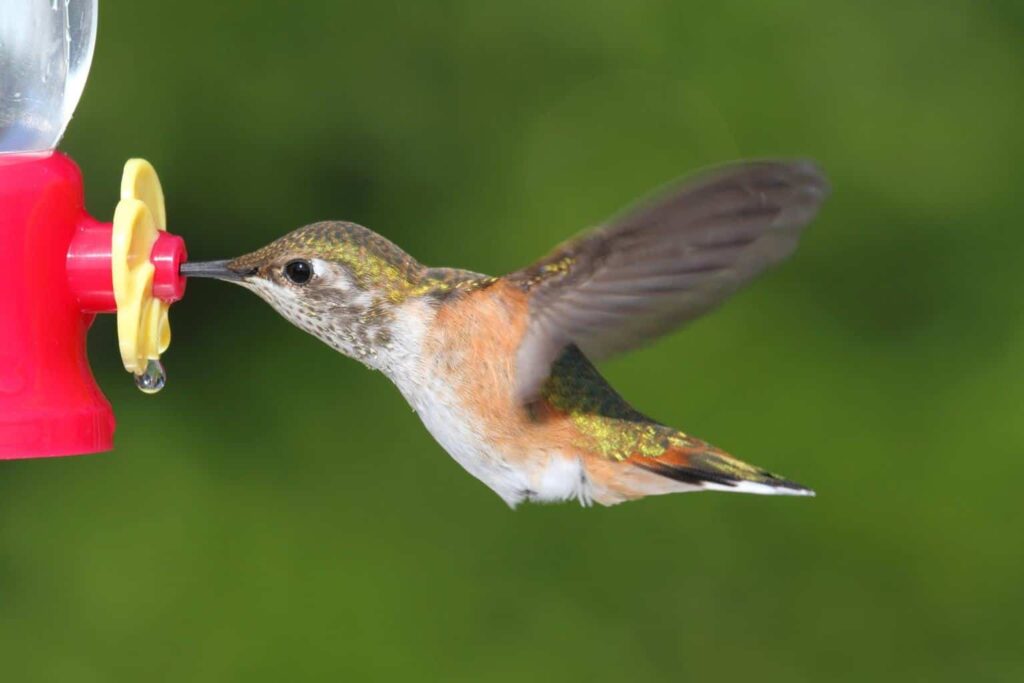

You step outside and spot the first hummingbird of the season darting toward a bright flower. You’ll learn about native flowers that reliably bloom when hummingbirds return to your region, so you can plant what they need and enjoy close-up visits.

The Camera Feeder We Use In Our Own Backyard
See Today's PriceSave this article for later so you don't lose it. Enter your email and I'll send it to you now—plus you'll get my favorite backyard birding tips delivered to your inbox.
You don’t need a big yard or special skills to make a hummingbird-friendly space; a few pots or a small patch will do. Claire D. will guide you through easy, practical choices that match the birds’ timing and your level of experience.
1) Trumpet Honeysuckle (Lonicera sempervirens)

You’ll see clusters of red, trumpet-shaped flowers that attract hummingbirds from a distance. This native vine grows on fences, shrubs, and woodland edges in eastern and central U.S. habitats.
Blooms start as hummingbirds return in spring and often peak through early summer. Timing matches migration so you get nectar right when birds arrive.
Plant it in well-drained soil with full sun to part shade. Give a trellis or support—vines climb and show flowers best when lifted off the ground.
Prune lightly after bloom to shape and encourage new growth. Start with a young plant from a native nursery; it establishes faster than seed.
2) Cardinal Flower (Lobelia cardinalis)

This tall native has bright red, tubular blooms that hummingbirds love. You’ll often find it near streams, wet meadows, and damp garden edges where the soil stays cool.
It usually blooms in mid to late summer, which matches the time many hummers arrive or are actively nesting in your region. The vivid red and nectar-rich flowers make it an easy source of food when insects are scarce.
Plant it where the soil is consistently moist and partly sunny. Start with nursery-grown plugs if you’re new; they establish faster than seed and still attract hummingbirds the first season.
Divide clumps every few years to keep plants vigorous. You’ll get more blooms and healthier roots, and the birds will notice the brighter display.
3) Red Buckeye (Aesculus pavia)

You’ll spot red buckeye by its upright clusters of tubular red flowers and rounded, glossy leaves. It grows naturally in moist woods and along stream banks in the southeastern U.S., often as a small tree or large shrub.
Its flowers open in early spring, usually just as migrating hummingbirds arrive. The timing gives you bright nectar sources right when birds need energy after migration.
Plant red buckeye in part shade with rich, well-drained soil. Space it where roots can spread and where hummingbirds can perch nearby. Mulch to keep roots cool and water during dry spells to help young plants establish.
4) Columbine (Aquilegia canadensis)

You’ll see nodding, bell-shaped flowers with red outer petals and yellow inner cups. Plants grow in wood edges, rocky slopes, and shaded gardens across eastern North America. Leaves are fern-like and form a low clump.
Blooms start in spring and often overlap with the first returning hummingbirds in your region. Flowers are deep enough for a hummingbird’s bill but open early, so birds find nectar soon after arrival. Timing makes columbine a reliable early-season feed.
Plant in part shade with well-drained soil. You can sow seeds in fall or plant nursery starts in early spring. Thin seedlings so plants have room to grow and set more flowers for the birds.
5) Coral Honeysuckle (Lonicera sempervirens ‘Major’)

Get our free Hummingbird Attraction Guide! Plus, we'll send you our best tips for attracting more birds to your yard.
You’ll see long clusters of tubular red-orange flowers that hummingbirds love. The vine has glossy leaves and climbs fences, arbors, or spills over walls. It grows naturally in wood edges, thickets, and sunny spots in the Southeast and parts of the Midwest.
Flowers usually open in late spring to early summer, matching the arrival of migrating hummingbirds in many regions. That timing gives birds an early nectar source as they reach your yard.
Plant it in full sun to part shade and give it well-drained soil. Train the canes on a trellis or let it scramble through native shrubs. Mulch to hold moisture, and prune lightly after bloom to keep it tidy and flowering next year.
6) Scarlet Sage (Salvia coccinea)

This plant has bright red tubular flowers and soft green leaves. It grows naturally in open woods, roadsides, and garden edges across the Southeast and parts of the Southwest. The shape of the flowers fits a hummingbird’s bill.
Scarlet sage often blooms from late spring through fall in areas where hummingbirds arrive in spring. Flowers open right as migrants or local males return to claim territory. You’ll see steady nectar if you keep plants lightly deadheaded.
Plant seeds or young transplants in well-draining soil and full sun to light shade. Space plants about 12–18 inches apart so air can move. Water regularly until established, then cut back only if it gets leggy.
7) Bee Balm (Monarda didyma)

You’ll see bright red, tubular flowers that hummingbirds love. The plant has aromatic, jagged leaves and grows in moist meadows, woodland edges, and garden beds in much of eastern North America.
Bee balm usually blooms in mid to late summer. That lines up with many hummingbird arrivals, so you get steady nectar when birds settle in. In warmer areas blooms can start a bit earlier.
Plant bee balm in full sun to partial shade and give it rich, well-drained soil. Space plants about 18 inches apart to improve airflow and reduce mildew. If you’re new to perennials, buy a healthy transplant rather than starting from seed to see blooms sooner.
8) Hummingbird Trumpet (Zauschneria californica)

You will notice low shrubs with narrow leaves and bright red tubular flowers along dry slopes and chaparral. The blooms are open-faced at the tip, perfect for hovering hummingbirds. They form clumps that look tidy in sunny beds.
Flowers start in late spring to early summer, often right when local hummers return. In many coastal and foothill areas the timing matches spring migration, so you get nectar when birds arrive. Bloom length can extend into fall with warm weather.
Plant in full sun with well-draining soil. Space plants 18–24 inches apart so air circulates and roots dry between waterings. Water deeply at planting, then reduce irrigation—this plant prefers drier conditions once established.
9) Firecracker Plant (Russelia equisetiformis)

You’ll see long, arching stems with lots of thin leaves and clusters of bright red tubular flowers. It grows naturally in Mexico and Central America and loves warm, sunny spots.
Blooms start in spring and often peak just as hummingbirds return to warm regions. The flowers sit on dangling stems, so hummingbirds can hover and feed easily.
Plant it in well-draining soil where it gets full sun to light shade. Prune lightly after the first bloom to keep stems tidy and encourage more flowers. Water regularly until established, then cut back a bit—this helps blooms without wasting water.
Understanding Hummingbird Migration

Hummingbirds time their trips to match food and warm weather. You can watch local flowers and temperatures to guess when they’ll arrive.
How Temperature and Daylight Influence Arrivals
Hummingbirds use daylight and temperature as cues. Longer days in spring trigger hormonal changes that start migration. Warmer nights speed up insect activity and flower nectar production, giving birds more food on arrival.
Local cold snaps can delay movements by days or weeks. You should track daily high temperatures above about 50–55°F (10–13°C) for many migrating species. Early warm spells may bring a few scouts, but most of the flock follows steady warming.
Why Timing Varies by Region
Latitude matters: birds reach southern states earlier than northern ones. Coastal areas warm sooner than inland mountains, so expect arrivals earlier near the shore.
Elevation also shifts timing. Hummingbirds show up weeks later at 4,000 feet than at sea level. You should check regional reports or nearby nature centers for specific dates in your county.
Designing Your Garden for Early Blooms

Plan for soil, sun, and water that match local conditions. Pick plants that bloom when hummingbirds arrive and place them where birds can see and feed safely.
Choosing Plants That Match Local Conditions
Look at your yard’s soil and sun first. Clay, sand, or loam changes what will thrive. Test drainage by digging a small hole and filling it with water; if it drains in a day, roots will be fine for many natives.
Match plants to your hardiness zone and native plant lists from your state extension office. Choose species that bloom in late winter or early spring for early migrants. Plant groups of the same species so hummingbirds spot them easily.
Place taller plants behind shorter ones and avoid overwatering. Mulch two inches deep to hold moisture and suppress weeds. A single practical step: buy one native starter plant that blooms early and plant it where it gets the right sun.
Simple Tips to Encourage More Hummingbirds
Provide continuous blooms from early spring to fall by staggering planting times. Divide bulbs or set out seedlings every few weeks to extend nectar supplies. Hummingbirds follow reliable food, so consistency helps.
Add perches like small branches near feeders and flower clusters. Keep cats indoors and trim dense shrubs to reduce predator cover. Clean feeders and freshen nectar every 2–3 days in warm weather to prevent disease.
Plant at least three flowering spots within view of each other so hummingbirds move easily through your yard. Start with one feeder and one early-blooming native, then add more as you learn what blooms first in your area.
📷 Show us your feeder setup! Share a few photos of your feeders and you might be featured on Wild Bird Scoop. Share your setup →