


A fall pot holds up longest when every plant in it wants the same light and water. Each combination below uses named plants that share those needs, with notes on sun, watering and what happens when frost arrives.

The Camera Feeder We Use In Our Own Backyard
See Today's PriceUse fresh potting mix and a pot with a drainage hole. Water in the morning, and group pots near a wall where they get some shelter from wind.
Save this article for later so you don't lose it. Enter your email and I'll send it to you now—plus you'll get my favorite backyard birding tips delivered to your inbox.
1. Red Kale, Burgundy Mums and Sweet Potato Vine (Brassica oleracea, Chrysanthemum × morifolium, Ipomoea batatas)
Put red ornamental kale in the center, burgundy garden mums around it and dark-leaf sweet potato vine at the rim. All three want full sun. Water when the top of the mix feels dry; potted mums dry out fast, so check them daily during warm spells. Buy mums in tight bud for the longest show.
Treat this as an early-fall pot. Kale color deepens once nights stay below 50°F, and hardened plants handle hard frost. Sweet potato vine is tender. It dies at the first frost and does not turn orange-red as it cools, so pull it then and tuck in a few pansies.
2. Bronze Mums, Coral Bells and Nasturtium (Chrysanthemum × morifolium, Heuchera, Tropaeolum majus)
Bronze mums sit in the middle, a rust or caramel coral bells fills one side and a trailing nasturtium spills over the edge. This pot needs a compromise spot: morning sun and afternoon shade. Coral bells scorch in hot afternoon sun, especially in the South. Mums and nasturtiums want more light, so aim for about six hours of morning sun.
Keep the mix evenly moist but not soggy. Skip extra fertilizer, since nasturtiums bloom less in rich soil. Nasturtiums and mum flowers end at hard frost. Coral bells is a hardy perennial and can go into a garden bed once the pot is done.
Get our free Hummingbird Attraction Guide! Plus, we'll send you our best tips for attracting more birds to your yard.
3. Purple Cabbage, Dusty Miller and Pansies (Brassica oleracea, Jacobaea maritima, Viola × wittrockiana)
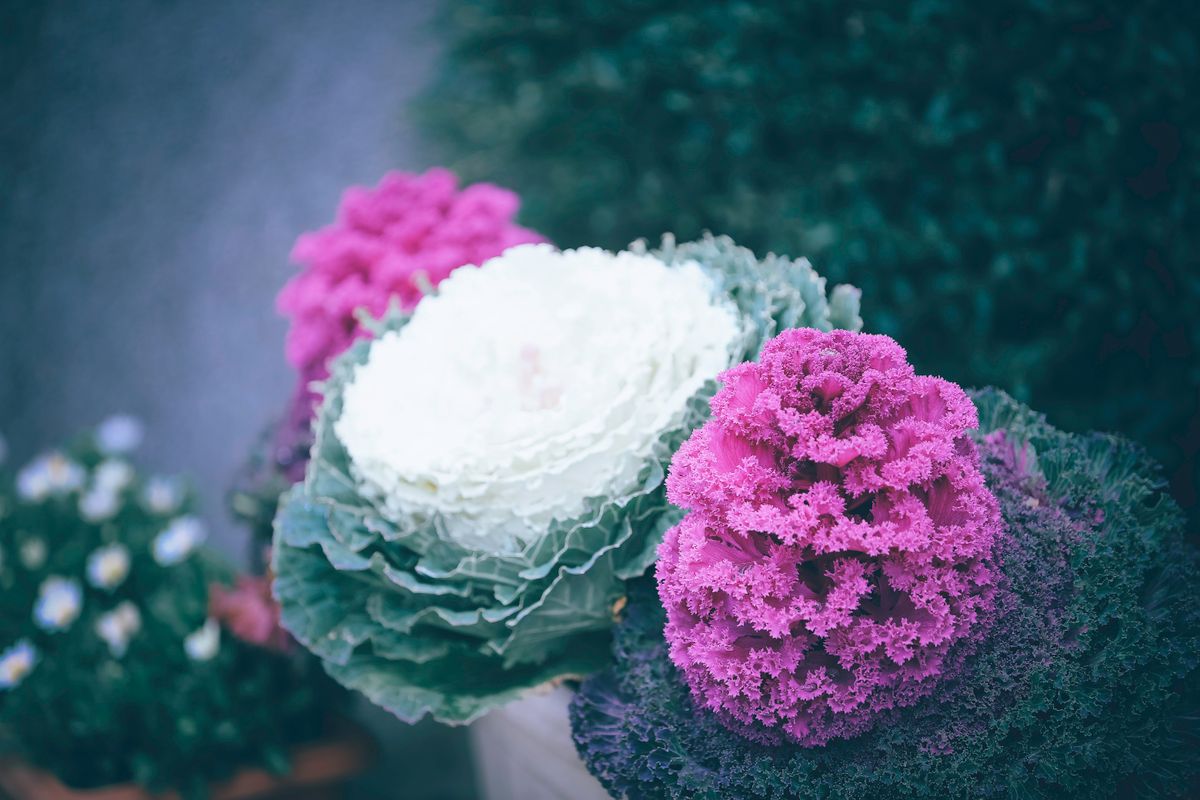
This is the longest-lasting pot on the list. Purple ornamental cabbage anchors it, silver dusty miller adds contrast and purple pansies fill the edges. All three do best in full sun and take frost.
Cabbage color intensifies once nights drop below 50°F, and acclimated plants survive to about 5°F. Pansies survive single-digit cold and bloom again in mild spells. Dusty miller tolerates frost and dry spells and is perennial in zones 7–10. It is toxic if eaten, so keep it away from pets and kids. Water when the top inch of mix is dry. Pots dry out slower in cool weather, so cut back from your summer schedule.
4. Autumn Joy Sedum, Low Stonecrop and Flowering Kale (Hylotelephium ‘Herbstfreude’, Sedum, Brassica oleracea)
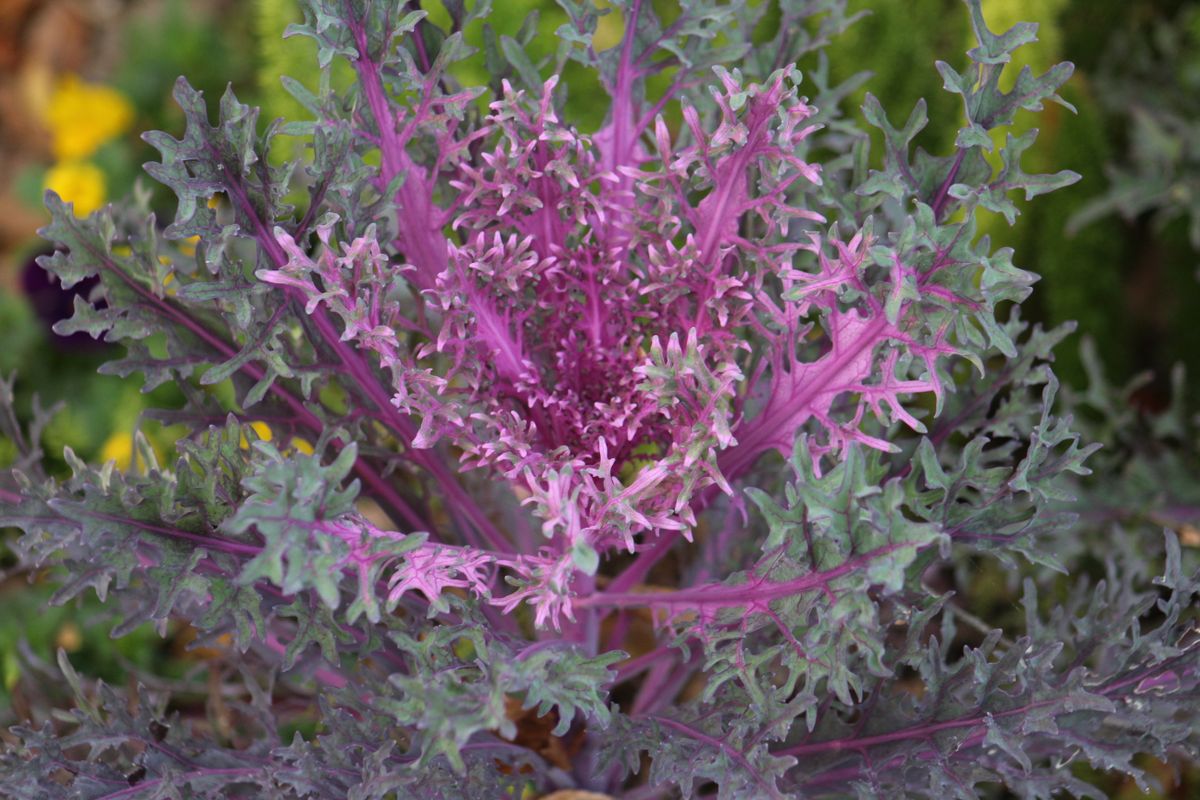
Use one Autumn Joy sedum as the tall plant, a low creeping stonecrop at the rim and a purple flowering kale as the focal point. All three want full sun. Plant in a gritty, fast-draining mix, since sedums rot in wet soil.
Water only when the top inch is dry. That keeps the sedums happy and is enough for kale in cool weather. Autumn Joy flowers open pink and age to rust-red through fall, and the dry heads can stay on into winter. Too much shade or rich soil makes it flop. The sedums are hardy perennials that can move to a sunny bed later.
5. Ornamental Pepper and Aromatic Aster (Capsicum annuum, Symphyotrichum oblongifolium)
Ornamental peppers carry fruit from late spring until frost. The color comes from ripening, not cool nights. Fruits start green or cream and turn purple, orange and red as they mature, so one plant shows several colors at once. Aromatic aster blooms late, often into October or November, with lavender-purple flowers.
Both want full sun and well-drained mix. Water the pot when the top inch dries out. Peppers are killed by frost, while aromatic aster is a hardy native perennial that can go into a sunny bed afterward. Keep hot-fruited peppers away from pets and small children.
6. Dwarf Alberta Spruce, Pansies and Kale (Picea glauca ‘Conica’, Viola × wittrockiana, Brassica oleracea)
This pot changes with the season. Plant a small dwarf Alberta spruce in the center with pansies and ornamental kale around it. Add a few mums early for September color, then pull them as they fade. Give it at least six hours of sun.
The spruce keeps the pot green through winter. It is prone to winter burn from wind and late-day sun, so water it well through fall and set the pot out of strong wind. It is also a favorite host of spruce spider mite. Tap a branch over white paper in spring and fall, and look for tiny moving specks.
📷 Show us your feeder setup! Share a few photos of your feeders and you might be featured on Wild Bird Scoop. Share your setup →





