


You’ve kept your feeder stocked all winter, but suddenly the birds have vanished. Before you blame the weather, consider this: cold temperatures rarely drive birds away from reliable food sources.

The Camera Feeder We Use In Our Own Backyard
See Today's PriceMore often, it’s something else in your yard that’s signaling danger or poor-quality resources.
Save this article for later so you don't lose it. Enter your email and I'll send it to you now—plus you'll get my favorite backyard birding tips delivered to your inbox.
Your Feeder Hasn’t Been Cleaned Recently

Make sure your bird feeders are clean. Birds are very particular about the food they eat, and they won’t hesitate to pass up a dirty feeder.
To keep your feeders clean and appealing to birds, make sure to wash them with hot, soapy water regularly. Feeders should be cleaned at least every two weeks.
Scrub the feeder until all visible dirt and debris are removed, then soak it with a solution of 1 part bleach to 9 parts water. The bird feeder has to dry completely before you refill it.
You’re Offering the Wrong Seeds for Winter

One consideration when feeding seeds during the winter is how much energy they will provide for the birds. Keeping this in mind, black oil sunflower seeds are often an ideal winter bird seed choice.
Black oil sunflower seeds attract the widest variety of birds including cardinals, chickadees, and nuthatches. Nyjer seeds are perfect for finches and siskins.
Safflower seeds deter squirrels while attracting cardinals and chickadees. For hummingbird feeders, use a simple recipe of 1 part white sugar to 4 parts water – never use honey, artificial sweeteners, or red dye.
Suet cakes work well in window suet feeders during cooler months. Avoid seed mixes with filler ingredients like milo and cracked corn that most birds ignore.
Disease Is Spreading at Your Feeder

Feeders can be a significant source of disease spread for birds like finches. One study by Virginia Tech and Oxford University found that birds in high-density feeder groups had significantly higher pathogen transmission than those in lower-density feeder groups.
With this in mind, it’s important to clean feeders regularly. Bird feeders can spread salmonella bacteria and Avian influenza, among other diseases.
It is important to protect your home as well as prevent the spread of disease among our feathered friends. There’s also the potential for disease to spread between people and birds.
The potential for disease to spread between birds is significant, even at feeders, as it is an area frequented by lots of birds and can be a hotbed for bacteria. This is why it’s important to clean feeders frequently.
Predators Have Made Your Yard Unsafe

Obvious things that might keep some birds away are noisy or aggressive dogs, and especially cats that are allowed to roam, as these are aggressive bird predators. If cats rule the roost, birds may steer clear.
You can protect backyard birds from hawks by giving bird feeders cover from predators or taking down bird feeders temporarily to encourage hawks to look elsewhere if they’re staking out your yard in search of food. Make sure your bird feeders are placed far enough from dense cover like shrubs so that birds can escape predators such as cats.
10 feet is a good distance.
Get our free Hummingbird Attraction Guide! Plus, we'll send you our best tips for attracting more birds to your yard.
Old, Moldy Seed Is Piling Up Below
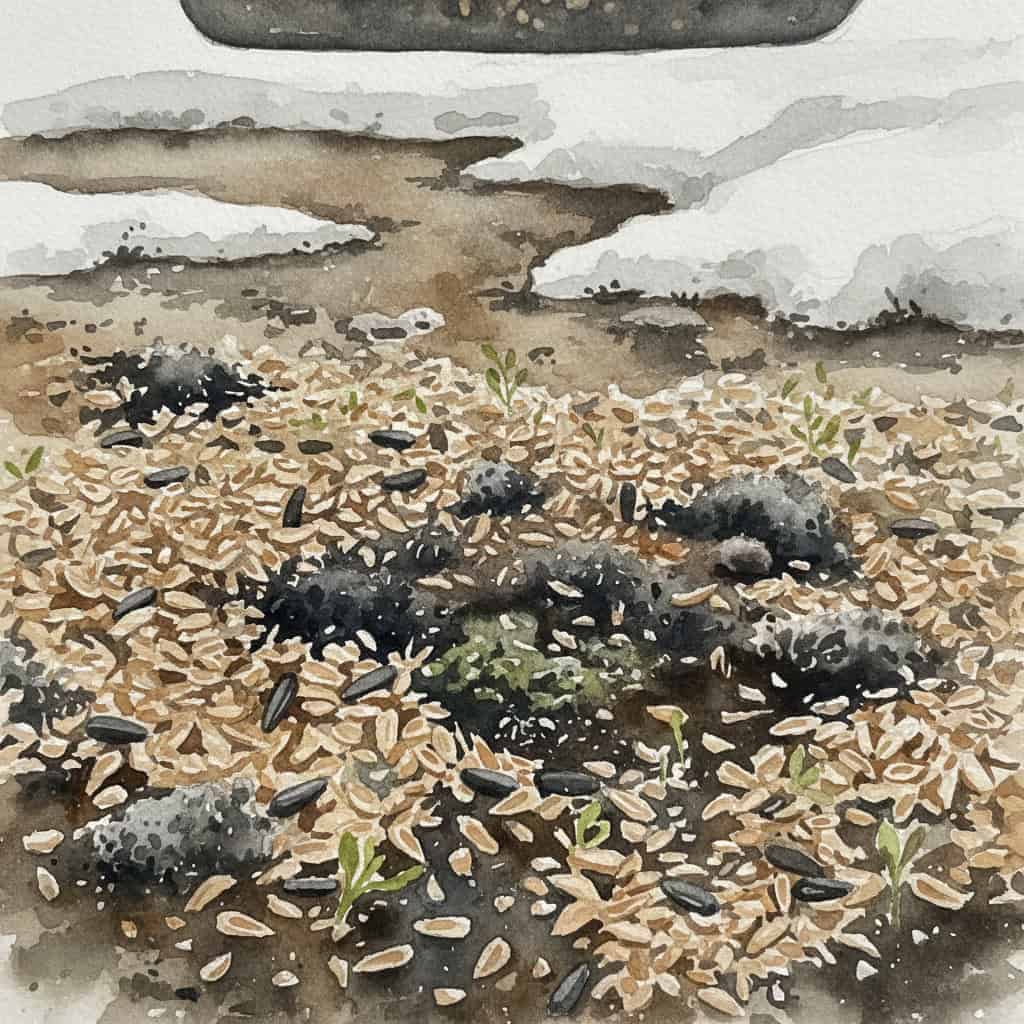
The uneaten seed on the ground may not be eaten before it decays from the moist condition of the soil. The rotting seed will quickly start to smell.
To prevent the seed from landing on the ground under the bird feeder, hang a seed catcher from the bird feeder. It will also provide a place for ground-feeding birds to eat.
Your Feeder Location Lacks Nearby Shelter

If there are no trees within 20 feet of your feeder, then a pile of brush will serve as a place for birds to take refuge to hide from predators and for rest, while they wait their turn at your feeder. Birds feel safer if they have a bush or tree nearby to provide some cover close to a feeder.
The feeder should be no more than 10 to 15 feet away from protective foliage. Including evergreen trees, shrubs, and ground cover is a great thing to consider.
Evergreen plants keep their leaves or needles year-round, so they naturally provide shelter for winter birds through the coldest season.
You’re Inconsistent With Refills

Birds are creatures of habit who incorporate reliable food sources into their daily survival routes. When your feeder sits empty for days at a time, birds learn they can’t depend on it and adjust their foraging patterns to more consistent locations.
This is especially problematic in January, when birds optimize their energy expenditure and can’t afford to waste calories visiting unreliable stations. Once they’ve established new feeding territories, it takes time to win them back even after you refill.
Consistency matters more than abundance.
A small feeder that’s always stocked attracts more birds than a large one that’s frequently empty. If you travel or have an unpredictable schedule, consider installing multiple feeders so some remain available while others are being serviced, or choose large-capacity models that hold several days’ worth of seed.
Ask a neighbor to help with refills during absences. Many birds have small territories and limited options during harsh winter months—your feeder may be more important to their survival than you realize.
Regular, predictable refills signal that your station is worth remembering and visiting daily.
Window Collisions Have Made Birds Wary

If birds have struck your windows near the feeding area, survivors remember and avoid the danger zone. Window collisions kill hundreds of millions of birds annually, and near-misses create learned avoidance behaviors that spread through flocks.
Feeders positioned too close to reflective glass create a deadly illusion, making windows appear as open flight paths into trees or sky. Even if you haven’t found dead birds, collisions may be happening when you’re not watching.
Look for telltale smudges, feather dust, or small marks on windows near your feeder. The solution requires repositioning or adding visual barriers.
Move feeders either within three feet of windows (too close for collision-speed impacts) or farther than thirty feet away (enough distance for birds to recognize glass). Apply window decals, external screens, or tape in patterns spaced no more than two inches apart—birds will fly through larger gaps.
Consider window film that’s visible to birds but nearly invisible to humans. Some birds that witnessed a collision may never return, but protecting current visitors and attracting new ones requires making glass visible and safe.
Bird Populations Are Already Stressed
Sometimes low feeder activity reflects broader ecological challenges beyond your control. Bird populations face mounting pressures from habitat loss, climate shifts, and declining insect populations that affect winter survival and migration patterns.
Certain species that were once common backyard visitors are experiencing range shifts or population declines due to changing conditions. Irruptive species like redpolls, crossbills, and evening grosbeaks only move south in winters when northern food crops fail—their absence doesn’t mean your feeder has problems.
Additionally, mild early winters can delay typical migration patterns, keeping some species farther north longer than usual. Local construction, removal of nearby woodlands, or pesticide use in your neighborhood can all reduce the bird population available to visit your feeders.
While you can’t solve these larger issues alone, maintaining a high-quality feeding station, planting native species, and avoiding pesticides creates an island of habitat that supports whatever birds remain in your area. Your efforts matter, even when results seem modest.
Every safe feeding station and healthy habitat patch contributes to broader conservation efforts that help bird populations recover and thrive.
Why the January feeder sits empty
| Spec | What our writers say |
|---|---|
| Cleaning mix | 1 part bleach to 9 parts water |
| How often | At least every two weeks |
| Winter seed | Black oil sunflower seeds |
| Skip in mixes | Milo and cracked corn |
| Cat distance | 10 feet from dense cover |
| Shelter if no trees | A brush pile if none are within 20 feet |
| Cover distance | No more than 10 to 15 feet from foliage |
📷 Show us your feeder setup! Share a few photos of your feeders and you might be featured on Wild Bird Scoop. Share your setup →





