

Jerry from Spotsylvania, VA shared their feeder setup with us by email after seeing our reader form. Everything below is in their own words.

The Camera Feeder We Use In Our Own Backyard
See Today's Price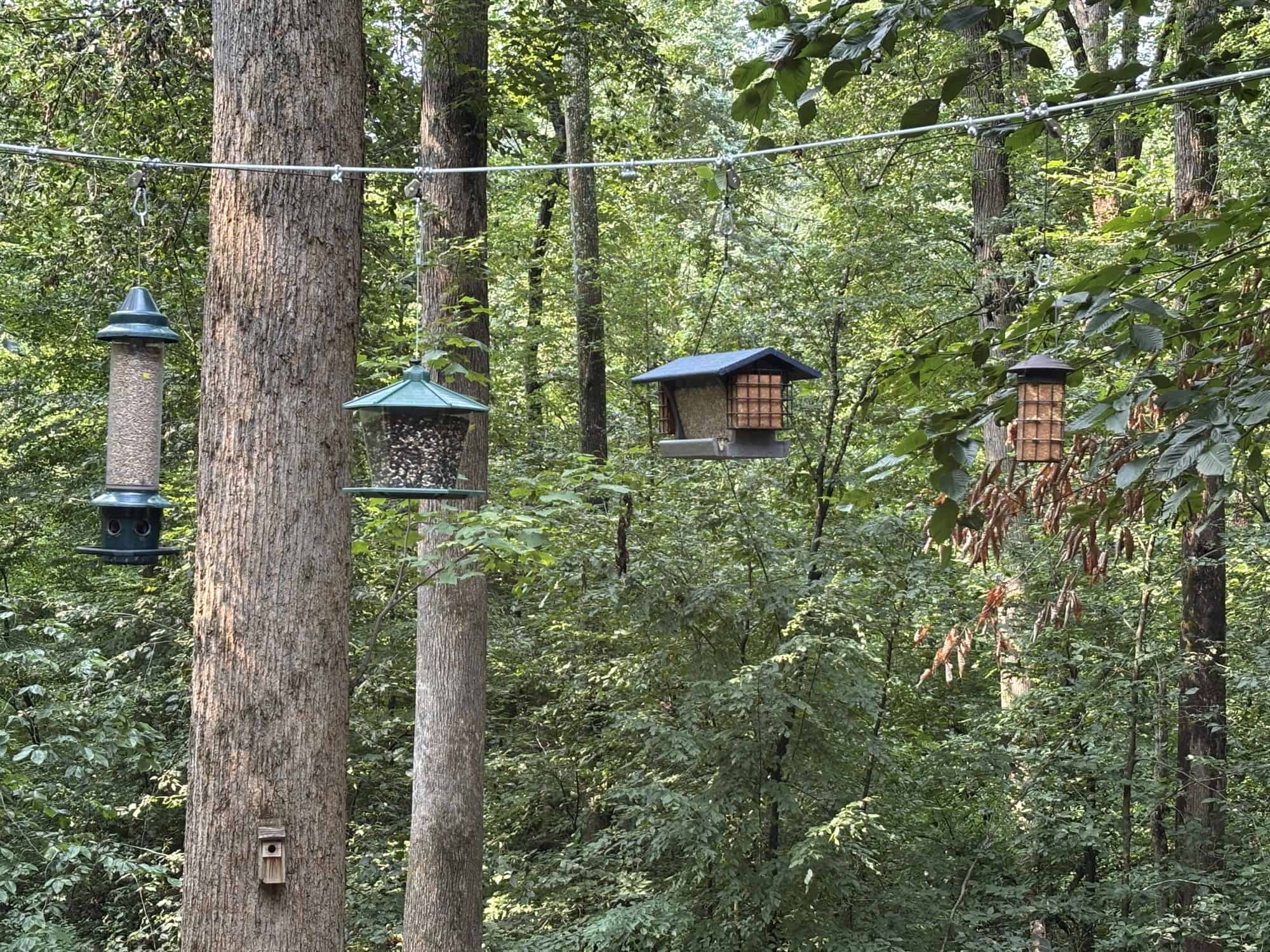
The Setup
All of our feeders are in our backyard. We have 3 hummingbird and 4 seed/suet feeders. One hummingbird nectar feeder is on our window, and two hang from poles that also hold two inviting plants (Vinca and Fuchsia). To create a hummingbird-friendly haven, we start each season by hanging Fuchsia plants that seem to have a long flowering season, and end with hanging annual Vinca plants that continue to attract hummingbirds through migration.
Save this article for later so you don't lose it. Enter your email and I'll send it to you now—plus you'll get my favorite backyard birding tips delivered to your inbox.
What’s on the Menu
As a family, we enjoy watching a large variety of birds that enjoy nectar, seed, suet, and mealworms.
Our Ruby Throated Hummingbirds return each year in late March to early April and start their families. For several years now, I make my own hummingbird nectar using 4-parts water and 1-part granulated sugar. I start by boiling the water and then adding the granulated sugar to ensure the mixture is free of any contaminants. Normally, I will make a gallon at a time, let it cool down, and keep the nectar in my refrigerator for easy access to refill our feeders. I have learned to replace the hummingbird nectar every 3-4 days, or anytime it becomes cloudy.
Plus, at every refill, clean your feeders well with a small bottle brush to get rid of any mold that may have started. These little friends are preparing now and will soon migrate south until next season. But we will keep our feeders up through at least mid-October for any migration stragglers.
Get our free Hummingbird Attraction Guide! Plus, we'll send you our best tips for attracting more birds to your yard.
Who Shows Up
Each year we get to enjoy quite a variety of native birds. These include: Northern Cardinals; American Goldfinches; Downy Woodpeckers; Mourning Doves; Eastern Bluebirds; Carolina Chickadee; American Robin; Red-bellied Woodpeckers; House Finches; Purple Martins; Field Sparrows; Eastern Towhee; Carolina Wren; and in our yard and creek behind our home, the Barred Owl and Blue Heron.
Lessons Learned the Hard Way
We have learned the hard way that feeders too close to a window will be harmful, and that feeders not raised at least 12 feet above the ground can become easy prey for roaming black bears searching for food. Where we live, squirrels abound, and the occasional black bear roams for food. We have always put up two feeders with raccoon-proof baffles, but this year we had a roaming bear tear down our seed feeder 3 times.
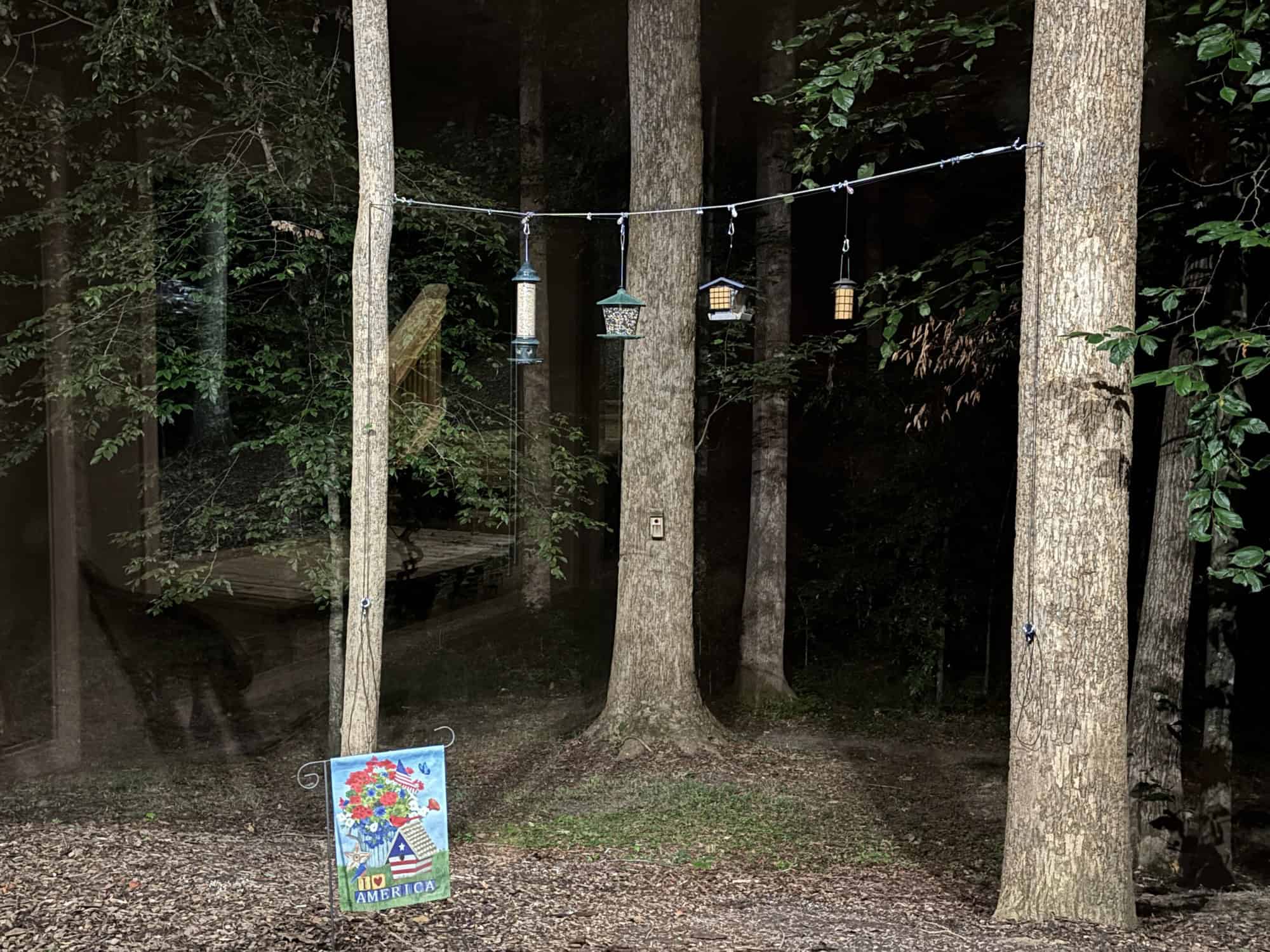
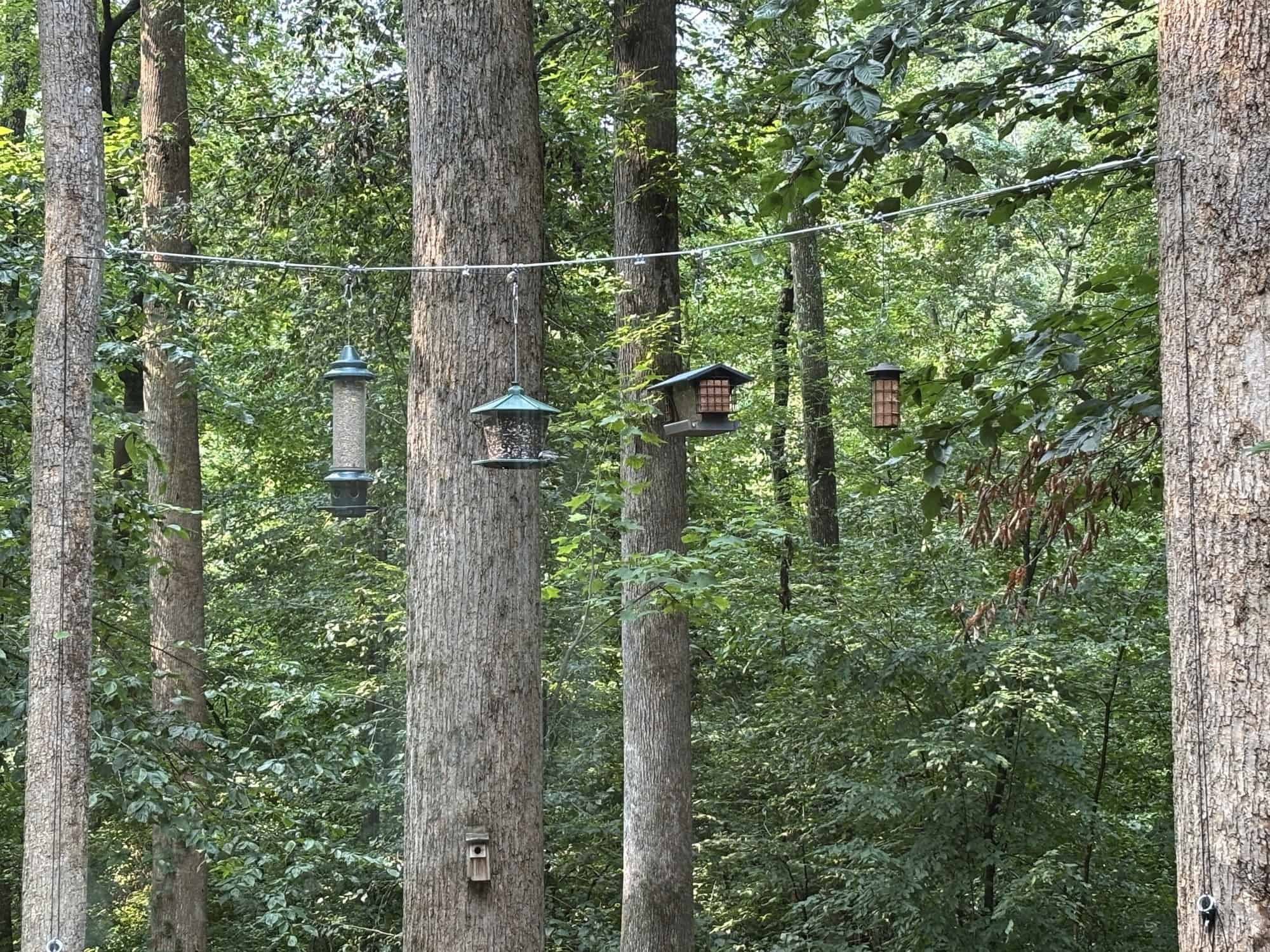
Game control said the only way to stop the bears was to remove the food source (seeds and nuts) since bears can sniff out their favorite black sunflower seed from miles away. But I didn’t like that answer because it meant no more bird watching, so I constructed my own feeder system between 2 trees, which has worked amazingly well. Attached are a few pictures which show how I constructed a pulley system that allows me to raise and lower individual feeders for refills and keeps all of the feeders well above 12 feet in the air. No more bear problems!
Placement mistakes are relatively easy to overcome. My rule of thumb is 12 feet away from all windows for hummingbird nectar and at least 12 feet above the ground for seed/suet feeders. Pesky squirrels can also be minimized by using hot red pepper seed. The birds don’t mind the hot red pepper mix and the squirrels hate it.
A Tip for Beginners
From the youngest to the oldest, my entire family loves bird watching! Ideas: I basically use the same seed mix but have started to add in the hot red pepper seeds to spice things up and deter the onslaught of pesky squirrels. Brand of seed and suet I use are: Wild Birds Unlimited Classic Blend, Wild Birds Unlimited No-Mess Blend, Mr. Bird Wild Bird Seed Flaming Hot Feast, and Wild Birds Unlimited SuperSuet Hot Pepper No-Melt.
All of these are honestly super foods that attract the large variety of birds we enjoy watching. So, I will mix regular no-mess and flaming hot seed for a more cost-effective mixture that seems to work very well, and I have shifted over to hot pepper no-melt suet. Squirrels really avoid this new combination, and the birds keep coming!
Want your feeder setup featured on Wild Bird Scoop? We’d love to see it — share your photos and answers on our Share Your Feeder Setup page.





