


A sudden flutter of black and white wings catches my eye through the kitchen window. A Downy Woodpecker lands lightly on the wire feeder, letting out a sharp, cheerful peek call before settling in for a morning meal. The summer sun is already warming the green oak leaves, and by noon, the temperature will easily climb past 80 degrees.

The Camera Feeder We Use In Our Own Backyard
See Today's PriceBirds have a knack for bringing life and excitement into our backyards during the summertime. Black-capped chickadees are very inquisitive, while fledgling woodpeckers and glowing nuthatches excite us with their presence. All these birds have one thing in common: they fuel their high-energy lifestyles with the bird food we provide. Unfortunately for backyard bird watchers, offering bird suet feeders during the warm months presents a real problem. Most commercially available suet cakes are made primarily of raw animal fats. When the sun heats up these cakes, they become flooded with liquid fat.
Save this article for later so you don't lose it. Enter your email and I'll send it to you now—plus you'll get my favorite backyard birding tips delivered to your inbox.
Making heat-resistant suet at home is actually very easy. Simply change the ratio of fat to dry ingredients to make a safe snack that is high in energy and keeps its shape in the heat. The best part is that using bulk ingredients brings the cost down to mere pennies per block.
Why Melting Suet is a Hazard
Keeping our backyard visitors safe means we need to keep the food we offer stable. If a suet block starts to drip, it should be taken down right away. The purpose of a summer suet recipe is to try to get the required fats bound with enough dry ingredients to raise the melting point as high as possible.
Get our free Hummingbird Attraction Guide! Plus, we'll send you our best tips for attracting more birds to your yard.
The Secret to Heat-Resistant Suet
The trick to a no-melt recipe lies in the dry binders. We still use high-energy fats like lard and peanut butter to attract the birds, but we mix them with a heavy base of plain cornmeal, quick oats, and whole wheat flour.
These dry ingredients behave like little sponges. They soak up melted fats when mixed together. Once the mixture cools and sets, the cornmeal and the oats trap the fats, causing a dense and crumbly texture. Even when the ambient temperature increases, the dry grains hold the fats, and instead of liquefying and dripping out, the fats stay trapped.

The 40-Cent Suet Block Breakdown
No-melt suet cakes that are bought at stores usually sell for 2 to 4 dollars a piece. However, you can make your own for way less by buying typical bulk ingredients from feed stores or warehouse clubs. Here is a breakdown for a large batch that makes ten 8-ounce blocks.
| Ingredient | Bulk Price Estimate | Amount Used | Cost per Batch |
|---|---|---|---|
| Lard | $6.00 per 64 oz tub | 2 cups (16 oz) | $1.50 |
| Crunchy Peanut Butter | $6.00 per 64 oz jar | 1 cup (8 oz) | $0.75 |
| Plain Yellow Cornmeal | $15.00 per 50 lb bag | 6 cups (30 oz) | $0.56 |
| Quick Oats | $20.00 per 50 lb bag | 4 cups (12 oz) | $0.30 |
| Whole Wheat Flour | $3.00 per 5 lb bag | 2 cups (8 oz) | $0.30 |
| Total Cost for 10 Blocks | $3.41 | ||
| Final Cost Per Block | $0.34 | ||
No-Melt DIY Suet Recipe
This recipe creates a stiff, dough-like mixture. Empty plastic suet containers from the store make perfect molds, but you can also use square food storage containers or a lined baking dish.
Ingredients
- 2 cups pure lard (do not use shortening with butter flavoring)
- 1 cup crunchy peanut butter (ensure it contains no xylitol, which is toxic to birds)
- 6 cups plain yellow cornmeal
- 4 cups quick oats
- 2 cups whole wheat flour
Instructions
- **Melt the fats:** Using a large pot, set the stove to low heat, add the lard and peanut butter, and stir until the ingredients have fully melted and combined into a smooth liquid. Carefully take the pot off of the heat.
- Combine the dry ingredients: In another large bowl, whisk the cornmeal, quick oats, and whole wheat flour together.
- While stirring with a robust wooden spoon, pour the dry blend gradually into the melted fats. The mixture will be thick and crumbly, like wet sand.
- Press the mixture into the molds that you have selected. To do this, you may use the back of a spoon or your hands to press the mixture evenly and firmly. It is crucial to pack the mixture tightly to make sure that the blocks don’t crumble apart.
- Set and store: Place the molds in the freezer for at least two hours to set. Once frozen solid, pop the blocks out of the molds. Store them in an airtight container or freezer bag in your freezer until you are ready to use them.
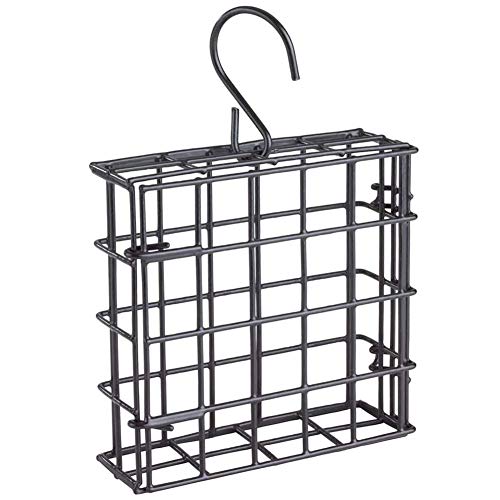
More Birds Suet Cage Bird Feeder Black
Check PriceSummer Feeding Best Practices
Regardless of having a heat-resistant recipe, summer bird feeding has a few extra precautions to keep your flock of birds healthy.
- Find deep shade: Always hang your suet feeders where the protection of shade is maximum in your yard. The deep shade of a mature tree protects the suet from afternoon sun.
- Consider offering smaller portions: Instead of putting a full block out, try putting out a half block instead. Birds will finish a smaller portion quicker, and will help keep the food from sitting out in the humidity for too long.
- Clean feeders weekly: Summer heat accelerates bacterial growth. Wash your wire suet cages with hot, soapy water at least once a week. Rinse them thoroughly and let them dry completely before refilling.
Enjoying the Summer Flock
Watching a parent woodpecker bring its fledglings to the feeder is one of the greatest joys of summer birding. By taking a few minutes to mix up this simple, heat-safe recipe, you provide a reliable source of energy for the birds without risking their health. Keep your binoculars close by, listen for those cheerful calls, and enjoy the vibrant life visiting your backyard this season.
📷 Show us your feeder setup! Share a few photos of your feeders and you might be featured on Wild Bird Scoop. Share your setup →





