


Most deciduous shrubs can go in the ground in fall. Warm soil keeps roots growing after the air cools, and the plant isn’t trying to push new leaves at the same time. The catch is timing: aim for at least six weeks before your ground freezes, which in much of the North means planting by mid-October.

The Camera Feeder We Use In Our Own Backyard
See Today's PriceEach shrub below lists its USDA zones, light needs and any regional cautions.
Save this article for later so you don't lose it. Enter your email and I'll send it to you now—plus you'll get my favorite backyard birding tips delivered to your inbox.
1. Common Lilac (Syringa vulgaris)
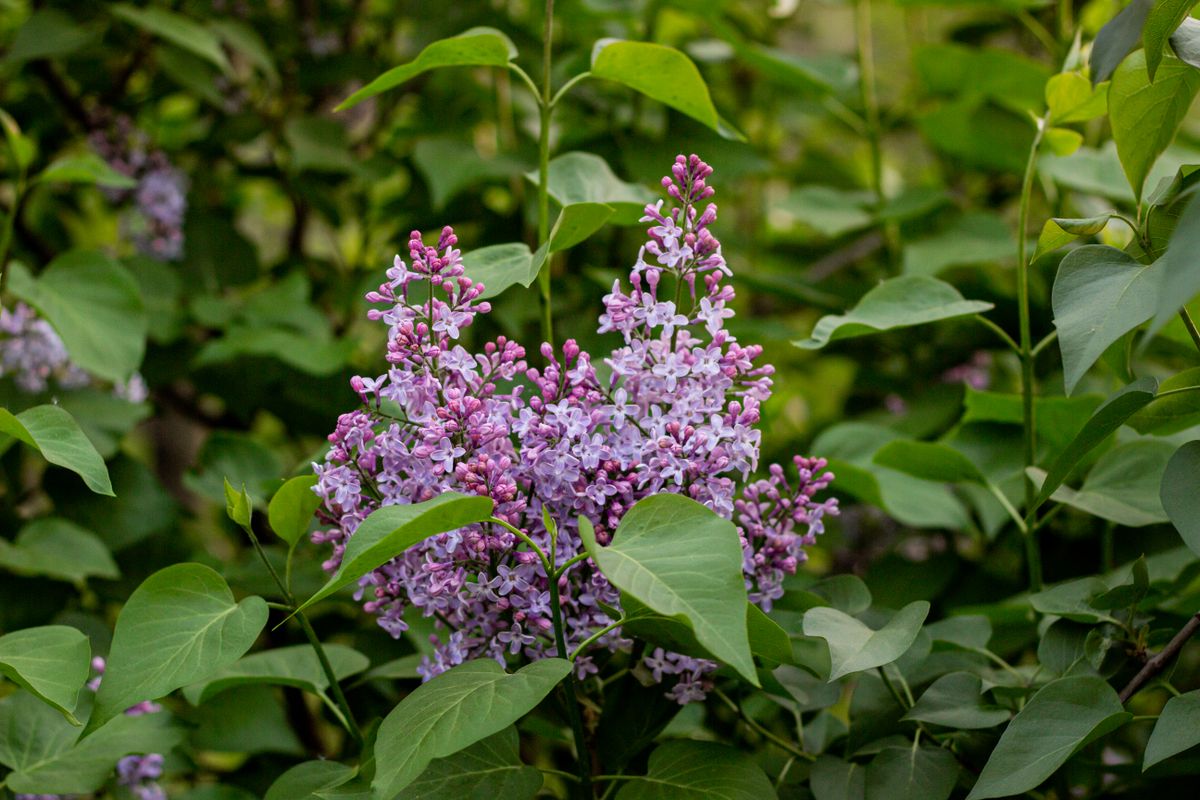
Lilac is a cold-hardy shrub for zones 3–7 that grows 12 to 16 feet tall if left unpruned. It blooms in mid-spring on wood formed the year before, so a fall-planted lilac won’t need any pruning before its first flowers. Give it full sun and well-drained soil; it tolerates clay and is seldom bothered by deer.
Plant container or balled-and-burlapped lilacs from late summer into early fall. Water deeply after planting and then every 7 to 10 days during dry spells until the ground freezes. Powdery mildew on the leaves in late summer is common and mostly cosmetic. Hummingbirds and butterflies visit the flowers.
2. Border Forsythia (Forsythia × intermedia)
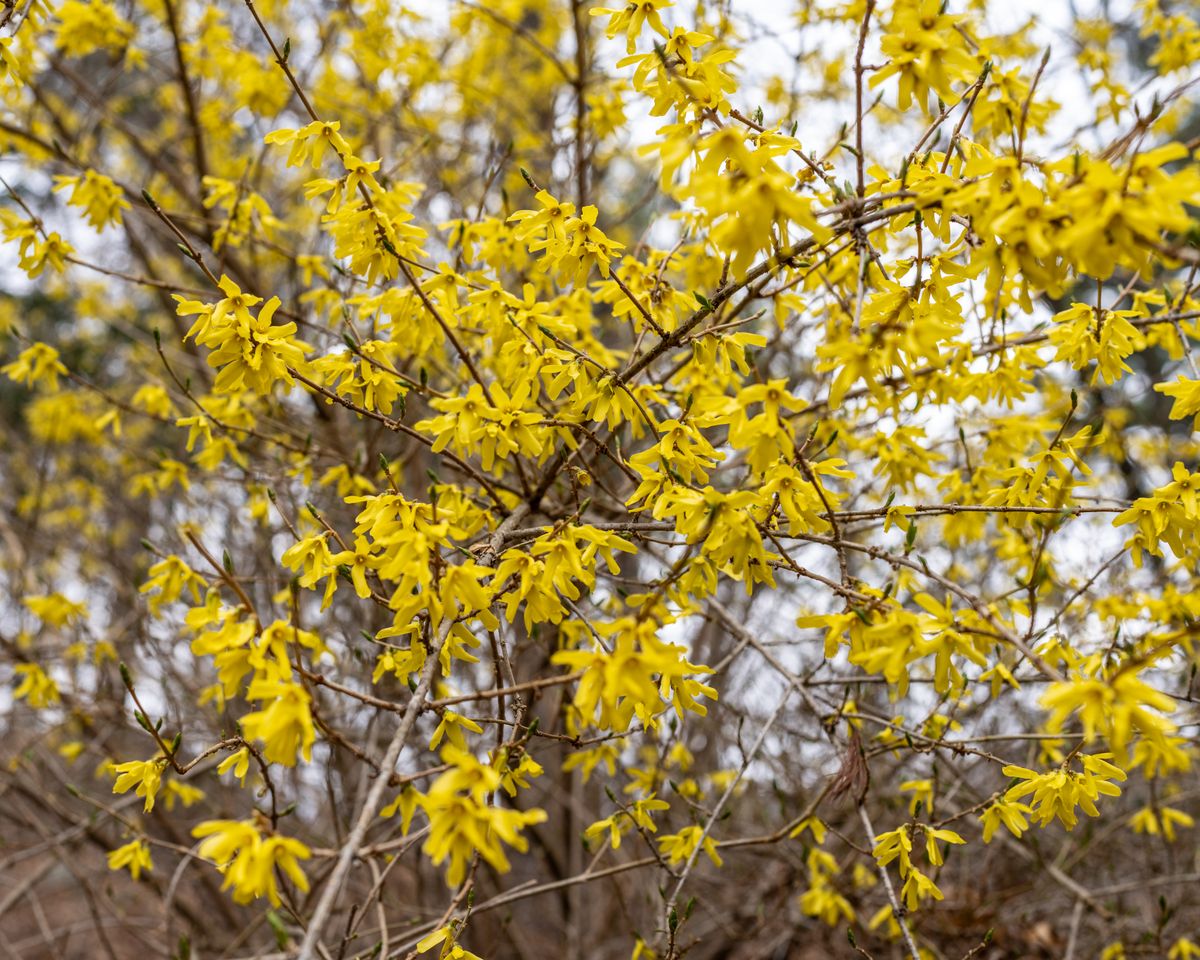
Forsythia is one of the first shrubs to flower in spring, covering bare stems in yellow before the leaves appear. It suits zones 5–8 and full sun to part shade, and it handles most soils. Flower buds form the previous summer, so prune right after bloom, never in fall.
In zone 5 the shrub survives winter, but flower buds are usually lost when temperatures drop below −5°F. Pruning after mid-July also removes next spring’s buds. Plant in fall by early October in cold regions and keep the root ball moist until freeze-up. Border forsythia grows 6 to 10 feet tall and up to 12 feet wide, so give it room.
3. Meadowsweet and Steeplebush (Spiraea alba, Spiraea tomentosa)
Spirea is easy to grow and blooms from late spring through summer. In the eastern U.S., choose a native species. Meadowsweet (Spiraea alba, zones 3–7) has white flower spikes, and steeplebush (S. tomentosa, zones 3–8) has pink ones. Both like full sun and moist soil and draw butterflies.
The common nursery Japanese spirea (S. japonica) self-seeds into fields, woods and stream banks and is listed as invasive in Virginia, Tennessee, Kentucky, Georgia and other states. Check your state’s list before buying it. Spireas establish quickly from fall planting; water weekly in dry weather until the ground freezes.
4. Hydrangea (Hydrangea paniculata, H. arborescens, H. macrophylla)
Which hydrangea you plant matters more than when. Panicle hydrangea (H. paniculata, zones 3–8) takes full sun to part shade and blooms on new wood, so winter damage rarely costs you flowers. Native smooth hydrangea (H. arborescens, zones 3–9) prefers part shade and also blooms on new wood.
Bigleaf hydrangea (H. macrophylla) is hardy only to zone 6 and blooms mostly on old wood, so a cold winter can wipe out the next year’s flowers. In zones 5 and 6, plant it early in the fall window and mulch the root zone. All three need steady moisture; soak newly planted shrubs weekly in dry weather until freeze-up.
Get our free Hummingbird Attraction Guide! Plus, we'll send you our best tips for attracting more birds to your yard.
5. Rose of Sharon (Hibiscus syriacus)
Rose of Sharon flowers from midsummer into fall, when most shrubs are finished. It grows in zones 5–8, in full sun to part shade, and tolerates clay, heat and drought once established. It leafs out late in spring, so don’t mistake a slow start for a dead plant.
The caveat is seed. Older varieties drop seedlings all over, and the plant is reported as invasive in parts of the Mid-Atlantic and Southeast, including Pennsylvania, Virginia, Kentucky and Tennessee. If you plant it, choose a triploid (low-seed) cultivar such as ‘Diana’, which has white flowers that stay open at night. Plant by early October so roots settle before winter.
6. Arrowwood Viburnum (Viburnum dentatum)
Arrowwood viburnum is a native shrub for zones 2–8 that grows 6 to 10 feet tall in full sun to part shade. White flower clusters in late spring turn into blue-black fruit in late summer, which birds eat. The foliage often turns yellow to red in fall.
It tolerates a wide range of soils and, once established, some drought. Prune only right after flowering so you don’t remove next year’s flowers and fruit. Viburnums root well from fall planting in the late-August to mid-October window. Water new plants deeply every 7 to 10 days when rain is short, and keep going until the ground freezes.
7. Weigela (Weigela florida)
Weigela produces funnel-shaped pink, red or white flowers in late spring, and hummingbirds visit them. It is hardy in zones 4–8 and flowers best in full sun. The species grows 6 to 10 feet tall and can spread to 12 feet, so check the tag; many newer cultivars are much more compact.
Weigela blooms on the previous year’s wood, so prune right after flowering. A fall-planted shrub needs no pruning before its first spring. Plant it in well-drained soil, water it in well, and keep the root ball from drying out through fall. It tolerates clay but not standing water. A light scattering of repeat flowers often appears in mid to late summer.
8. Mock Orange (Philadelphus coronarius)
Mock orange is grown for its fragrant white flowers in late spring. The sweet orange-blossom scent is the reason to plant it; the shrub is plain for the rest of the year. It suits zones 4–8 in full sun to part shade and is not fussy about soil.
Bloom is heaviest in full sun. Flowers form on the previous year’s growth, so prune immediately after bloom. Fall planting is simple: set the plant at the depth it grew in the pot, water it in thoroughly, and water again every week or so in dry weather until the ground freezes. Thin a few of the oldest stems at the base every few years to keep it blooming.
9. Serviceberry (Amelanchier laevis and relatives)
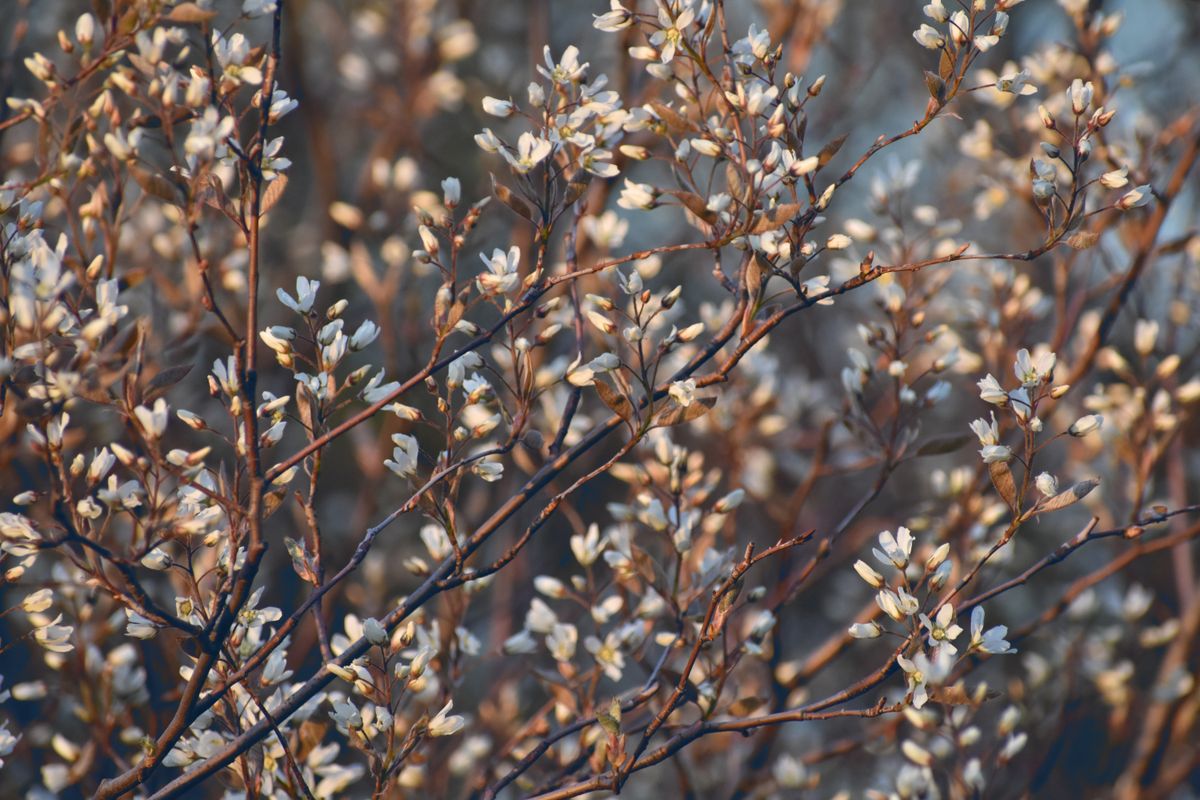
Serviceberry is one of the best shrubs for a bird garden. White flowers open in early spring, and the small dark berries ripen in June. Birds eat them quickly, so pick early if you want some for jam. Allegheny serviceberry (A. laevis) grows in zones 4–8; downy serviceberry (A. arborea) in zones 4–9. Both are native.
Plant in full sun to part shade and moist, well-drained soil. Serviceberries are large shrubs or small trees, often 15 to 25 feet tall, so site them away from walks if you mind fallen fruit. Fall planting in the late-August to mid-October window gives roots time to grow before the soil freezes.
10. Ninebark (Physocarpus opulifolius)
Ninebark is a native shrub for zones 2–8 that tolerates a wide range of soils and dry to medium moisture. It blooms in late spring with small white to pinkish flower clusters, followed by reddish seed capsules. Purple-leaved cultivars give color all season.
It grows 5 to 9 feet tall in full sun to part shade, with some afternoon shade welcome in hot, humid climates. Ninebark roots readily, which makes it a reliable fall-planted shrub even in the coldest zones, as long as it goes in at least six weeks before the ground freezes. Water weekly in dry weather until freeze-up. Prune right after bloom and no later than mid-August.
11. Beauty Bush (Kolkwitzia amabilis)
Beauty bush is an old-fashioned shrub in the honeysuckle family, grown for its masses of pink, bell-shaped flowers with yellow throats in mid-spring. It suits zones 4–8 and full sun, and grows 6 to 10 feet tall and wide with an arching shape.
It needs space, and older shrubs get leggy. Thin crowded stems, or cut the whole shrub back hard, right after flowering. Hard pruning in late winter costs you that year’s flowers. Plant it in fall in well-drained soil, water it in well, and keep watering during dry spells until the ground freezes.
📷 Show us your feeder setup! Share a few photos of your feeders and you might be featured on Wild Bird Scoop. Share your setup →





