Late summer and early fall are good times to plant many perennials. The soil is still warm, and roots have weeks to settle before winter. Water new plants deeply at planting and then about an inch a week when rain is short, and mulch after the ground freezes to limit frost heaving.

The Camera Feeder We Use In Our Own Backyard
See Today's PriceTen of these 13 plants are North American natives, and most entries note where they grow wild. The rest are non-native garden plants that bees still use.
Save this article for later so you don't lose it. Enter your email and I'll send it to you now—plus you'll get my favorite backyard birding tips delivered to your inbox.
1. Purple coneflower (Echinacea purpurea)

Purple coneflower grows 3 to 4 feet tall in zones 3–8 and wants full sun to light shade and soil that drains. Its wild range is fairly narrow, from Georgia to northeast Texas and north to Ohio, Illinois and Iowa, though it grows well far outside that area. Blooms peak in summer. The Xerces Society rates it as having special value to native bees.
Leave the dead stems standing at 12 to 24 inches over winter. NC State Extension notes that native bees nest in the hollow stems. It reseeds and can pick up aster yellows disease.
2. Scarlet bee balm (Monarda didyma)
Scarlet bee balm is native from Ohio and New Jersey down the mountains to Georgia and grows in zones 4–8. It needs moist soil and full sun to part shade, and it blooms in midsummer. The long red tubes are built for hummingbirds, but the Xerces Society also rates it as having special value to native bees and bumble bees.
It spreads by underground stems into dense patches, so give it room or divide it every few years. Powdery mildew is common where air circulation is poor. In dry soil, wild bergamot below is the easier choice.
3. Black-eyed Susan (Rudbeckia hirta)
Black-eyed Susan grows across most of the eastern and central U.S. and is naturalized in much of the rest. It handles zones 3–8, full sun and dry to moist soil, and blooms from June into October. Bees and butterflies visit for nectar, finches eat the seed and it hosts the gorgone checkerspot and bordered patch butterflies.
This species is short-lived, often lasting two or three years. It keeps a patch going by reseeding, so leave some seed heads standing in fall. Plants set out this fall may bloom lightly next year and fill in after that.
4. Wild bergamot (Monarda fistulosa)
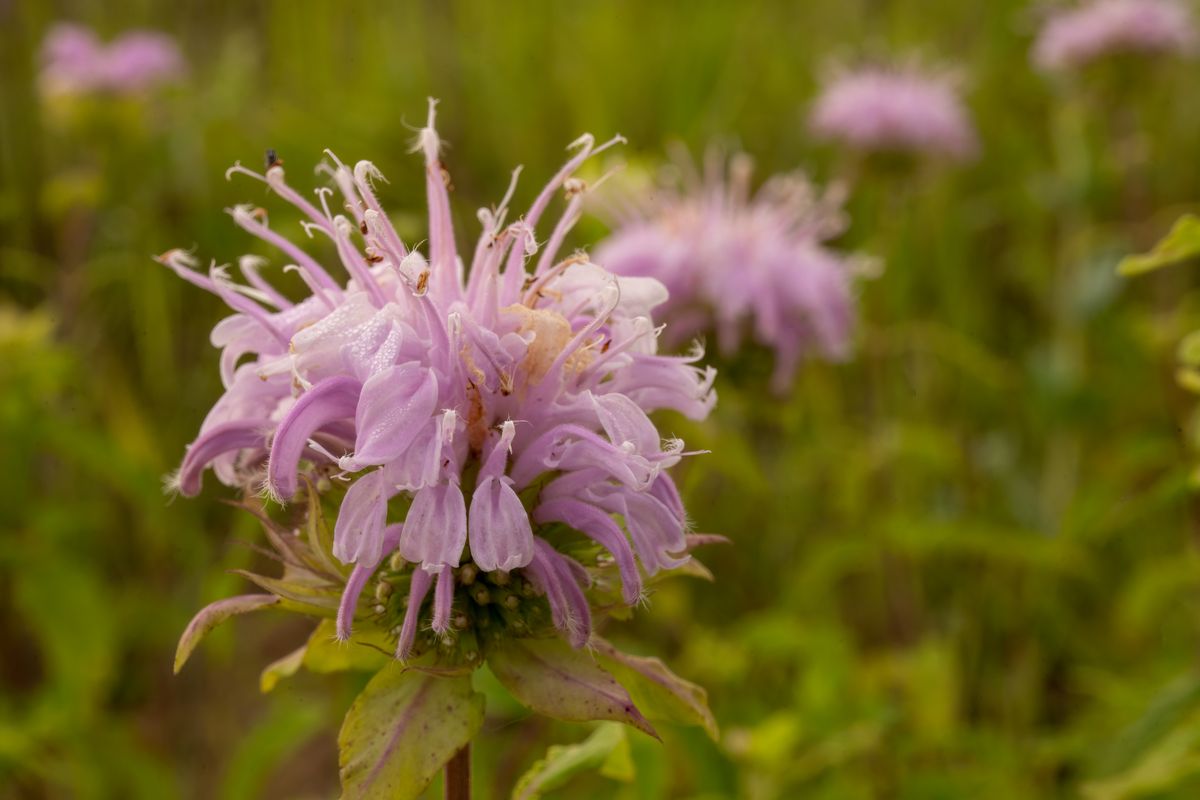
Wild bergamot grows wild through most of the U.S. east of the Rockies and into southern Canada, in zones 3–9. It takes full sun to part shade and dry to moist soil, and it blooms from late spring through summer. The Xerces Society rates it as having special value to native bees and bumble bees, and hummingbirds visit too.
It handles drier ground than scarlet bee balm, but it still gets powdery mildew in crowded, stuffy spots. It spreads by rhizomes, so plan for a patch rather than a single clump. Deer tend to leave it alone.
5. Anise hyssop (Agastache foeniculum)
Anise hyssop is native to the northern Great Plains and upper Midwest, from Colorado to Wisconsin and north into Canada, not the eastern states. It grows 3 to 4 feet tall in zones 4–8 and needs full sun and well-drained soil. The main bloom runs July and August, not all the way to frost.
The Xerces Society rates it as having special value to native bees, bumble bees and honey bees, and hummingbirds visit the spikes. Plants are often short-lived but reseed. Wet winter soil is the usual reason they fail to return.
Get our free Hummingbird Attraction Guide! Plus, we'll send you our best tips for attracting more birds to your yard.
6. Catmint (Nepeta × faassenii)
Catmint is not native to North America. It is a garden hybrid of European parents that grows 18 to 24 inches tall and up to 3 feet wide in zones 5–9. Give it full sun to part shade and well-drained soil. Its blue flowers draw bees from spring into summer, and shearing after the first flush brings another round.
This hybrid is sterile and will not reseed. That sets it apart from catnip (Nepeta cataria), which self-sows and has become a weedy escapee in many areas. Deer usually avoid catmint, and it handles drought once established.
7. Meadow sage (Salvia nemorosa)
Meadow sage is native to Europe and west-central Asia, so it is a non-native choice, though it is not considered invasive. It grows 18 inches to 3 feet tall in zones 4–8 and prefers full sun and well-drained soil. NC State Extension lists bees, butterflies and hummingbirds as visitors.
The first flush comes in early summer. Cutting the spent spikes back often brings more flowers later, but repeat bloom is not guaranteed in heat. It has few pest problems and tolerates dry spells once its roots are settled.
8. Joe-Pye weed (Eutrochium purpureum)
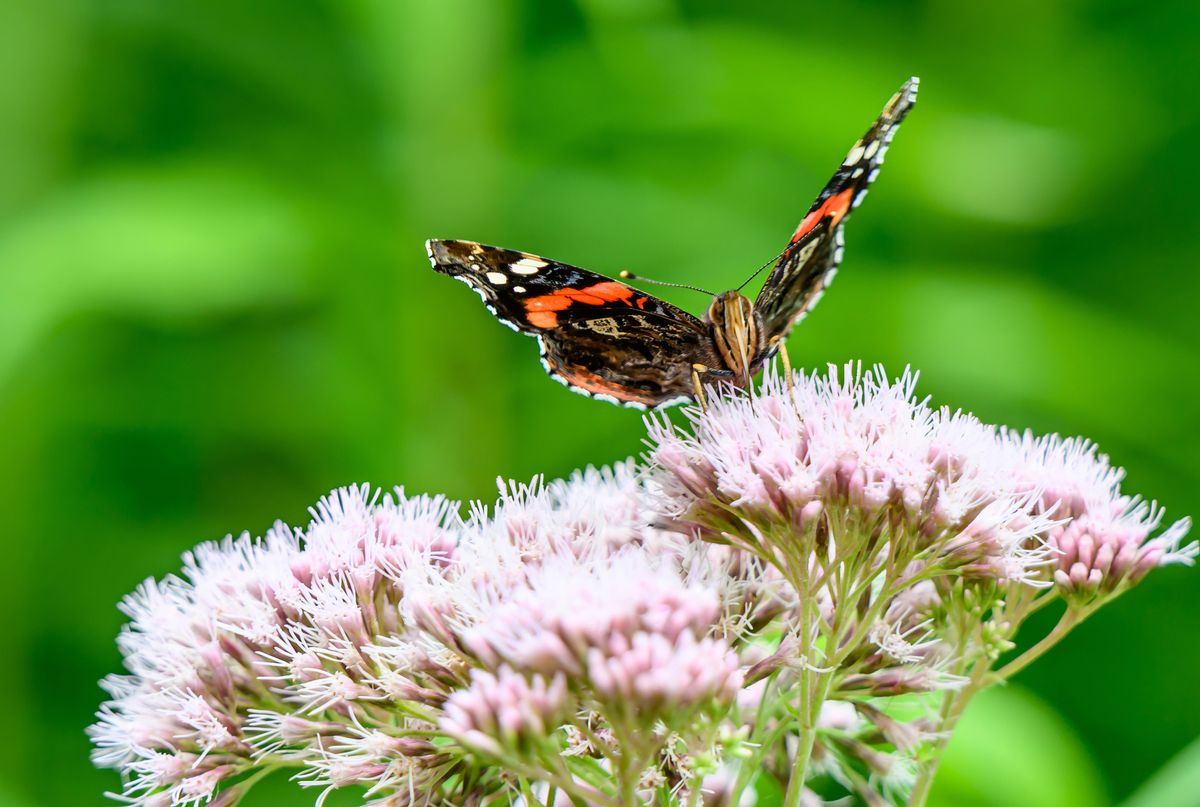
Sweet Joe-Pye weed grows wild from New Hampshire and Pennsylvania to Georgia and west to Minnesota and Oklahoma. It reaches 5 to 7 feet in zones 4–9, so it belongs at the back of a bed. It prefers moist, rich soil and full sun to part shade, and it blooms from July into September.
The Xerces Society rates it as having special value to native bees, and butterflies crowd the flower heads. It needs steady moisture, so water it through dry spells in its first two summers. It will not thrive in a hot, dry strip.
9. New England aster (Symphyotrichum novae-angliae)
New England aster blooms from August into October, when many other flowers are done. It grows 3 to 6 feet tall in zones 4–8 in full sun and moist to average soil. The Xerces Society rates it as having special value to native bees, bumble bees and honey bees, and it hosts the pearl crescent butterfly.
Tall stems tend to flop by fall. Cutting them back by about a third in early summer keeps plants shorter. It reseeds readily, so deadhead it if you don’t want volunteers. Fall-planted asters should be mulched in late fall to limit frost heaving.
10. Showy goldenrod (Solidago speciosa)
Showy goldenrod grows wild from Massachusetts to the Georgia mountains and west to Wyoming and Texas. It grows 2 to 6 feet tall in zones 3–8, depending on soil, and blooms in August and September. The Xerces Society rates it as having special value to native bees and honey bees.
Goldenrod gets blamed for fall allergies, but its pollen is heavy and carried by insects. Ragweed, which blooms at the same time, is the usual culprit. Showy goldenrod is better behaved than Canada goldenrod, which spreads hard, though the Wildflower Center notes it can turn aggressive in moist soil.
11. Wild columbine (Aquilegia canadensis)
Wild columbine is an eastern native for zones 3–8 that blooms in spring, when few other flowers are open. It grows in part shade and well-drained soil, including rocky spots. The red spurred flowers are shaped for hummingbirds, which are the main pollinators. Long-tongued bumble bees also visit, and short-tongued bees often chew into the spur to reach the nectar.
Finches and buntings eat the seeds, and it hosts the columbine duskywing. Plants are short-lived but reseed. Leaf miners leave trails on the foliage, which looks bad but rarely harms the plant.
12. Dense blazing star (Liatris spicata)
Dense blazing star grows wild from New Jersey to Michigan and Illinois, south to Florida and Louisiana. It reaches 3 to 6 feet in zones 3–8, likes full sun and moist, well-drained soil, and blooms from July into September. The spikes open from the top down.
The Xerces Society rates it as having special value to native bees and bumble bees, and butterflies and goldfinches visit. Plant the corms or potted plants in fall, and water weekly until the ground freezes if rain is short. Heavy wet clay can rot the corms over winter.
13. Autumn Joy sedum (Hylotelephium ‘Autumn Joy’)
Autumn Joy is a hybrid stonecrop with Asian and European parents, not a native plant. It grows about 18 inches to 2 feet tall in zones 3–10, needs full sun and dry, well-drained soil, and rots in wet ground. Flower heads open pink in late summer and age to rust red in fall.
NC State Extension notes that the flowers attract bees and butterflies and provide a fall nectar source. The dried heads can stand through winter. It needs little water once established, so stop watering after its first season unless a drought runs long.
📷 Show us your feeder setup! Share a few photos of your feeders and you might be featured on Wild Bird Scoop. Share your setup →