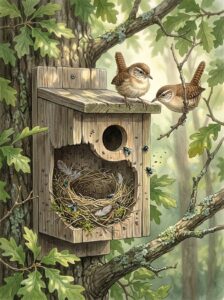
I spot a Tree Swallow skimming the yard, blue flash and a thin chirp as it checks an old nest box, and I think about how different birds choose different homes. You’ll find Eastern Bluebird, Purple Martin, House Wren, and more in this article, with each bird paired to a specific birdhouse style so you know what to use where.

The Camera Feeder We Use In Our Own Backyard
See Today's PriceI base every recommendation on real nesting data, not marketing copy, so you get clear facts about entrance size, interior space, height, and habitat.
Save this article for later so you don't lose it. Enter your email and I'll send it to you now—plus you'll get my favorite backyard birding tips delivered to your inbox.
1) Eastern Bluebird — Peterson-style single-compartment Bluebird House
I watched a male bluebird hover low over a fencepost, bright breast flashing as he inspected a cavity like a tiny, earnest house-hunter. The soft chitter and quick wingbeats tell you they favor open areas bordered by perches.
Nesting studies show bluebirds like a 1.5-inch entrance, about 5–6 inches wide inside and 6–8 inches deep. Mount boxes 4–6 feet high in open fields, pastures, or large yards with scattered trees and perches nearby.
I recommend a Peterson-style single-compartment box with a sloping roof and predator-guarded entrance. Pros: straightforward interior size, good ventilation, and easy cleaning. Caveat: avoid painted interiors and provide a clean, rough floor for nest grip.
Place the box facing east or southeast to reduce afternoon heat and aim over short grass or a maintained lawn so parents can spot insects. Check from a distance while they’re away and mount on a post with a baffle if raccoons or snakes are common.

Generic Peterson Blue Bird House
Check Price2) Tree Swallow — 1.5″ entrance cedar nest box
I watched a flash of blue skim over my pond and vanish into a small hole in the maple ridge. The call was a thin chitter; then two swallows inspected the cavity, wings flicking like paper.
Nesting records favor a 1.5-inch entrance, an interior floor around 4×4 inches and 6–8 inches deep, mounted 5–15 feet high in open habitat near water or fields. Tree Swallows prefer boxes with smooth interiors and a little drainage and ventilation.
I recommend a simple cedar box with a 1.5″ round hole and a side panel that opens for cleaning. Cedar resists rot and keeps temps steadier, but it can be pricier and needs secure mounting to prevent swinging.
Place the box on a pole or post facing a clear flyway, 10 feet high if possible, with a predator baffle. Keep it 20–40 yards from trees to reduce prowling and leave nearby perches for approaching birds.

Garden Artworks Swallow Nest Box
Check Price3) Purple Martin — Langstroth-style multi-compartment gourd house
I watched a pair of purple martins skim the lawn at dusk, wings flashing, then land together on the clubhouse roof and chatter like quiet clappers. Their arrival feels like a small summer chorus.
Nesting studies show martins prefer compartments about 6–7 inches deep with a 2-inch entrance hole and internal floor around 5 x 5 inches. Mount 10–20 feet high, over open lawn or water when possible, and keep predator guards and baffles in place.
I recommend a Langstroth-style multi-compartment gourd house with removable panels. Pros: easy to clean, compartment size matches data, and multiple couples nest close together. Caveat: martins strongly prefer colony housing and may ignore single boxes; you must manage sparrows and house wrens.
Place it on a sturdy pole in open space away from trees, with a simple pulley for lowering. Check nests mid-season, remove invasive nests early, and leave the house up through fall to signal territory for next year.

Yaocom 16 Pack Purple Martin Plastic Gourds
Check Price4) House Wren — 1.25″ entry rough-sawn wooden wren box
I watched a pair of house wrens flick into a narrow cavity, voices chittering like dry leaves. They stacked soft grasses and an odd feather, working quickly between sharp little flights.
Nesting data shows house wrens use 1.25″ to 1.5″ entrances, an interior floor about 4″–5″ square, and prefer 5–10 feet high in shrubs, fence posts, or nest boxes placed at edges of open yards and brushy tangles. They like rough surfaces to grip and defend the hole.
I recommend a rough-sawn cedar wren box with a 1.25″ round entrance and a 4.5″ floor. Pros: durable wood, natural texture for perching, predator resistance when mounted on a post. Caveat: wrens may peck at decorative boxes or fill multiple cavities with nest material.
Mount the box on a post or thin tree trunk about 6–8 feet up, facing a quiet gap in shrub cover. Leave at least 10–15 feet of low brush or tangles nearby for foraging and quick escape routes.

Wild Wings Cedar Box Wren House
Check Price5) Black-capped Chickadee — 1 1/8″ entry maple nest box with predator baffle
I watched a chickadee slip through a tiny hole, wings blinking like a small flag, then pause on the porch roof to call. In my yard, they prefer snug cavities where the warmth stays and cats can’t reach.
Nesting studies show chickadees use 1 1/8″ entrances, an internal floor about 4–5″ across and 6–8″ deep, mounted 6–15 feet high in mixed woods or shrub edges. They like sheltered spots with nearby perches and a steady supply of caterpillars.
I recommend a solid maple box with a 1 1/8″ hole and a simple predator baffle below the entrance. Maple resists rot and keeps insulation steady; the baffle reduces raccoon and squirrel access. Caveat: baffles need correct spacing for poles and may look bulky on small trees.
Place the box facing east or southeast to catch the morning sun and avoid prevailing winds. Mount where you can check it from a distance and leave a 25–50 foot buffer of low brush for foraging.

SISTERBIRD Cedar Hanging Wren Birdhouse
Check Price6) Barn Swallow — open-cup mudnest shelf mounted under eaves
I watch barn swallows quarter the barn, their tails flashing as they scoop mud. They don’t use round boxes; they build open-cup mud nests stuck to vertical surfaces under eaves and bridges, often in colonies.
Nesting studies show they need a flat shelf about 3–5 inches deep with a shallow lip, not an enclosed cavity. Mount nests 6–20 feet high in open farmland, barns, or under long eaves where insects are nearby, and predators have fewer hiding spots.
I recommend a simple mud-nest shelf kit: a shallow ledge of rough concrete or wood that lets swallows attach mud and shape a cup. Pros: mimics natural sites and supports colony nesting. Caveat: you must allow mud collection nearby and accept droppings below.
Place the shelf under a wide, sheltered eave, facing open flyways and away from bright lights. Leave seasonal access so nests can be checked after breeding and clean only in late fall.

Generic Swallow Nest Cup for Barn Swallows
Check Price7) Violet-green Swallow — 1.5″ deep small-box with side ventilation
I watch violet-green swallows quarter the blue sky, then flash into a tight cavity in a dead snag, wings glittering green and violet. Their quick chitter and the tiny scrape of feet tell me they prefer snug, shallow homes where parents can pass insects in and out fast.
Nesting studies show they use boxes with 1.5″ entrances, shallow bowls about 1.5″ deep, and side or back ventilation. Mount boxes 10–20 feet high on poles, trees, or cliffs near open water or ranchland. They accept clustered sites and natural cavities.
Get our free Hummingbird Attraction Guide! Plus, we'll send you our best tips for attracting more birds to your yard.
I recommend a small wooden box with a 1.5″ hole, shallow 1.5″ interior, and side vents near the top. Pros: suits swallow body size and cooling needs; mimics natural crevices. Caveat: shallow depth can let rain in if not properly roofed or sited.
Place the box facing a clear flight path, 10–20 feet up, and leave a few inches of dead snag or perch nearby. Check from a distance during nesting season; disturb as little as possible.
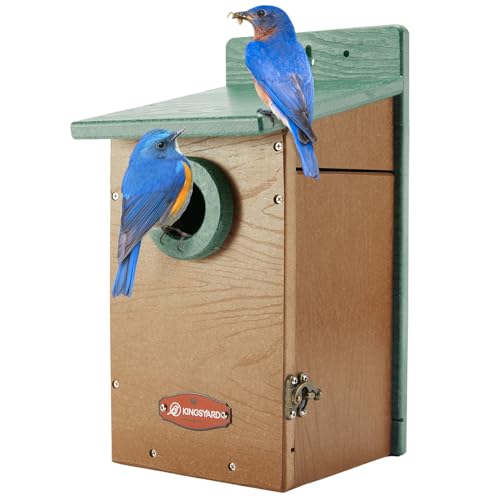
Kingsyard Durable Recycled Plastic Bird House
Check Price8) Carolina Wren — recessed 1.25″ entry box with top-hinged cleanout
I watched a Carolina Wren slip into a narrow cavity beneath an eave, tail flashing as it scolded a passing cat. The wren moved like a bright thread, probing for nesting material and checking edges with a quick, sharp call.
Nesting data show Carolina Wrens prefer small, recessed openings about 1.25 inches in diameter, interior floor space of about 4–5 inches square, and a shallow depth of 6–8 inches. Mount boxes 4–10 feet high in brushy yards or near thickets, and place them in protected, somewhat sheltered spots.
I recommend a wooden box with a recessed 1.25″ entry and a top-hinged cleanout panel. Pros: extra weather protection, easy seasonal checks, and the recessed entry helps keep cowbirds out. Caveat: paint the exterior a muted color and avoid varnishing the inside; wrens favor natural, rough surfaces.
Place the box facing a shrub or vine with a short flight path; leave a small gap under eaves for access to cover. I check boxes early spring, before nesting peaks, and secure the hinge so it won’t rattle in wind.

Gtongoko Cedar Hanging Bird House with Air Vents
Check Price9) Prothonotary Warbler — flooded-wood style box for swampy habitats
I watched a flash of golden-orange slip into a willow snag over still water, then hear a thin chip that meant she’d found a hole. Prothonotary Warblers hunt over flooded forests, so cavities near slow water get the most visits.
Nesting records favor an entrance about 1 1/8 inches, an interior floor roughly 4×4 inches and 6–8 inches deep, mounted 3–10 feet high in standing water or within a few feet of the bank. They prefer open-cavity sites in swampy, wooded wetlands rather than dense upland trees.
I recommend a flooded-wood style box: cedar or cypress, predator-resistant baffle options, and a 1 1/8″ entrance. Pros: durable in wet conditions and matches historical nest sites. Caveat: you must place it over water or very near the shoreline; dry yards won’t attract them.
Mount boxes on a post in the water or on a tree overhanging the swamp, angled slightly to shed rain. Check and clean after nesting season from a canoe or pole; avoid disturbance during egg-laying and early broods.
10) Northern Flicker — 3″ deep large-entrance flicker box with durable siding
I watched a male flicker hammer at a weathered post, dust and feathers flying, then slip into a shallow cavity with a loud, sharp call. The motion felt impatient and precise — they want roomy, dry holes they can excavate or enlarge.
Nesting records show flickers prefer a wide entrance (about 2.75–3.5 inches), shallow floor depth near 3 inches, and cavities open to taller trees or posts 6–20 feet high. They favor open woods, edges, and yards with short turf for foraging. Durable siding helps resist rot where repeated excavations occur.
I recommend a solid flicker box with 3″ depth and a 3.25″ entrance, exterior-grade plywood or cedar, and a reinforced entrance to reduce wing wear. Pros: matches measured preferences and lasts. Caveat: flickers may still peck to expand the hole or choose natural cavities.
Mount on a snag, post, or trunk 8–15 feet up, facing away from prevailing winds. Leave some nearby open foraging ground and avoid close clustering with small-nest boxes.

JCs Wildlife Recycled Poly Lumber Flicker House
Check Price11) Eastern Screech-Owl — 6-8″ diameter round-entrance owl box with roof overhang
I once heard soft trilling on a damp spring night and found a small gray owl slipping into a hollow oak. The bird hovered, then vanished into shadow, leaving only the whisper of wings and a faint smell of moss.
Nesting records show eastern screech-owls accept round entrances around 6–8 inches across and prefer roomy cavities about 10–12 inches deep and 8–10 inches wide. Mount boxes 8–20 feet high in wooded edges, parks, or suburban yards with mature trees.
I recommend a cedar owl box with a 6–8″ circular opening and a generous roof overhang to keep rain out. Cedar lasts and moderates temperature, but check for predators at the base and avoid perches that help raccoons or squirrels.
Place the box facing a stand of trees with some open flight space and a nearby perch. Mount it on a trunk or sturdy post, secure it tightly, and check annually from a distance to avoid disturbing breeders.

MOBYKE Wooden Screech Owl House
Check Price12) Purple Finch — 1.5″ entrance thick-walled pine house placed mid-canopy
I watched a Purple Finch slip between maple leaves, flash of raspberry on the breast, then hesitate at a hole in an old pine. Their approach is light and quick; they prefer cover and a snug cavity to settle in.
Nesting data show Purple Finches use 1.5-inch entrances, prefer interiors about 4–5 inches across and 6–8 inches deep, and choose mid-canopy heights of 8–20 feet. Thick walls help buffer temperature swings and predators in mixed woods or wooded yards.
I recommend a thick-walled pine box with a 1.5″ drilled entrance, floor about 4.5″ square, and 7″ depth. Pine holds up and stays cool. Pros: durable, good insulation, natural look. Caveat: needs predator guards and occasional cleaning to prevent mites.
Mount the box on a trunk or sturdy branch 10–15 feet high, opening away from prevailing winds and with foliage nearby for cover. Face the entrance toward filtered light, not full sun, and check in late fall when birds are absent.
13) Tufted Titmouse — 1.25″ entry box with rough interior for climbing
I watched a titmouse hover at the oak, cock its head, then slip into a small cavity with a quick, soft chitter. The bird pushed past bark flakes and disappeared, leaving me listening for nest sounds.
Nesting data shows tufted titmice use a 1.25″ entrance, an interior floor about 4×4 inches and 8–10 inches deep, mounted 6–15 feet high in wooded yards or edges. They prefer rough interior walls or natural fiber lining so chicks can climb.
I recommend a simple wooden box with a 1.25″ hole and a textured interior or glued sisal strips. Pros: matches measured preferences and is easy to clean. Caveat: rough interior can trap mites if not cleaned yearly.
Place the box facing east or southeast to catch morning sun and avoid prevailing winds. Mount it on a tree or pole near shrubs for quick cover, and check nest timing so you avoid disturbing birds during egg-laying.

wildtier herz Wildlife Heart Birdhouse for Great Tits
Check Price14) Eastern Phoebe — open-front shelf box under porch or bridge rafters
I watched a phoebe bob on a rafter, wings twitching, then slip into a shallow nook beneath the porch where mud and hair lined a cup of nest. The bird prefers low, sheltered ledges and cavities with easy access rather than a deep, round hole.
Nesting data: entrance can be open or a wide 2–3 inch tall opening; interior floor about 5–6 inches wide and 3–4 inches deep; mount 3–20 feet high in shaded, sheltered spots near water or open lawns. They like ledges under eaves, porches, or bridge undersides with a roof overhead.
Recommendation: a simple open-front shelf box or shallow platform with a small backboard works well. Pros: easy to clean and copy natural sites; lets phoebe enter without squeezing. Caveat: open design can let predators or heavy rain disturb nests unless placed well under cover.
Setup tip: place the shelf under a tight roofline or bridge rafter, 6–12 feet high, facing away from prevailing winds. Add a thin layer of coarse material inside to encourage nest building.
How Habitat Shapes Nest Choices
I watch wrens slip into tight bark crevices and bluebirds eye open fields from telephone wires. Habitat—what plants, trees, and structures surround birds—shapes the size of the hole they use, how high they nest, and which box will actually get used.
Changing Seasons and Shelter Needs
A chickadee slips into a cavity on a rainy spring morning, feathers damp and bill catching insects. Data show chickadees prefer 1 1/8″ entrance holes, 4–6″ internal depth, and mounting 6–15 feet high in mixed woods or backyard groves. The interior should be snug to reduce heat loss during cool nights.
Recommended box: a 6x6x8″ wood box with a 1 1/8″ hole, ventilation near the top, and a predator baffle option. Pros: durable, stays warm, and matches nesting specs. Caveat: avoid metal or painted interiors that hold heat.
Placement tip: mount on a north- or east-facing trunk 8–12 feet high, near deciduous trees and 10–20 feet from feeders to reduce competition.
Neighborhoods: Suburb, Forest, or Prairie
I’ve seen bluebirds perched on fenceposts above a wide prairie, scanning for grasshoppers. Nesting data for eastern bluebirds favor 1 ½″ entrance holes, 5–6″ floor dimensions, and boxes mounted 4–6 feet high in open grassy areas with scattered perches.
Recommended box: a 12×6×8″ open-porch style with a 1 ½″ hole, predator guard, and a drainage floor. Pros: matches cavity size, easy to clean, and suits open habitats. Caveat: place away from dense shrub thickets to limit wrens and sparrow takeover.
Placement tip: mount on a post or pole 4–6 feet high in the center of a pasture or lawn, with a perch 20–30 feet away for hunting perches and clear flight approaches.
Small Encounters: Reading the Signs of Successful Nesting
I watch a tiny sparrow slip into a weathered box at dawn, then perch nearby to call. Look for feathers, small droppings, and repeated visits — they tell you a nest is active and healthy.
Feather Traces and Calling Cards
I often find a scatter of down and a few short guard feathers at the entrance. These mean adults are lining or insulating a nest cup. Note size: house sparrows and chickadees leave tiny feathers; starlings leave larger contour pieces. Fresh soft feathers and moist plant fibers suggest recent activity. Older, bleached feathers and broken seed hulls point to past use.
Check droppings on the perch or under the box. Small, dark droppings with white tips are normal for nestlings and adults. A steady pile under a box over several days signals an occupied nest. Avoid touching or moving materials; disturbance can cause abandonment.
Behavior Clues in the Garden
I listen for regular shuttling flights to the box between sunrise and mid-morning. Parents make short, quick trips when feeding nestlings; long, spaced visits often mean eggs. Watch from a distance; sudden silence when you approach signals a nest is sensitive.
Territorial calls and aggressive chases around the box show active nesting. If predators like jays or squirrels circle often, parents will increase alarm calls and hide nestlings. Mount boxes 5–10 feet high for chickadees and sparrows, and face entrances away from prevailing winds. Place small vegetation 3–6 feet out to give cover but keep branches at least 18 inches from the entrance to deter predators.
📷 Show us your feeder setup! Share a few photos of your feeders and you might be featured on Wild Bird Scoop. Share your setup →