These 16 perennials handle dry spells once their roots are established. None are drought tolerant on day one. Soak each plant at planting. Then aim for about an inch of water a week, from rain or the hose, with deep, infrequent soakings instead of light sprinkling. Keep that up through the first growing season. Colorado State Extension notes that watering can be cut back after one or two years, once plants are established.

The Camera Feeder We Use In Our Own Backyard
See Today's PriceEach entry lists its hardiness zones, where it comes from and the soil or climate that kills it. For most of these plants, wet soil is a bigger risk than drought.
Save this article for later so you don't lose it. Enter your email and I'll send it to you now—plus you'll get my favorite backyard birding tips delivered to your inbox.
1. English lavender (Lavandula angustifolia)
English lavender comes from the Mediterranean and grows 1 to 2 feet tall in zones 5–9. It needs full sun and sharp drainage, and NC State Extension notes it prefers neutral to alkaline soil and will die out in heavy clay.
Water it at planting and about weekly through the first summer, letting the soil dry between soakings. After that it rarely needs help. Overwatering causes root rot, which kills more lavender than drought does. It is listed as mildly toxic to cats, dogs and horses.
2. Russian sage (Salvia yangii)
Russian sage is native to Central Asia, from Afghanistan to the western Himalayas, not the American prairie. It grows 2 to 4 feet tall in zones 5–9 and tolerates drought, poor soil and salt. Deer and rabbits leave it alone.
Soak it at planting and water weekly in dry spells through the first season. Avoid wet or poorly drained soil. It flowers best and flops less in full sun and dry conditions. Cut stems back to a few inches in early spring.
3. Showy stonecrop (Hylotelephium telephium)
Upright sedums such as ‘Autumn Joy’ belong to this group, native to Europe, Russia and northern China. They grow 2 to 2.5 feet tall in zones 3–9, store water in thick leaves, and handle dry soil. Bees and butterflies visit the flowers.
Water new plants weekly until they root in, then only in long droughts. Wet soil can cause fungal and bacterial crown rot, so plant it in full sun and well-drained soil. The flower heads last from summer into fall.
4. Yarrow (Achillea millefolium)
Yarrow grows wild across North America, Europe and western Asia, and garden plants are often European strains. It grows 1 to 3 feet tall in zones 3–9 and tolerates drought, heat, humidity, salt and poor soil.
It spreads by shallow rhizomes and seed rather than a deep taproot, and NC State Extension says it spreads aggressively. Water weekly in dry spells the first summer, then rarely. Wet soil causes root rot. It can irritate skin and is listed as a problem for cats.
5. Purple coneflower (Echinacea purpurea)

Purple coneflower is native to the eastern and central U.S. and grows 3 to 4 feet tall in zones 3–8. It tolerates drought, heat, humidity, poor soil and salt once settled, and goldfinches eat the seed in fall.
Water it deeply at planting and about an inch a week through the first summer. After that it handles dry spells well in full sun and well-drained soil. Japanese beetles, leaf spot and aster yellows are the common problems.
6. Blanket flower (Gaillardia × grandiflora)
Blanket flower is a hybrid of the perennial G. aristata and the annual G. pulchella. Hardiness ratings differ by source. Missouri Botanical Garden lists it for zones 3–10, and University of Wisconsin Extension says it is usually hardy to zone 3, though this varies by variety. NC State Extension lists only zones 7–10. The parent G. aristata is rated for zones 3–8 by NC State. It grows 2 to 3 feet tall, blooms from late spring into fall, and goldfinches eat the seed.
It is short-lived. Wisconsin Extension puts the hybrid’s average lifespan at two years. Drainage matters more than cold. Wisconsin says most plants survive -20°F if drainage is good but rarely make it through winter in heavier soil, and NC State says they will not survive winter in poorly drained clay. Keep new plants evenly moist the first season. Once established it tolerates some drought. Sandy or gravelly soil, or a raised berm, gives it the best chance of coming back.
Get our free Hummingbird Attraction Guide! Plus, we'll send you our best tips for attracting more birds to your yard.
7. Lamb’s ear (Stachys byzantina)
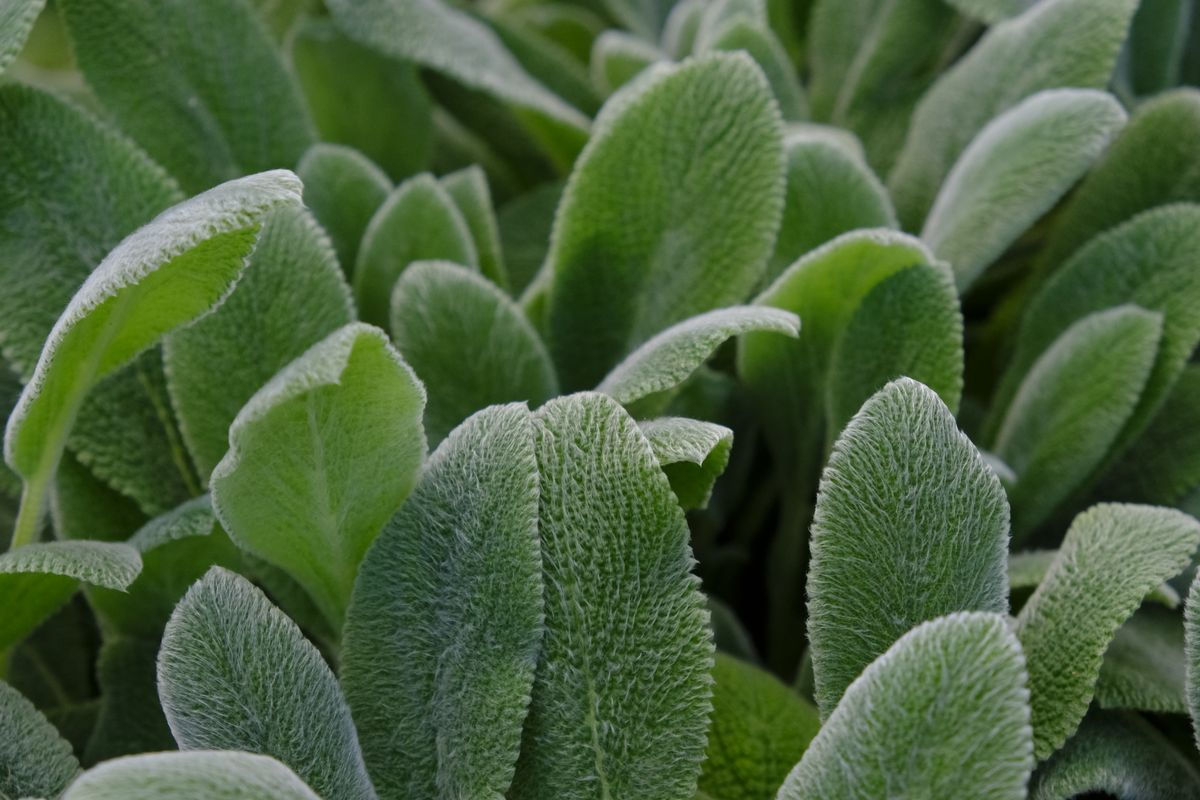
Lamb’s ear comes from Turkey to northern Iran and grows 1 to 1.5 feet tall in zones 4–9. It tolerates drought, poor soil and deer, and spreads by stems that root where they touch the ground. NC State Extension flags it as weedy.
Water it weekly in dry spells the first summer, at the soil rather than overhead. Wet leaves and humid summers invite leaf rot. In hot, humid areas, plant it on a slope and give it some afternoon shade.
8. White sage (Artemisia ludoviciana)
White sage, also called prairie sage or western mugwort, is native to North America. It grows 2 to 3 feet tall in zones 4–10 and takes poor, dry soil. Deer and rabbits avoid it.
It spreads by rhizomes, and NC State Extension flags it as weedy, so give it room or a barrier. Water weekly through the first dry spells. After that it needs little water, and moist or poorly drained soil can cause root rot.
9. Eastern prickly pear (Opuntia humifusa)
Eastern prickly pear is native to the eastern and central U.S. and into Ontario. It stays 6 to 12 inches tall in zones 4–9, blooms yellow in summer, and produces edible fruit that ripens red or purple.
It needs sharp drainage. Water once after planting and only in long droughts after that, since root rot is the main risk. The pads lack large spines but carry tiny barbed bristles called glochids that lodge in skin, so keep it away from paths.
10. Red hot poker (Kniphofia uvaria)
Red hot poker comes from South Africa and is rated for zones 5–9. It needs full sun and a site sheltered from wind, and NC State Extension says it will not tolerate wet, heavy soil.
Water weekly through the first season while roots establish. It does poorly in cold winters, so mulch the crown or tie the leaves together over it to keep water from freezing there. Once established, avoid moving it.
11. Rosemary (Salvia rosmarinus)
Rosemary is a Mediterranean shrub that can reach 4 to 5 feet where it survives winter. NC State Extension rates it for zones 8–10. University of Illinois Extension says it is typically hardy to zone 7, and that ‘Arp’ and ‘Hill Hardy’ are noted as hardy to zone 6. It tolerates drought, heat, poor soil and salt once rooted, and deer leave it alone.
Water it weekly the first season in well-drained soil. At the cold edge, choose ‘Arp’, which NC State lists as the hardiest cultivar, and plant it in a sheltered, sunny spot. Illinois Extension notes that single-digit temperatures are often fatal, so in zone 6 and colder a pot you bring indoors for winter is the safer choice.
12. Globe thistle (Echinops ritro)
Globe thistle is native from Europe to Mongolia and grows 3 to 4 feet tall in zones 3–8. It tolerates drought, poor soil, deer and rabbits, and takes clay, loam or sand if it drains.
Water it at planting and weekly in dry spells through the first summer. It self-seeds, so deadhead before seed sets if you don’t want volunteers. Deadheading can also bring a second flush of blooms.
13. Meadow sage (Salvia nemorosa)
Meadow sage is native to Europe and west-central Asia and grows 1.5 to 3 feet tall in zones 4–8. It tolerates drought, dry soil, deer and rabbits. Bees, butterflies and hummingbirds visit the flowers.
Water it weekly through the first summer, then only in long dry spells. It needs full sun and well-drained soil. Violet-blue spikes appear from June to September.
14. Threadleaf coreopsis (Coreopsis verticillata)
Threadleaf coreopsis is native to the eastern U.S. and Canada and grows 2.5 to 3 feet tall in zones 3–9. It tolerates drought, heat, humidity, poor soil and salt.
Water weekly in dry spells the first season. Skip fertilizer, because NC State Extension notes that rich or moist soil makes stems weak and floppy. Clumps spread by rhizomes and self-seed, so divide every two to three years. Shearing after bloom can bring fall flowers.
15. Orange coneflower (Rudbeckia fulgida)
Orange coneflower is native to the eastern U.S. and grows 2 to 3 feet tall in zones 3–9. It tolerates drought, dry soil, pollution and deer, and spreads into broad clumps over time.
Water it deeply at planting and about an inch a week through the first summer. It prefers average soil that drains, and it handles moist soil better than most plants here. Once settled it rides out ordinary dry spells in full sun.
16. Catmint (Nepeta × faassenii)
Catmint is a sterile European hybrid that grows 1.5 to 2 feet tall and spreads up to 3 feet in zones 5–9. It tolerates drought, dry soil, urban conditions and deer. Because it is sterile, it does not self-seed.
Water it weekly through the first summer. After that it is drought tolerant in well-drained soil and full sun. Shear it back after the first bloom for a repeat flush. Cats may roll in it.
📷 Show us your feeder setup! Share a few photos of your feeders and you might be featured on Wild Bird Scoop. Share your setup →