8 Reasons Your Wren Family Suddenly Abandoned the Nest Box (Ranked by Likelihood)

A sparrow-size blur lands on my porch rail and the wren pair that had been busy at the blue wooden nest box slips away—empty twigs, open entrance, no parents in sight. You see wrens and a suddenly abandoned nest box up close, and you want to know why they left so fast and what to do next. I’ll rank the most likely reasons so you can spot the cause from what you observe and take the right action.

A wooden nest box on a tree with small wrens flying away and perched nearby, surrounded by forest plants and subtle signs of potential threats like a snake, wasps, rain, and a hidden cat.

Save this article for later so you don't lose it. Enter your email and I'll send it to you now—plus you'll get my favorite backyard birding tips delivered to your inbox.

I watch small signs first: a torn feather on the grass, fresh raccoon tracks, or a soggy nest cup after a storm. This piece walks you through the usual backyard causes, from predators and parasites to weather and human disturbance, and shows practical steps you can try for each one.

1) Predator visit (Cooper’s hawk or raccoon evidence)

A wren nest box on a tree with signs of disturbance, a Cooper's hawk perched nearby, and a raccoon approaching at the tree base in a forest setting.

I heard frantic scratching and a sharp thud at the box one evening and saw feathers fluttering below. A Cooper’s hawk will smash into a box entrance, or a raccoon will pry and leave torn lining and claw marks.

When a predator checks a box, adults may flee and never return because the site feels unsafe. Look for crushed eggs, scattered nesting material, feathers, deep scratch marks, or a bent mounting screw.

Move the box higher or add a predator guard—metal baffles or a long, smooth pole stop raccoons. Trim nearby perches and shrubs so hawks and raccoons have fewer hiding spots, and check boxes at dawn when activity is lowest.

2) Extreme weather shock (sudden heatwave or late frost)

A small wren family abruptly leaving their nest box on a tree branch amid contrasting extreme weather with intense heat on one side and frost on the other.

I remember opening the blinds to a yard humming like a toaster on a June morning after a surprise heatwave. The air felt thick, and adult wrens fluttered in and out with frantic, wide-eyed movements.

Sudden heat or an unexpected freeze can shock nestlings. Eggs or tiny chicks can die from temperature swings, and parents may abandon a box that no longer offers safe conditions.

Move a box to a shadier spot or add a simple sunshade on the outside to reduce heat. If frost threatens, leave the box undisturbed but shelter nearby plants and avoid handling the nest; parents decide whether to stay.

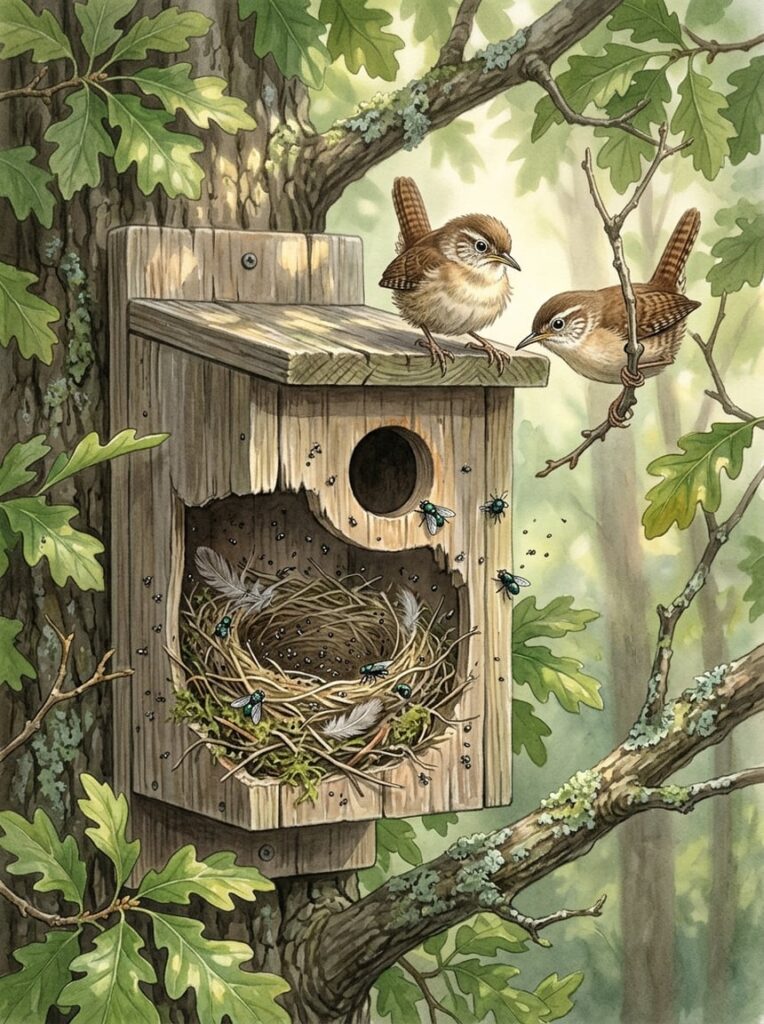
3) Nest parasite outbreak (blowflies or mites observed)

image 1

I spotted restless adults at the box, fluttering and peering in with tails flicking. You can sometimes hear faint scratching or see tiny dark specks that move when you blow on old nesting material.

Parasites like blowfly larvae or mites feed on nestlings and make parents abandon nests fast. Infested chicks get weak, featherless patches, or open wounds, and parents often give up to try again elsewhere.

Remove the nest once the box has been empty for at least two weeks to break the parasite life cycle. Wear gloves, scrub the box with a mild bleach solution, and replace fresh, dry nesting material before the next season.

4) Food scarcity nearby (insect decline after pesticide use)

An empty nest box on a tree branch in a garden with few insects and wrens flying away, showing the impact of insect decline and food scarcity.

I watch a wren dart to a bare patch of mint and come up empty, tiny wings beating faster than usual. When insects vanish after a spray, adult wrens can’t find enough caterpillars, flies, or beetles to feed nestlings. Chicks grow thin, and parents may abandon the box to search farther for food.

I check for recent pesticide use on nearby lawns and gardens. If you suspect chemicals, stop spraying and plant native, nectar- and insect-friendly plants like goldenrod, asters, and native mint.

Get our free Hummingbird Attraction Guide! Plus, we'll send you our best tips for attracting more birds to your yard.

Leave a small brush pile or a damp log to boost local insect life quickly. Move feeders and water close to the box so parents spend less time hunting and more time feeding young.

5) Human disturbance (children or lawn equipment too close)

image

I once heard a sudden clatter and watched a pair of wrens bolt from their box, wings flashing into the hedge. Loud noises, quick movements, or kids running by can make adults decide the site isn’t safe.

Wrens treat a nest as fragile real estate. Repeated footsteps, shouting, or a mower’s roar raise stress and tempt parents to abandon eggs or young. They won’t return if visits feel risky.

Move play areas and tools at least 20–30 feet from the box. Mow and trim on different days than nesting checks, and use quieter electric equipment when possible.

If children are nearby, teach them to be calm and slow around the nesting area. A simple rope or low marker helps keep curious feet and bikes at a respectful distance.

6) Brood parasitism attempt (cowbird eggs present)

A nest box on a tree branch containing small wren eggs and larger cowbird eggs, with a family of wrens nearby appearing hesitant or distressed.

I spotted a pale, speckled egg tucked among the wrens’ darker eggs and felt my stomach drop. Cowbird females sometimes slip eggs into open nests while the parents are away, and wrens may abandon a clutch when they recognize the foreign egg or when feeding demands change.

Wrens may desert because they can’t raise a much larger chick or because the odd egg signals risk. Check nests quickly with gloves and minimal disturbance; if a cowbird egg is present, remove it and wash your hands to avoid scent transfer.

Reduce cowbird access by trimming low perches and keeping open pasture away from dense shrub nesting areas. Mount nest boxes with small entrance holes and in brushy cover, where wrens prefer; this makes parasitism harder for cowbirds.

7) Nest flooding or heavy rainwater damage

A small wooden bird nest box on a tree during heavy rain, partially flooded and empty with scattered feathers inside.

I watched wet clumps of moss sag out of a box after a spring storm and knew the nest was ruined. Water flattens or soaks nesting material, chills eggs and chicks, and makes the site smell bad to adult wrens. They often slip away rather than keep sitting in a soaked, cold cup.

Check your box for leaks, warped seams, or a blocked predator hole that lets rain in. Tilt the box slightly forward and add a shallow roof overhang; replace soggy nesting material with dry, loose fibers between broods.

8) Nest site unsuitable (poor ventilation or overheating)

A small wren family flying away from a wooden nest box showing signs of poor ventilation and overheating.

I stood at the window one July afternoon and watched a wren dart from a box, then sit panting on a nearby branch. Heat or stale air in a tight box can stress adults and eggs; eggs cool or overheat faster than you think, and adults stop attending when it feels risky.

Poor airflow raises temperature and humidity. That makes chicks weak, and parents leave during the hottest hours to avoid brooding in a sauna.

Open small ventilation holes near the top and add a shaded roof or a north-facing placement to cut direct sun. Drill two tiny vents high on opposite sides and put the box under tree cover so air moves and the sun doesn’t bake the nest.

Seasonal Patterns in Backyard Nesting

A backyard scene showing an empty wooden wren nest box on a tree with seasonal elements like blossoms, falling leaves, frost, insects nearby, a small predator bird in the background, and signs of human disturbance.

I smell fresh-cut grass and hear male wrens rattling their song at dawn; timing and weather shape most nest outcomes. Spring rushes can bring busy, brief nests, while sudden cold or storms can empty a box overnight.

Spring Surges and Sudden Departures

I watch males stake out boxes in March, singing from ivy and fence tops. High mate competition and quick lay-start cycles mean females may begin then abandon if disturbed or if a stronger male wins the site.
Mechanism: rapid territorial shifts and frequent nest checks by rivals stress pairs and can prompt a female to stop nesting or move to a quieter box. Predators drawn to activity can also scare adults away.
What to do: reduce foot traffic and keep pets leashed during early morning checks. Offer a second nearby box set back 10–15 feet; many wrens move instead of giving up entirely.

Weather Shifts and Nesting Timelines

I feel the cool snap after a warm week and see adults linger at the box without entering. Sudden cold, heavy rain, or late freezes can kill eggs or make brooding unsafe, causing parents to desert a nest.
Mechanism: eggs and young need steady warmth; repeated wetting or chilling raises mortality and forces adults to cut losses and try again later. Extended storms also limit food, so parents abandon low‑yield nests.
What to do: mount boxes under eaves or add a small roof overhang to block driving rain. Keep drainage holes clear and avoid moving the box during cold snaps so parents can resume when the weather improves.

How Neighboring Wildlife Shapes Wren Behavior

A woodland scene showing an empty wren nest box on a tree surrounded by a squirrel, a bird flying above, a snake near the tree base, and insects nearby.

I often hear a rustle at dawn and watch my wrens freeze, heads cocked. Other animals near the box change how wrens feed, nest, and stay safe.

Unexpected Guests: Squirrels, Snakes, and Other Intruders

One spring morning a squirrel stuck its nose into the entrance and the male wren alarmed loudly. Wrens react to house-raiding mammals and snakes by abandoning if they feel repeats of threat or see eggs disturbed. Scent, repeated visits, and damage to nesting material make wrens uneasy.

Action steps:

  • Fit a predator guard: a 1/2–1-inch metal plate around the hole keeps teeth and claws from widening the entrance.
  • Clear brush 3–5 feet from the box to remove cover for ground predators and reduce scent trails.

Cooperative Competition With Fellow Songbirds

I listened as a robin pair mobbed a wren at the box; the wren gave up the entrance after a week of harassment. Other birds compete for cavities and defend territory; frequent fights, egg dumping, or nest dismantling can push wrens out. Wrens also leave if a dominant species repeatedly occupies nearby perches and blocks access to food.

Action steps:

  • Move the box 10–20 feet to a different perch height to reduce direct encounters with aggressive neighbors.
  • Provide separate feeders and dense low shrubs so wrens can forage and hide without crossing paths with larger songbirds.
