Your yard can feel lifeless one morning and buzzing with hummingbird traffic by June, once you plant the right flowering shrubs. Bold, tubular blooms are the main draw. Hummingbirds spot them fast, return to them reliably, and will keep working a good nectar source all season long.

The Camera Feeder We Use In Our Own Backyard
See Today's PriceSave this article for later so you don't lose it. Enter your email and I'll send it to you now—plus you'll get my favorite backyard birding tips delivered to your inbox.
Every plant on this list is easy to find at a garden center or online, and none of them require you to be an experienced gardener. You’ll get notes on size, sun needs, and hardiness for each one so you can match the right plant to your actual space. These nine shrubs attract hummingbirds fast and are simple to source and plant, even if you’ve never grown anything beyond a tomato.
1) Red Salvia (Salvia splendens)

Red salvia is the plant to start with if you’re new to hummingbird gardening. It delivers exactly what birds are looking for: bright red color, a tubular flower shape, and real nectar in every bloom. Those long flower spikes are practically built for a hovering bird.
When shopping, pick plants labeled Salvia splendens or simply “red salvia.” Expect upright mounds 12 to 24 inches tall and roughly as wide, with vivid red blooms from late spring right through the first frost. They do best in full sun to part shade with well-draining soil. In hardiness zones 8 to 10 they behave as perennials; in cooler zones, grow them as annuals or bring potted plants inside before temperatures drop.
This is a great fit for small yards, containers on a patio, and anyone who wants low-fuss color that keeps hummingbirds coming back without a lot of extra effort on your part.

DMOH Set of 3 Bright Red Salvia Plants
Check PriceGot a Fence or Arbor? Trumpet Vine Is Calling Your Name
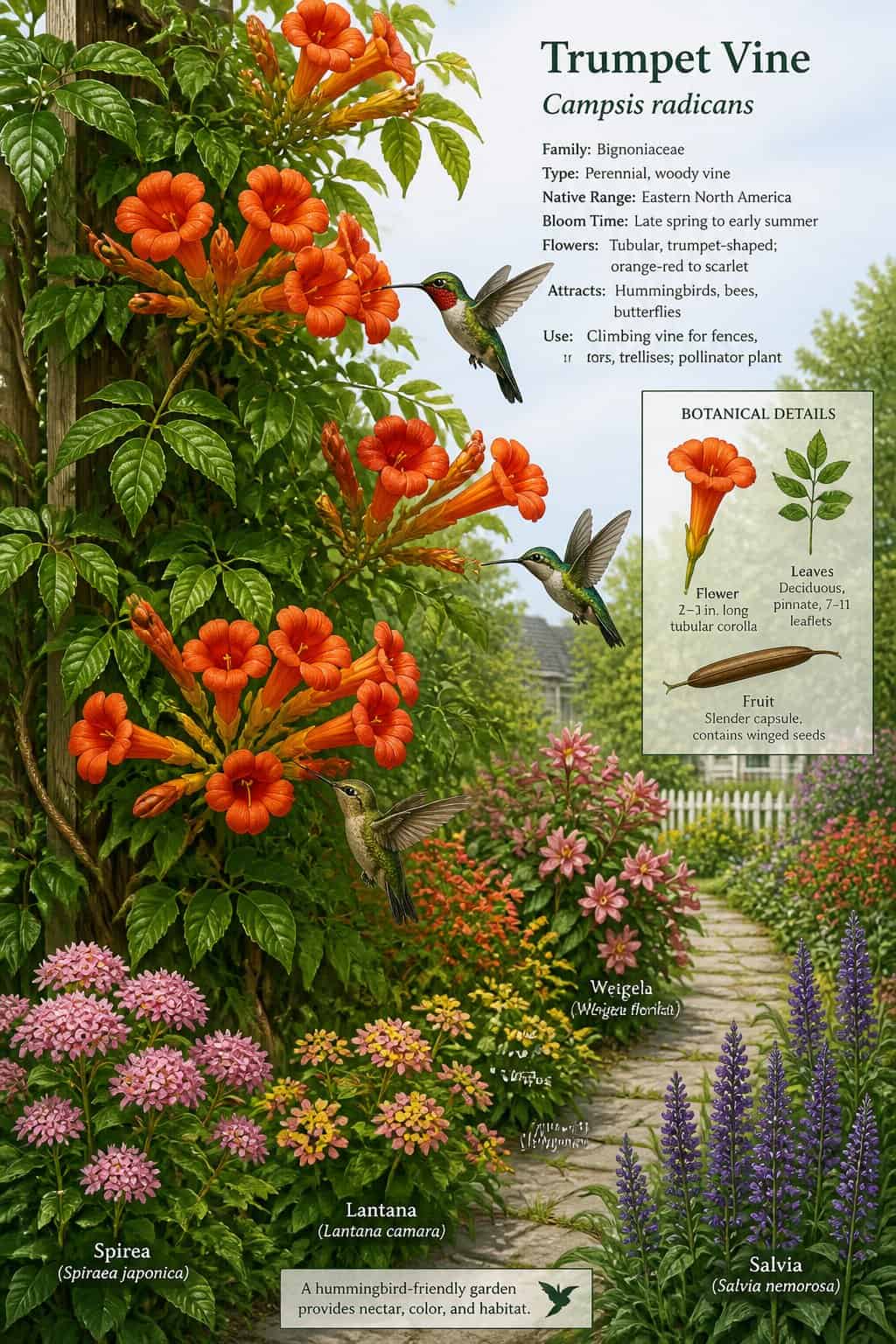
Hummingbirds love trumpet vine for its long, tube-shaped flowers and generous nectar flow. The orange-red color is visible from a real distance, which means birds will find it quickly even in a new yard. Blooms cluster at the branch tips, making them easy for birds to hover at without fighting foliage.
Look for a vigorous climbing habit when you’re shopping, and expect orange to reddish trumpet-shaped flowers at maturity. A supported vine can reach 20 to 30 feet, so give it something solid to climb. Plant in full sun to part shade in well-drained soil. It grows reliably in zones 4 through 9.
One honest note: trumpet vine earns its reputation as a spreader. It’s a great choice if you have a fence, arbor, or wall to cover and want fast results, but it’s not right for tiny yards or spots where it could crowd out other plants. Beginners can absolutely grow it. Just plan to prune it back each year and pull any suckers that come up through the lawn.
If trumpet vine feels like too much to manage, coral honeysuckle (listed below) gives you a similar tubular red-orange bloom with a much more polite growth habit. It’s the better call for smaller spaces or gardeners who don’t want to babysit a vine every season.

Pilestone Trumpet Vine - Campsis radicans 4" Pot
Check Price3) Bee Balm (Monarda didyma)

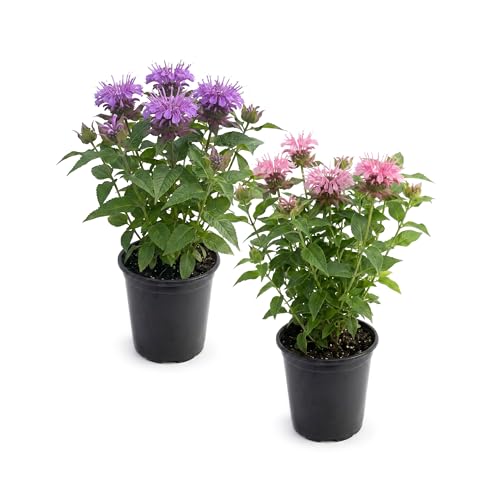
Bee balm looks a little wild in the best possible way. Those shaggy, firework-shaped blooms are actually made up of dozens of small tubular flowers packed together, and hummingbirds work through them methodically, hitting bloom after bloom in a single visit.
When shopping, look for a clumping habit that stays 2 to 4 feet tall and spreads by short roots. Red is the most hummingbird-attractive color, though pink and purple varieties will still bring in some traffic. Bee balm wants full sun to part shade and moist, well-drained soil. It grows well in USDA zones 4 through 9.
Expect to divide it every few years to keep it healthy and prevent the center of the clump from dying out. Other than that, it’s a low-demand plant that suits small to medium yards and beginner gardeners equally well. Avoid planting it in very dry spots since it genuinely needs some soil moisture to thrive.
The Three Company Live Bee Balm Plants
Check PriceNative Columbine: The Quiet Overachiever

Columbine doesn’t shout for attention, but hummingbirds notice it immediately. The red and yellow tubular flowers have long, backward-pointing spurs that are basically shaped for a hummingbird’s bill, and birds will visit bloom after bloom in quick succession.
Pick plants labeled Aquilegia canadensis or “native columbine” when you’re shopping. The nodding, bell-shaped flowers come in red, pink, and yellow, and mature plants stay modest at 1 to 2 feet tall. They spread gently by seed over time, so you’ll get more plants without doing anything. Part shade to morning sun suits them best, with well-drained soil. Hardy in zones 3 through 8.
Get our free Hummingbird Attraction Guide! Plus, we'll send you our best tips for attracting more birds to your yard.
This is one of the few plants on this list that actually prefers a shadier spot, which makes it useful for filling in areas where other sun-lovers won’t perform. Small yards, shady borders, and native plant gardens are all good fits.
“You don’t need a big yard to attract hummingbirds. You need the right plants in the right spots, and even a single tubular red bloom can pull a bird in from down the block.”

My Home Park Wild Columbine Plants, 3-Pack
Check Price5) Ruby Throat Hummingbird Trumpet (Cestrum elegans)

This one is for gardeners in mild climates who want a big, dramatic nectar producer. Cestrum elegans puts out dense clusters of deep red to crimson tubes that are practically impossible for a passing hummingbird to ignore. The color is intense and the nectar output is high, which is exactly the combination that keeps birds returning to a yard all season.
Look for plants labeled Cestrum elegans or “red cestrum” when shopping. This is an upright, multi-stem shrub that can reach 6 to 10 feet tall and 4 to 6 feet wide at maturity, so give it room. Flowers run red to deep pink and bloom from late spring into fall in warm climates. Plant in full sun to part shade with well-draining soil. Zones 9 through 11 are the sweet spot; it’s not cold-hardy and will struggle anywhere that gets hard freezes.
If you’re in a colder zone and still want to try it, a large container brought inside for winter is an option. For beginners in mild areas, though, it’s one of the most reliable hummingbird draws you can plant.

Florida Foliage Cestrum Red Live Seedlings
Check PriceCardinal Flower: Small Plant, Big Hummingbird Payoff

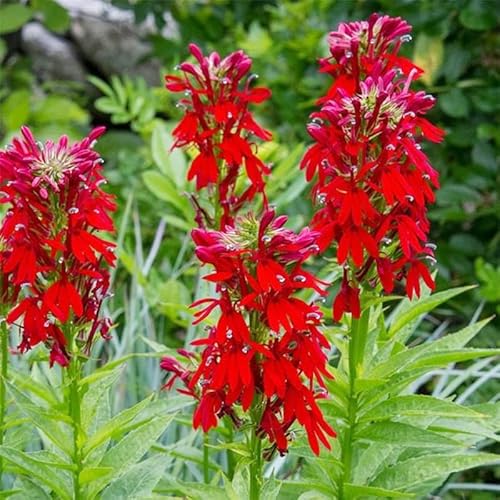
Cardinal flower is one of the most effective hummingbird plants you can put in the ground, full stop. The blooms are a specific shade of red that registers almost like a beacon to these birds, and the tall upright spikes make them easy to spot while flying.
When shopping, look for plants with upright spikes and deep red flowers. Mature plants stay 2 to 4 feet tall and roughly 1 to 2 feet wide, so this isn’t a plant that takes over. It likes part sun to full sun, wants consistently moist soil, and will actually tolerate wet spots where other plants fail. Hardy in zones 3 through 9.
The one thing to know going in: cardinal flower doesn’t love dry soil. If you have a consistently dry yard, either plan to water it regularly or pair it with a spot that stays naturally moist. For anyone who can meet that one condition, it’s a genuinely strong hummingbird magnet with very little other fussing required.
Cardinal flower (Lobelia cardinalis) evolved almost exclusively with ruby-throated hummingbirds as its pollinator. The flower’s tube length and the placement of its pollen are specifically calibrated to dust a hummingbird’s forehead during each visit. It’s one of the clearest examples of a plant and bird evolving together over thousands of years.
Generic Red Cardinal Flower Lobelia Cardinalis Seeds
Check PriceHummingbird Mint: The Name Says It All
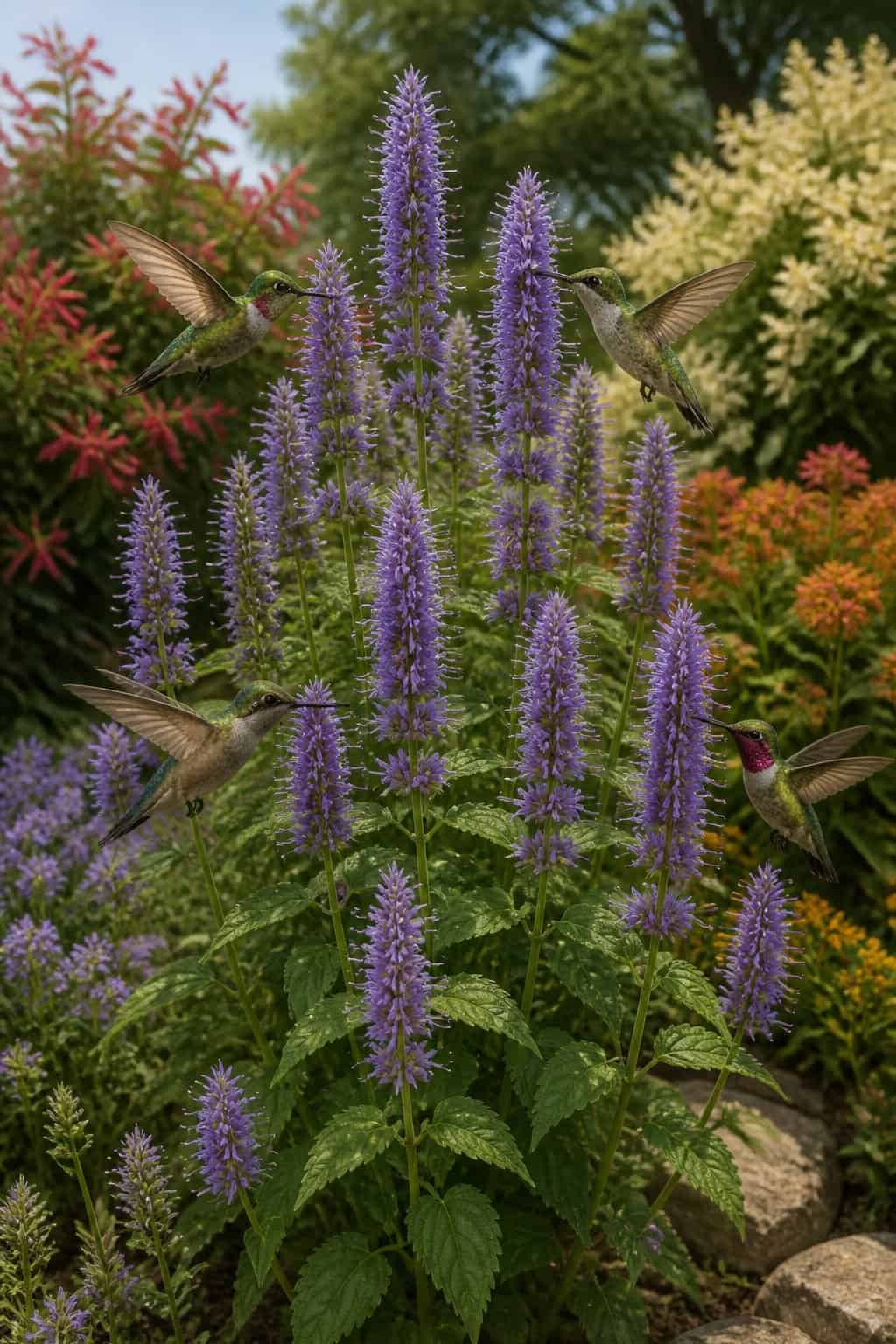
Any plant that has “hummingbird” in its common name is usually worth a look. Agastache earns it. The long tubular flowers come in purple, pink, and orange depending on the variety, and the nectar production stays strong across a long bloom period. Birds work the spikes methodically, hitting multiple blooms per visit.
Look for a clumping perennial that grows 2 to 4 feet tall and wide when shopping. Cultivars like ‘Blue Fortune’ and ‘Aphrodite’ are reliable and widely available. Full sun and well-drained soil are non-negotiable; this plant genuinely does not like wet feet. Once it’s established it handles drought reasonably well. Hardiness falls roughly in zones 5 through 10 depending on the variety.
Hummingbird mint suits pollinator beds and small yards nicely. Cut it back hard in early spring and it bounces back with fresh growth. Bees love it as much as hummingbirds do, which is a bonus if you’re trying to build a more pollinator-friendly yard overall.
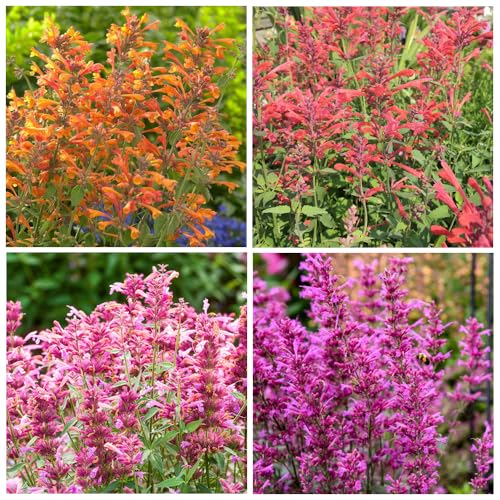
Carpet Creeping Agastache Hummingbird Mint Seeds
Check Price8) Coral Honeysuckle (Lonicera sempervirens)

Coral honeysuckle is the well-behaved alternative to trumpet vine. You get the same red-to-coral tubular flowers that hummingbirds are drawn to, but without the aggressive spreading habit that makes trumpet vine a handful in smaller yards. It’s one of the plants I’d recommend most often to beginners looking for a reliable, manageable nectar source.
When shopping, look for either a twining vine or compact shrub form. Flowers range from red to coral, with some cultivars offering pink or softer yellow tones. Vines can reach 6 to 20 feet with support; shrub forms stay 3 to 6 feet. Plant in full sun to part shade in well-drained soil. Hardy in USDA zones 6 through 10.
A trellis, fence, or mailbox post is all you need to give it something to climb. It blooms from late spring into summer, which lines up well with peak hummingbird activity in most of the country. Easy to find, easy to grow, and consistently effective.

Florida Foliage Coral Honeysuckle Plants
Check PriceScarlet Sage: The Self-Sufficient One

Scarlet sage is the plant that keeps giving without you doing much to help it along. Hummingbirds love the bright red tubular flowers and the open cluster arrangement, which lets them hover and sip without fighting dense foliage. The flower shape fits their bills well and the nectar is reliably accessible.
When shopping, look for plants listed as Salvia coccinea or “tropical sage.” Expect upright or mounding habits 1 to 3 feet tall and roughly as wide. Blooms run scarlet to coral, and some varieties offer white. Full sun to part shade works, with a preference for well-drained soil. Officially hardy in zones 7 through 11, though it’s commonly grown as an annual farther north.
Here’s the part that makes it especially good for beginners: scarlet sage reseeds freely. Plants that drop seed in fall come back as volunteers the following spring, which means your yard can keep a steady population of this plant going with almost no effort from you. Small yards and container gardens are both fair game.
One yard won’t draw every species, but the right combination of red, tubular, and reliably nectar-rich will pull in whatever hummingbirds are already moving through your area. Plant even two or three of these and you’ll start to notice the difference by early summer.

My Home Park Scarlet Sage 3 Live Plants
Check Price📷 Show us your feeder setup! Share a few photos of your feeders and you might be featured on Wild Bird Scoop. Share your setup →