Many hardy annuals and biennials can be sown in fall so they sprout, sit through winter and bloom the next spring or summer. Success depends on your winter. Some flowers overwinter only in mild zones, and others need a late-winter or spring start in cold regions.

The Camera Feeder We Use In Our Own Backyard
See Today's PriceEach entry says where fall sowing is recommended, by zone or region, and what to do instead where it isn’t. Fall sowing is not automatically better than spring sowing everywhere.
Save this article for later so you don't lose it. Enter your email and I'll send it to you now—plus you'll get my favorite backyard birding tips delivered to your inbox.
1. Corn Poppy (Papaver rhoeas)
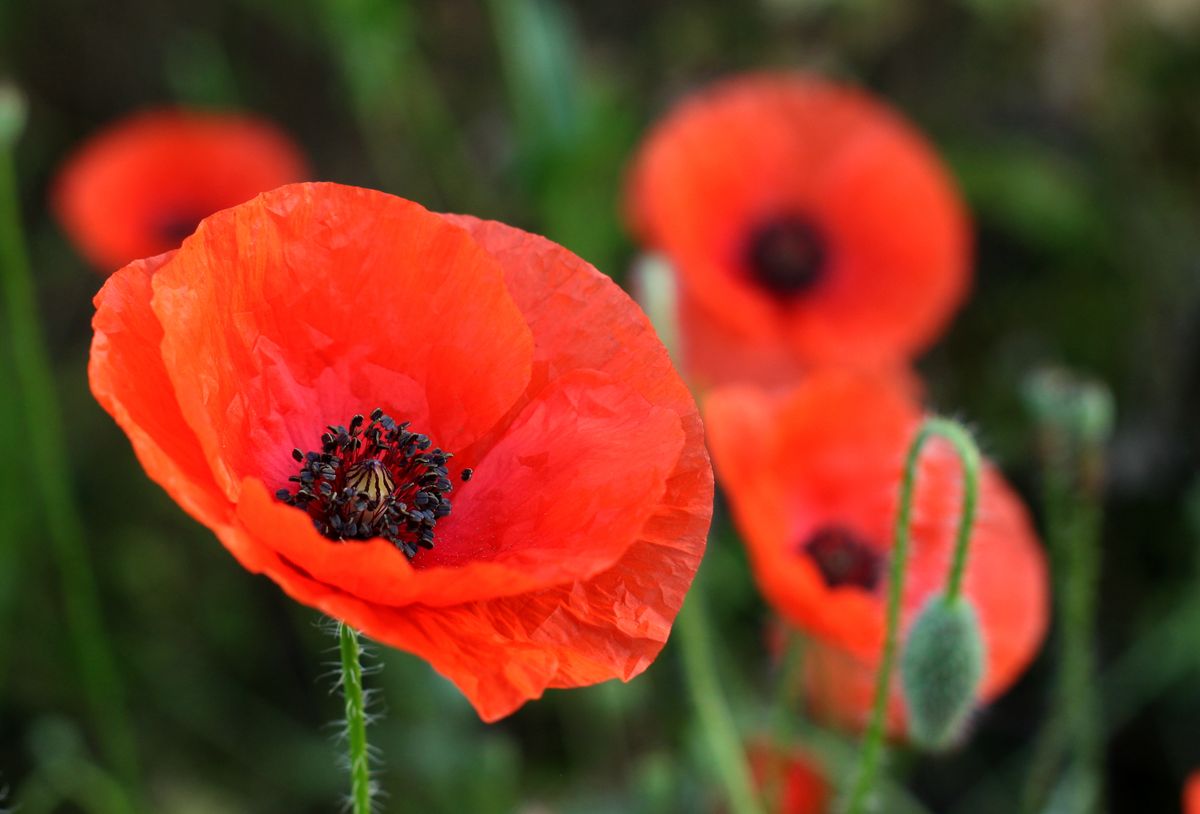
Corn poppy is a hardy annual that grows best from seed scattered where it will bloom. It forms a taproot and does not move well. Pick a spot in full sun with well-drained soil. It self-sows freely and can escape into nearby areas; NC State Extension describes it as weedy, so deadhead if you don’t want volunteers.
Timing: in North Carolina, NC State Extension’s Lee County office suggests sowing within about a week of Veterans Day (Nov. 11), once cool weather reliably arrives. The seeds get a natural chill over winter, seedlings show up in February or March and flowers follow in May. UGA Extension lists Shirley poppy, a strain of corn poppy, among annuals to sow in fall in Georgia and notes that seed is usually sown in late fall or early spring. Where winters are harsh, sow in spring as soon as the soil can be worked.
2. Sweet Pea (Lathyrus odoratus)
Sweet peas are cool-season climbers that fade once summer heat arrives, so an early start makes a big difference. Give them a trellis, full sun and rich, well-drained soil. Soaking the seed overnight can speed germination.
Timing: fall sowing works only where winters are mild, roughly zone 8 and warmer. The seedlings overwinter and bloom in late winter and spring. In colder zones, sow in late winter or early spring as soon as the soil can be worked. The seeds are poisonous if eaten, so keep them away from children and pets, and don’t plant sweet peas where they could be mixed up with edible peas.
3. Cornflower (Centaurea cyanus)

Cornflower, also called bachelor’s button, is a hardy annual with blue, pink or white flowers that bees visit often. It grows in full sun in average, well-drained soil and does not need rich ground. NC State Extension lists it as non-toxic to cats, dogs and horses.
Timing: NC State Extension says it can be direct-sown outdoors in fall only in mild-winter climates. Elsewhere, start seed indoors 6 to 8 weeks before your last frost. In the UK, the Royal Horticultural Society lists it among hardy annuals to sow in autumn for earlier, sturdier plants.
Invasive watch: cornflower reseeds and naturalizes easily, and the Georgia Exotic Pest Plant Council lists it as invasive. Deadhead before seed sets, and skip it next to meadows or natural areas.
4. Larkspur (Consolida ajacis)
Larkspur produces tall spikes of blue, pink or white flowers in late spring and is a favorite for cutting. It is the annual relative of delphinium and is often sold as “annual delphinium.” True perennial delphinium is a different plant that is started in spring and takes more than a year to flower, so it isn’t on this list. Larkspur prefers full sun and well-drained soil and has a taproot, so sow it where it will grow. The seed will not germinate if the soil is warmer than about 55°F.
Get our free Hummingbird Attraction Guide! Plus, we'll send you our best tips for attracting more birds to your yard.
Timing: Johnny’s Selected Seeds says fall sowing is possible in about zone 5b and warmer for bloom the next spring. It cautions against fall sowing in the Pacific Northwest, where fall rain can rot the seed. UF/IFAS Extension says it is grown as a winter annual in Florida, with seeds germinating in winter. In colder zones, sow in very early spring; chilling the seed for about a week first helps it germinate.
All parts of the plant, including the seeds, are poisonous.
5. Love-in-a-Mist (Nigella damascena)
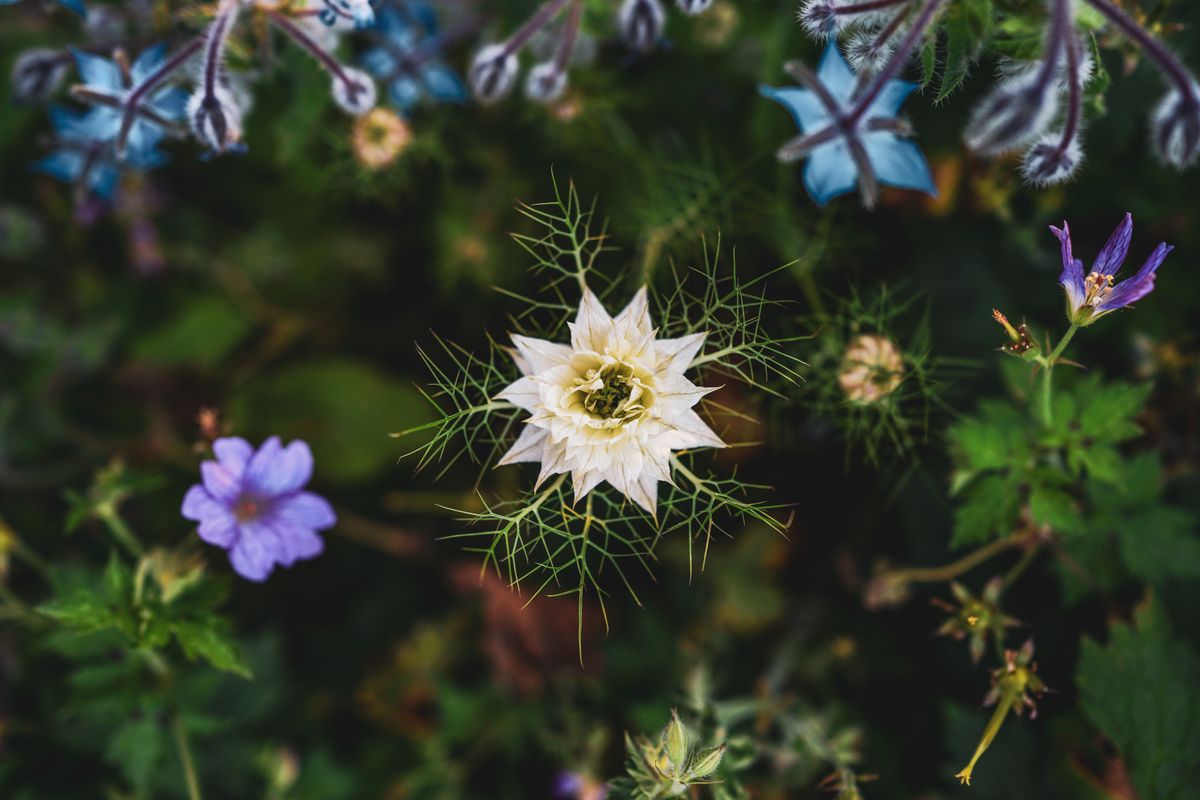
Love-in-a-mist has blue, white or pink flowers set in feathery foliage, followed by inflated seed pods that are good in dried arrangements. It grows in full sun in average, well-drained soil. It has a long taproot and does not transplant well, so sow it where it will grow. It self-sows freely.
Timing: in North Carolina, NC State Extension says fall sowing usually works better than spring there and that young seedlings are winter-hardy. University of Wisconsin Extension notes that summer or fall sowing works in many areas, giving earlier, larger plants that also finish earlier. In cold-winter states such as Wisconsin and Illinois, the extension services advise sowing directly in the garden as soon as the soil can be worked in early spring. Where summers stay cool, repeat sowings every 3 to 4 weeks until midsummer stretch the bloom season.
6. Foxglove (Digitalis purpurea)

Common foxglove is a biennial. It makes a leafy rosette the first season and sends up flower spikes the following year. It is hardy in about zones 4 to 9 and likes part shade and moist, well-drained soil. Surface-sow the fine seed, since it needs light to germinate.
Timing: University of Wisconsin Extension recommends direct sowing in late summer where the plants are to grow, for bloom the following year. Clemson Extension, writing for South Carolina, says to sow in fall for flowers the next spring. A few varieties bloom the first year from seed and can be grown as annuals.
Every part of foxglove is poisonous if eaten, and the leaves can irritate sensitive skin, so skip it where children or pets graze on plants. It self-sows aggressively and has escaped into wild areas in the Pacific Northwest and California, where it is listed as invasive. Gardeners in those states should deadhead before seed sets or choose another plant.
7. Pot Marigold (Calendula officinalis)
Calendula is a cool-season annual with orange or yellow daisy flowers and edible petals, as long as they have not been treated with pesticides. It grows in full sun in average, well-drained soil and blooms best in mild weather, slowing down in summer heat. UF/IFAS lists it as not known to be invasive.
Timing: UF/IFAS Extension says that in zones 9B through 11 it is generally planted in fall for winter and spring color. UGA Extension lists calendula among annuals to sow in fall in Georgia and notes that it can take a light frost. In colder zones, NC State Extension advises sowing seed outdoors just before the last frost date. Deadheading keeps new buds coming.
8. Snapdragon (Antirrhinum majus)
Snapdragons are cool-season plants that grow in full sun and moist, well-drained soil. The tiny seed needs light to germinate, so many gardeners start seed indoors or buy young transplants. NC State Extension lists them as non-toxic to cats, dogs and horses.
Timing: UGA Extension lists snapdragon among annuals to sow in fall in Georgia. Clemson Extension recommends fall planting in South Carolina, where plants bloom through fall, rest in the coldest part of winter and bloom again the next spring. UF/IFAS says to plant in fall for winter color in zones 9A to 11B, and plants sometimes flower through winter in zone 8B. In colder zones, where plants die back in winter, treat them as spring-planted annuals. Cutting off spent spikes encourages more flowers.
9. Hollyhock (Alcea rosea)
Hollyhocks are biennials or short-lived perennials that make tall spikes of single or double flowers along a fence or wall. They need full sun and well-drained soil, and NC State Extension lists them for zones 5 to 9 and as non-toxic to cats, dogs and horses.
Timing: old-fashioned hollyhocks spend their first year as a leafy rosette and flower in the second. University of Wisconsin Extension says to direct-sow in spring or late summer for flowering plants the next year, so a late-summer sowing loses nothing in cold-winter areas. Some newer varieties flower the first year if started early. Plants self-sow, so a patch tends to keep itself going.
Rust is the main problem. Space plants for air flow, remove spotted leaves, and clear out debris after bloom, since the disease overwinters on it.
📷 Show us your feeder setup! Share a few photos of your feeders and you might be featured on Wild Bird Scoop. Share your setup →