


I remember the first time I heard that rich, flute-like whistling dropping down from the high canopy. I grabbed my binoculars and scanned the newly budded oak trees, hoping for a flash of brilliant orange and deep black.

The Camera Feeder We Use In Our Own Backyard
See Today's PriceInstead of visiting my carefully prepared feeding station, the Baltimore Oriole swooped right past my fence and landed squarely in the yard next door.
Save this article for later so you don't lose it. Enter your email and I'll send it to you now—plus you'll get my favorite backyard birding tips delivered to your inbox.
It is a shared, familiar frustration among backyard birders. You put out the right food, you buy the right feeders, but the birds choose the neighbor’s yard anyway.
Why do these stunning migrants bypass one space to claim another?
The Secret is in the Schedule
The one thing that neighbor did differently comes down to a single concept: timing. Baltimore Orioles are creatures of habit and urgency.
When they arrive from their long spring migration, they are exhausted and depleted. They do not have the energy to browse the neighborhood for new restaurants.
They lock onto the very first reliable food source they find.
If you wait until you hear their song to hang your feeders, you are already two weeks too late. To win the loyalty of an oriole, your feeders must be waiting for them before they even arrive.
In many parts of North America, this means setting up your oriole station in mid-to-late April, well before the trees have fully leafed out.
Creating a Visual Magnet
Orioles forage high in the trees, meaning they need a strong visual cue to draw them down to eye level. The color orange is an irresistible beacon.
While specialized orange-colored feeders help, nothing works quite as well as the real thing. Slicing a fresh orange in half and skewering it on a feeder branch provides both a visual flag and a sweet, hydrating meal.

Cauff Oriole 6-Inch Orange Jelly Feeder
Check PriceThe Oriole Menu and Safe Feeding
Even better, attracting a Baltimore oriole to your yard is simple. Just keep some ripe fruit and jelly available for this bird to feed on.
Get our free Hummingbird Attraction Guide! Plus, we'll send you our best tips for attracting more birds to your yard.
These sugary treats provide much-needed energy, while the insects that the oriole eats give it proper nutrition. Sure, you can buy sugar nectar–or you can make your own nectar for Oriole with sugar and water!
That means that a nectar-only feeder is one of the most cost-effective ways to feed orioles. Unlike traditional birdseed feeders, oriole feeders incorporate features like dishes for jelly, stakes for skewering oranges, and a sturdy ledge for the birds to stand on while eating.
There are, however, specialty oriole feeders you can get to serve them sugar water mixtures directly. They also love orange slices and jelly, so you don’t have to spend money on expensive bird food.
Whatever sweets you leave for the orioles, remember to change and clean everything frequently to avoid dangerous mold and bacteria.
Once you have their attention, you need to offer the right calories. After a long flight, orioles crave sugar.
A simple nectar solution of four parts water to one part plain white sugar is perfect. Please skip the artificial red dye, as it is unnecessary and potentially harmful.
Grape jelly is another famous oriole favorite, but it requires a gentle touch. It is crucial to offer jelly in very small, shallow dishes.
A single tablespoon is plenty. If you fill a large bowl with jelly, these active birds can easily brush against it.
Sticky jelly ruins the waterproofing on their feathers, making it difficult for them to fly or stay warm.
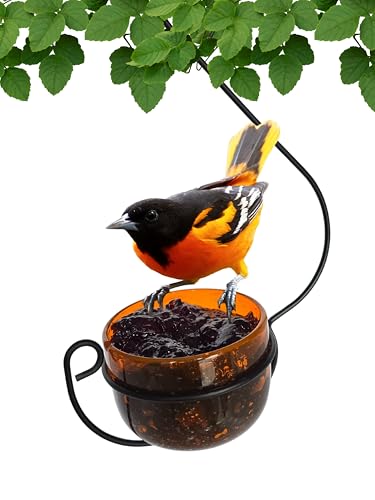
Backyard Essentials Oriole Jelly Feeder
Check PriceFinding the Perfect Feeder Placement
Technically, you can hang an oriole feeder just about anywhere, and you might end up with some visiting birds. If you want to increase your chances of seeing orioles, you should hang the feeders based on oriole behaviors.
Orioles are more likely to prefer a feeder placed at least seven feet high and near the trees. This may only attract the bravest orioles willing to go into areas that don’t feel as secure.
Understanding Seasonal Diet Shifts
If your orioles suddenly vanish in June, do not take it personally. As the season progresses, an oriole’s dietary needs change drastically.
The sweet treats that attract them in May will not sustain their growing nestlings in June.
| Season | Primary Diet | What to Offer in Your Yard |
|---|---|---|
| Spring Migration (April to May) | High energy carbohydrates | Orange halves, clear nectar, small amounts of grape jelly |
| Summer Breeding (June to July) | Protein for growing nestlings | Mealworms, suet, native plants that host caterpillars (stop offering jelly) |
| Late Summer (August to September) | Mixed diet for fall migration prep | Dark berries, native fruits, clear nectar |
Your Yard Prep Checklist
Now that we’ve looked at some of my favorite feeders, from the practical to the beautiful, let’s talk a bit more about orioles, oriole feeders, and what you should know to bring these colorful beauties to your yard. Baltimore orioles take their sharp, closed bill and stab it into soft fruits and berries.
Then, they open their mouths and access the juices inside the fruit. You can attract Baltimore orioles to your yard with sugary foods like cut oranges on backyard feeders.
Be patient. It can take some time for birds to find your yard and start using your backyard bird feeders.
So, don’t get discouraged if you don’t see any birds right away. Just keep your feeders stocked with food, and eventually, the birds will come.
The Ultimate Oriole Welcome Station
- Track the migration: Check local birding reports and hang feeders one to two weeks before the expected arrival date in your specific region.
- Prepare the nectar: Boil four parts water to one part plain white sugar, let it cool completely, and fill your feeders.
- Slice the fruit: Cut fresh oranges in half and skewer them securely on feeder spikes so the juicy flesh faces upward.
- Portion the jelly: Place exactly one tablespoon of grape jelly in a shallow dish to keep feathers clean and safe.
- Choose the right spot: Hang the oriole station in a quiet, visible area at least ten feet away from your busy seed feeders.
Birding is a daily adventure of observation and adjustment. By getting your feeders out early and offering safe, appropriate foods, you are sending a clear invitation to the canopy above.
Keep your binoculars close by, listen for that beautiful whistling song, and get ready to welcome the brightest birds of the season into your own backyard.
What Baltimore orioles take at the feeder
| Spec | What our writers say |
|---|---|
| Fruit | Ripe fruit, cut oranges, red and black grapes, cherries |
| Jelly | Grape or dark fruit jelly in a dish |
| Nectar | Homemade sugar water in an oriole or nectar feeder |
| Protein | Insects give orioles proper nutrition alongside the sweets |
| Feeder parts | Jelly dishes, stakes for oranges, a sturdy ledge to stand on |
| Height | At least seven feet high and near the trees |
| Cleaning | Change and clean sweets often to avoid mold and bacteria |
| Patience | Keep feeders stocked; birds can take time to find the yard |
📷 Show us your feeder setup! Share a few photos of your feeders and you might be featured on Wild Bird Scoop. Share your setup →





