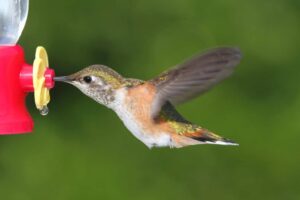
July brings a sudden explosion of green to your backyard. You might walk outside one morning and find a massive, leafy plant taking over a corner of your yard. Your first instinct is probably to grab your gardening gloves and pull them up. Before you do that, take a closer look. That aggressive-looking plant might be Spotted Jewelweed (Impatiens capensis). While it grows fast and looks like a weed, it is actually a native wildflower that provides a crucial food source for your hummingbirds and bees.

The Camera Feeder We Use In Our Own Backyard
See Today's PriceWhy It Looks Like a Threat
Spotted Jewelweed is a type of plant that shows up uninvited. It likes shady areas in your yard and grows really quickly. Its stems are a translucent, pale green color. It grows quickly and spreads throughout the area, which is why it is often mistaken for an invasive plant. If you are a first-time pollinator garden planter, one of the left-behind chairs will probably stall you. You like a tidy yard, and the plant looks as though it will take over the area. But the rapid growth of the plant is also the reason why it is so valuable for your local wildlife.
Save this article for later so you don't lose it. Enter your email and I'll send it to you now—plus you'll get my favorite backyard birding tips delivered to your inbox.
The Mid-Summer Nectar Gap
Most early spring flowers have been gone by July, which leaves a gap in mid-summer sources of nectar. Just when they need energy the most, sources of natural food decrease for hummingbirds and native bees. Spotted Jewelweed helps fill this gap.
The plant has bright orange, trumpet-shaped, and dangling flowers. They are specially designed for the hummingbird’s beak. The plant also contains a lot of nectar that will energize the birds on hot days. Jewelweed is a great way to help your local hummingbirds without the cost of buying extra feeders.
Get our free Hummingbird Attraction Guide! Plus, we'll send you our best tips for attracting more birds to your yard.

FEED GARDEN Glass Hummingbird Feeder 16oz
Check PriceIdentification Guide: Jewelweed vs. Invasive Lookalikes
Make sure that this newly sprouted and fast-growing plant in your yard is Jewelweed. It is important to tell this helpful native plant apart from an invasive species like Japanese Knotweed. Japanese Knotweed is highly destructive, and you should remove it immediately. Look at this list to identify what is growing in your yard.
| Plant Feature | Spotted Jewelweed (Helpful Native) | Japanese Knotweed (Harmful Invasive) |
|---|---|---|
| Stem Appearance | Pale green, watery, translucent, and easily crushed between your fingers. | Hollow, bamboo-like, tough, and often speckled with red or purple. |
| Flower Shape | Bright orange, dangling, and trumpet-shaped with reddish-brown spots. | Tiny, creamy white flowers that grow in upright, fuzzy-looking spikes. |
| Root System | Very shallow. The entire plant pulls up effortlessly with a gentle tug. | Deep, thick, woody rhizomes that are nearly impossible to pull by hand. |
Low-Stress Management Tips
You don’t need to let Jewelweed take over your entire garden to help the birds. It can be easily managed. Since Jewelweed has very shallow roots, you can just pull out individual plants by hand if they are creeping into spots you don’t want them. No heavy equipment or toxic chemicals are necessary.
Here is a simple way to get started on yard management:
- Pick a certain zone for uncontrolled growth. You might want to let Jewelweed grow wild in a back corner or along a fence line, as long as it doesn’t disrupt your other plants.
- Trim the edges. You should come by weekly or bi-weekly to pull any new sprouts that cross over your boundary line.
- Don’t cut the blooms! Please leave the flowering stems until the end of August so that the hummingbirds have an easy food source.
- Leave a few plants alone, and they’ll reseed themselves for next year. Jewelweed is an annual, which means it dies in winter and drops its seeds at the end of summer.
Embrace a Little Wildness
Your yard can be as simple or as complex as you want when it comes to inviting birds. You do not need to go out and purchase expensive landscaping tools or create a specific purpose-designed lawn. There is no need to go to your local garden center and buy a purpose-designed bird-welcoming flower. You can simply let nature take its course and leave an area untamed. If you let Spotted Jewelweed grow, visitors will find a source of nectar.
📷 Show us your feeder setup! Share a few photos of your feeders and you might be featured on Wild Bird Scoop. Share your setup →