


A bouncy flight call came from a group of American Goldfinches this morning as a flock settled on my tube feeder. One male caught my eye as he seemed like an unkempt quilt patch of dull olive and bright yellow.

Bring Hummingbirds Right To Your Window!
Check PriceThis strange and patchy stage is one of the signs of spring I look forward to most. For those of you who have been observing the feeders in your backyard, you may have been asking yourselves, why do male American Goldfinches have such an extreme process of getting dressed and when will that bright yellow color finish the transformation?
Save this article for later so you don't lose it. Enter your email and I'll send it to you now—plus you'll get my favorite backyard birding tips delivered to your inbox.
Let’s take a look at the amazing science of spring molt and ways you can assist them.
The Magic Behind the Yellow Plumage
From a distance, identifying male and female goldfinches in winter can be challenging as they dress in the same dull gray and olive costume. They wear muted plumage that perfectly allows them to blend in to their environment and elude predators such as sharp-shinned hawks.
However, as the days continue to lengthen, the males go through an entire change. This is known as a pre-alternate molt. They replace their old, boring body feathers with new ones for the upcoming breeding season.
This brilliant yellow suit serves a very straightforward purpose. The male aims to attract a female. A brighter, more vivid yellow indicates to prospective partners that the male is fit, well-nourished, and able to support the rearing of a robust brood of chicks.
Goldfinches cannot produce yellow pigment on their own. That stunning color comes entirely from carotenoids found in their diet. The seeds they eat contain pigments that are deposited directly into their growing feathers. A well-fed finch is quite literally a brighter finch.
When Does the Yellow Peak in Your Yard?
It’s not a single-night event. It requires weeks of focus and the use of massive amounts of energy to replace thousands of small feathers.
Get our free Hummingbird Attraction Guide! Plus, we'll send you our best tips for attracting more birds to your yard.

Expect to see their first patchy yellow spots around late March or early April. Males can look a bit scruffy at this time. They may have a bright yellow chest and a dull brown head, or the other way around.
Typically the first or second week of May exhibits the most dramatic changes in the adult male populations. In mid-May, most adult males will be complete in their molt. With a full assemblage of their bright yellow bodies, black forehead caps, and black wings with white wing bars, they are quite a sight.
Why Do They Molt So Late?
Have you noticed goldfinches running late compared to robins and bluebirds? While most backyard birds nest by April, American Goldfinches are late bloomers.
The nesting period is waited on until late June, July, and even August. Their young are fed almost entirely by seeds, and adults are strict vegetarians. Nesting is delayed so they can use native thistles, milkweed, and various other seed-bearing plants which are all in full bloom. The fresh seeds are fed to the nestlings. The down of the plants is used to line the nests.
How to Fuel Their Feather Growth
Goldfinches will need a lot of energy to replace their feathers because it is an exhausting process. In April and May, goldfinches require a lot of nutrition during the patchy phase. You can make your yard as a fueling station for them.
| Feeder Offering | Why It Helps During Molt |
|---|---|
| Fresh Nyjer (Thistle) Seed | High in oil and fat, providing dense calories for feather production. Ensure it is fresh, as Nyjer dries out quickly. |
| Sunflower Hearts or Chips | Offers maximum nutrition with zero effort. The birds do not have to waste energy cracking shells. |
| Clean Bird Baths | Molting birds need fresh water to bathe and preen their new feathers into perfect shape. |
A Quick Feeder Maintenance Checklist
Goldfinches are a social species and can quickly spread disease at contaminated feeders. Protect them during their sensitive molting stage by doing the following:
- Empty your tube feeders completely before refilling them.
- Check the bottom ports for clumped or moldy seed, especially after spring rain showers.
- Wash feeders every two weeks with a mild bleach solution (one part bleach to nine parts water), rinsing thoroughly.
- Rake up discarded seed hulls from the ground below the feeders to prevent rot.
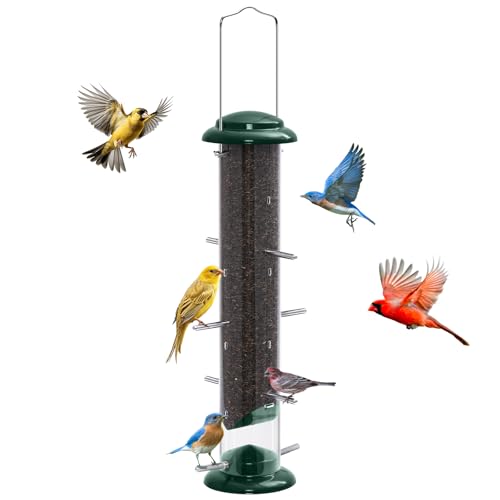
FEED GARDEN Finch Nyjer Seed Feeder
Check PriceFrequently Asked Questions
Do female goldfinches turn yellow, too?
Yes, females also molt in the spring, but their change is much more subtle. They replace their dull winter gray with a soft, muted olive-yellow. They do not gain the striking black cap or the bright coloration of the males.
Did my goldfinches leave for the winter and come back?
That is most likely incorrect. Although some northern populations migrate short distances, a good number of the American Goldfinches remain in the same location for the entire year. People tend to overlook them at their feeders during the winter because they shed their bright yellow plumage in the fall. Your winter flock often consists of this sudden burst of yellow in May.
Observe your feeders this week! One of the greatest joys of seeing birds in your backyard is watching the daily process of a scraggly, patchy olive change to a bright, sunlit yellow.




