


Perennials are plants that survive through the winter and return year after year. While annuals need to be replanted every year, which opens up opportunities for cold-weather gardeners since plants just need to survive the summer, perennials need to be hardy enough for the winter months in cold climates.

The Camera Feeder We Use In Our Own Backyard
See Today's PriceSome of these perennials even succeed when temperatures drop, retaining their leaves or providing winter food for birds and other wildlife. If you’re thinking about designing your gardens for year-round birdwatching, perennials may be the way to go.
Save this article for later so you don't lose it. Enter your email and I'll send it to you now—plus you'll get my favorite backyard birding tips delivered to your inbox.
Key Takeaways
- Perennials for all seasons: Perennials come back year after year and can survive winter, making them perfect for a garden that supports birds and wildlife year-round. Unlike annuals, they don’t need to be replanted each year.
- Bird-friendly native plants: Native perennials like beebalm and sunflowers are great for attracting birds. Nectar-rich flowers attract hummingbirds, while plants that produce seeds and berries are perfect for other birds. Native plants also boost insect populations, which many birds rely on as a food source.
- Creating a balanced ecosystem: A thriving bird-friendly garden needs more than just feeders. Native perennials provide food, nesting sites, and shelter for birds. Plants like bluestem grasses offer seeds for birds, and fruit-bearing plants support a variety of bird species. Check local resources to find the best plants for your area.
What Kind of Birds Are You Looking To Attract?
Perennials that produce nectar-rich flowers are ideal for attracting hummingbirds, while perennials that produce fruit or grow thick foliage are ideal for other birds that eat the fruit or need to hide out from predators.
Native plants will also increase the amount of insects in your yard to feed the birds. This may sound not exactly ideal, but not all insects bite like mosquitoes, and insects are imperative in allowing many birds to thrive.
Bird seed doesn’t do the trick for many birds. For example, even a hummingbird’s diet is mostly insects, despite a reputation as feeding on flower nectar and sugar water.
With this in mind, fostering a lively backyard depends not just on feeders and bird baths, but on an ecosystem that works at all levels.
But flower nectar helps too…
Hummingbirds
Beebalm

Several beebalm species are native to North America, including scarlet beebalm and wild bergamot.
Scarlet beebalm thrives in Eastern North America as far north as Canada and as far south as Georgia, while wild bergamot’s range stretches west into the Rocky Mountain states and across much of the eastern U.S.
These plants produce numerous flowers from which hummingbirds love to feed while adding some color and beauty to your yard.
Columbine

Columbine’s drooping red and yellow flowers look like they were made precisely for hummingbirds, and their looks are not deceiving. Columbine is frequently thought of as one of the best types of flowers for North American hummers.
Various columbine species are native across North America. Western gardeners can turn to western columbine across the entire western region or shooting star columbine in the Southwest, while red columbine works east of the Rockies.
Native Honeysuckles

While I’ll always advocate for native plants, honeysuckles deserve an extra mention in that regard, as there are invasive species of honeysuckle that can really wreak havoc on an ecosystem, such as Japanese honeysuckle.
Since its introduction to North America about a century and a half ago, Japanese honeysuckle has become an unfortunate mainstay, as it can tangle itself around other plants, killing them.
Consider instead a native variety of honeysuckle like coral honeysuckle, an eastern North American species that’s no less beautiful, with red and yellow flowers that are sure to attract hummingbirds.
Northwestern gardeners can consider western trumpet honeysuckle.
Get our free Hummingbird Attraction Guide! Plus, we'll send you our best tips for attracting more birds to your yard.
Butterfly Weed

Butterfly weed is a type of milkweed, which is the only host plant that monarch butterflies can lay their eggs on and feed their caterpillars, but that doesn’t mean that milkweed is only for the butterflies.
Certain milkweed species like butterfly weed have flowers that can provide food for hummingbirds. Birds don’t eat monarchs due to a toxin that they store, so more monarchs won’t necessarily mean more food for birds, but more wildlife is always a good thing.
Cardinal Flower

Outside the northwestern four states, as well as Wyoming and the Dakotas, cardinal flower is another one that can bring some color to your native plant gardens, with brilliant red flowers.
Cardinal flower does require quite a bit of moisture, so consider planting them near a pond or other wet area, or give them plenty of water.
To Attract Other Birds Besides Hummingbirds
Sunflowers

It’s no secret that backyard birds love sunflower seeds, so you can’t go wrong providing sunflowers directly to the birds, and they look good too.
Not all sunflowers are perennials in all climates, so do some research based on your location. But there are dozens of native sunflowers in North America, and some will do better in certain climates.
You can also plant annual sunflowers in more locations, you’ll just have to plant again each spring.
Coneflower

Butterflies love coneflower, and birds will feed on this beautiful purple flower’s seeds, including finches and chickadees.
Both prairie coneflower and purple coneflower are native species in the eastern United States. Western coneflower doesn’t have the colorful pedals of the two aforementioned plants, but it still produces seeds.
Black-Eyed Susans

American goldfinches are among the birds that love to eat black-eyed Susan seeds.
These flowers thrive in open sunny prairies and are native across much of the midwestern and eastern United States.
Holly

You likely associate holly with Christmas, but plant one in your backyard, and you may start associating it with the birds it feeds in no time.
Holly berries, while toxic to humans and pets, are enjoyed by fruit-eating birds like waxwings or catbirds, especially in months when food is scarce. Hollies are also evergreen, so birds can use them for cover year-round.
Virginia Creeper

Virginia creeper, a member of the grape family, provides winter food for many birds as well, though humans must know they should not eat them, as they are very toxic, and may be fatal if eaten, according to the Lady Bird Johnson Wildflower Center.
Even the leaves may irritate the skin if touched, so if you have kids or pets in your yard, Virginia creeper may not be for you.
Bayberry

Northern bayberry, swamp barberry, and southern bayberry are three eastern shrubs that produce fruit that can last into the winter months to feed the birds as well.
Humans should not eat bayberries, as the wax on the berries is toxic, according to the USDA.
Other Berries or Fruits

These are not the only fruits to feed the birds — far from it. Dogwood, crabapple or other fruit trees, raspberries, and blueberries can all feed waxwings, woodpeckers, and thrushes, among others. If it produces fruit, there’s a good chance that some sort of wildlife will benefit from it.
Bluestem and Other Grasses
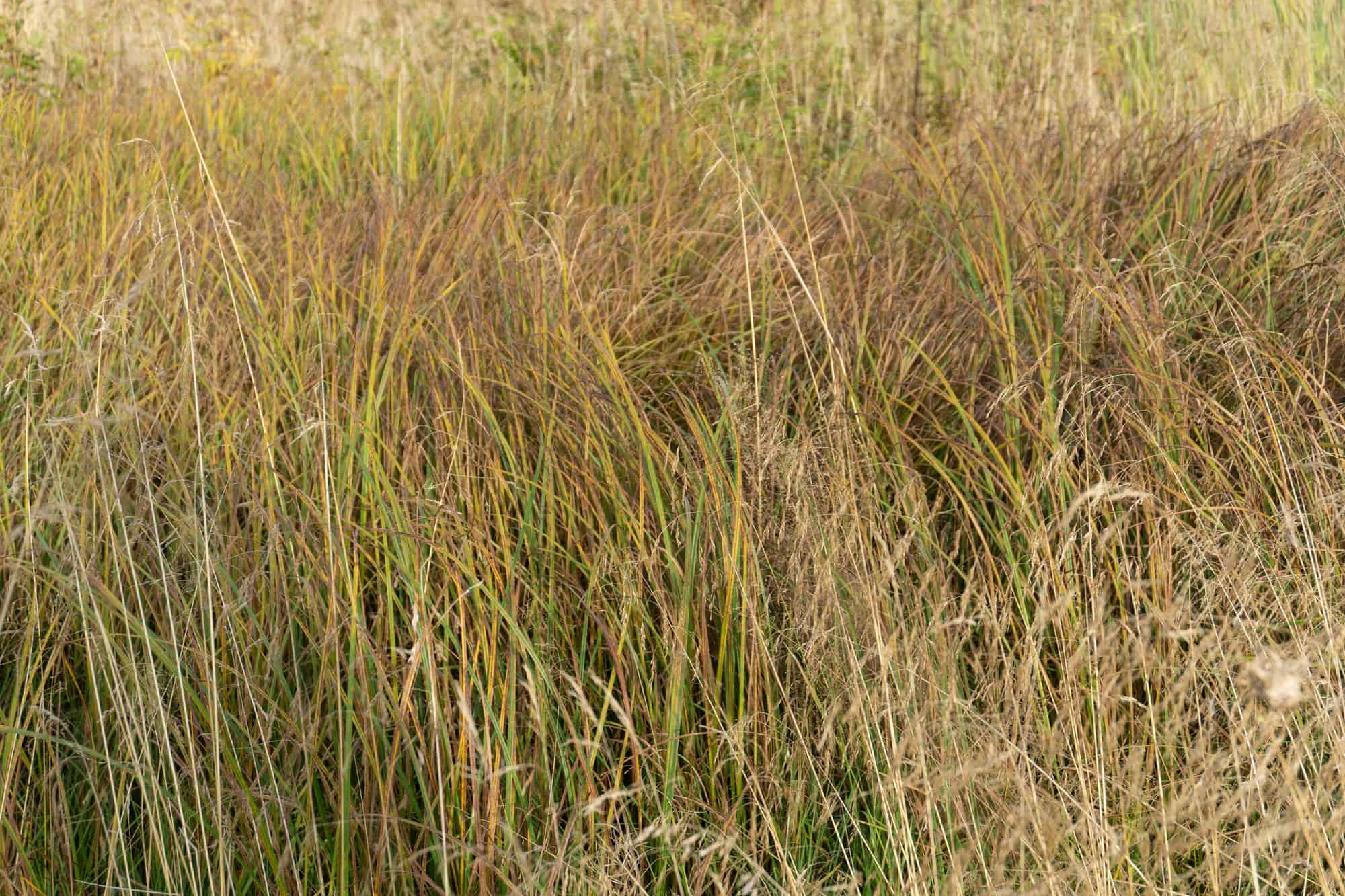
Not all plants that benefit wildlife produce beautiful flowers or colorful berries. Bluestem plants like big and little bluestem are perennial grasses that produce seeds that feed birds like juncos and sparrows, according to the Wisconsin Society for Ornithology.
Both little and big bluestem have a native distribution that stretches from the western Rockies to the East Coast.
And Many More…

The list of perennial plants that can benefit backyard birds goes on and on, far too long to fit into a list of a dozen or so plants. If you plant native perennials, chances are you’re doing great work to provide food and cover for backyard wildlife.
Your location, soil, and other local factors will determine which plants are best suited for your yard. With that in mind, local extension offices and conservation groups will often have resources about which plants will thrive on your property.
Wild Bird Scoop also has resources about various other ways to attract birds to your property, so head on over to our birding tips page.
Happy birding!
📷 Show us your feeder setup! Share a few photos of your feeders and you might be featured on Wild Bird Scoop. Share your setup →





