The Camera Feeder We Use In Our Own Backyard
See Today's PriceWhere have my backyard birds gone, is a question that can be asked in any season.
Save this article for later so you don't lose it. Enter your email and I'll send it to you now—plus you'll get my favorite backyard birding tips delivered to your inbox.
Any time of year the birds in our backyards sometimes seem to disappear.
It may not be a usual time for migration, which makes us wonder what happened to them.
But changes happen all year and not just to the weather.
Their activities change constantly throughout the year, as their life cycle dictates.
The key word here though is change!
When the weather begins to change, the birds respond, which usually means another cycle of their life will begin.
Where Have My Backyard Birds Gone In The Summer?
Let’s start with the summer season.
All summer birds have been busy building a home and raising their young.
When the fledglings leave the nest, they emulate their parents and begin to visit our feeders.
It is a great time for bird watching, with the increase of visitation that the young create at our feeders.
Our seed feeders and our Hummingbird feeders are very busy when the young birds are out and about.
Then it seems in a few weeks traffic at the feeders seems to slow down. Sometimes with a sudden drop and other times just a little less activity.
After the adult birds have finished raising their young they often begin to molt.
This provides the birds with fresh new feathers that are in tip-top shape.
Molt prepares those birds who migrate with the tools they need for optimum flight.
The Cornell Lab of Ornithology has a good explanation of this here.
We always think of migration as taking place in the spring and autumn months. But many birds have already left by mid-summer.
The males of many species, like the Ruby-throated Hummingbird, have left by late summer. Some leave as early as July and many more following in August.
You may even notice the traffic at your feeders is diminishing during this time.
Where Have My Backyard Birds Gone?
Where Have My Backyard Birds Gone In The Fall Season?
But as the autumn season arrives, things begin to change more noticeably.
The migrating birds are already on the move, gathering in large groups, and passing through.
The adult females are starting their trek in early fall and any remaining males.
Get our free Hummingbird Attraction Guide! Plus, we'll send you our best tips for attracting more birds to your yard.
Then the youths who are hanging about, stocking up on food, and figuring out what it is to be an adult bird, prepare to leave.
Some of the youths who hatched in early summer may have moved to a new location at some point in the summer.
They are defining their independence and when they leave your feeding station, you will notice a change in activity at your feeders.
Eventually, they will leave too, when they have stocked up on body fat and are strong enough to go.
This is the pattern for Hummingbirds, as well as many other songbirds. Although Hummingbirds do not group together to migrate, they make the trip individually.
But, Where Have My Backyard Birds Gone Who Don’t Migrate?

The birds who do not migrate will undergo a shift as well.
You may notice that you have fewer birds like Goldfinches and Chickadees at your feeders as the fall season progresses.
These species do not migrate on mass as Robins, Hummingbirds, and Orioles do.
But many non-migratory birds will group together for the winter.
Adults together, sometimes forming, male groups, and female groups.
The youths will gather and hang out together too. Sound familiar?
And some will just move to a new location, perhaps where they perceive food sources and shelter may be more abundant.
These groups of birds will travel around in winter too. But when they discover a reliable feeding station that offers, oil-rich food like, black-oil sunflower, suet, peanuts, they are more likely to stick around.
In the late spring and early summer, you may also notice a reduced number of visitors to your feeders. This may be in part due to, adult birds establishing territory, building nests, and taking turns sitting on the eggs.
Patience and keeping your backyard feeding area in tip-top shape will payout in the end.
(If you are wondering if you should be taking your feeders down in the autumn? You need to read this first.)
I hope this helps to answer the question “Where have my backyard birds gone?”
Find out where birds go in winter?
Questions Asked By Bird Watchers
Where have my backyard birds gone?
I live in central NY state (near Syracuse) and for many years I have feed wild birds.
I put out nyjer, black oil sunflower seeds, and mixed seeds.
This time of year I usually have many chipping sparrows, juncos, house finches, savannah sparrows, goldfinches, cardinals, downy and hairy woodpeckers, etc.
Starting in late August, my goldfinches often don’t show up at the nyjer seed feeder, but they have always come back by late September.
This year – for the first time in 20 years, ALL of my birds are gone.
There have been no changes in what I feed, where I feed; there are no predators haunting my area.
What is going on?
Why have all my birds disappeared?
And how can I get them back?
Shiela
Hi Sheila
Your experience of disappearing birds, sadly, is very common.
But to lose them all is unusual!
Hopefully, I can help.
6 Things To Answer Where Have My Backyard Birds Gone?
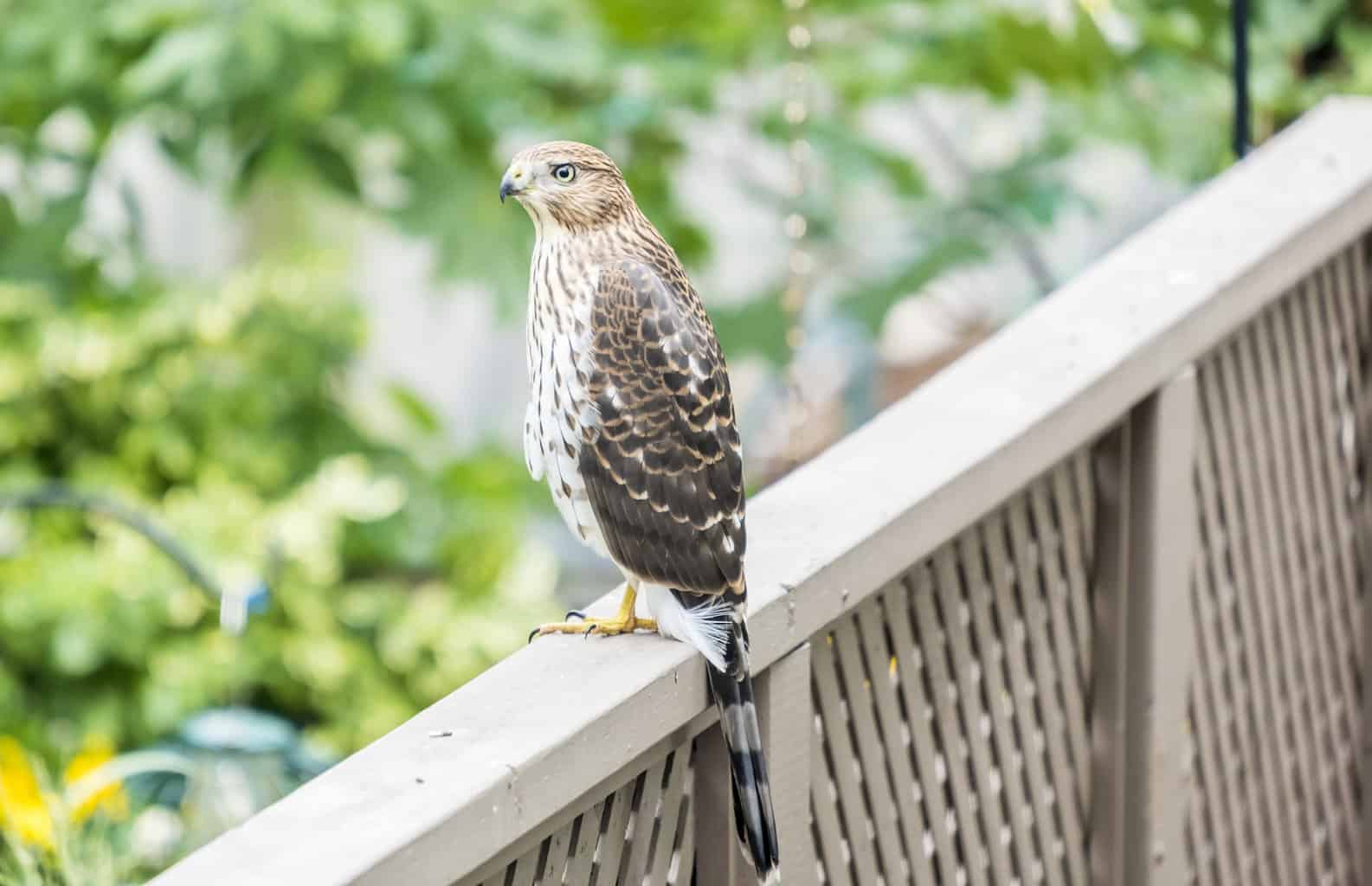
- You said there are no predators, but that would be a reason to lose all the birds. Birds of prey are not always easy to spot. Three winters ago we fed approximately 100 Finches daily along with all the other varieties. (It cost us a fortune! Gladly though! ;-)) But the next year we had much less, a busy day was 15 – 20. Then I started investigating and saw a Cooper’s Hawk on the roof of our home. After that, I saw him on the fence at the back of the yard, on the side fence one day, and in the front yard with a Mourning Dove. But I had not seen it before, but certainly noticed the effect it was having on my feeder visitation.
- Cats, feral and domestic are also a huge threat to backyard birds and I have installed a fence around my feeding area so my birds are better protected. But they hide well, even from us if they are feral and you may unwittingly have had a group move into your area.
- The other thing I would suggest is looking around to see if there have been any changes to the area around you. Construction or even different weather patterns can cause birds to change their behavior.
- Do you have neighbors near or far that also feed birds? They may be experiencing the same thing. Talking to them may shed some light on your situation.
- A local birding or nature group may also have ideas for you, as to why all your birds have disappeared.
- You might try adding suet and peanuts as they are great for attracting birds.
I hope this helps a little and truly hope your birds return soon!
Kind regards
Judy
More About Summer Bird Feeding
- Summer Bird Feeding A very rewarding season to feed and house wild birds. There is such a variety of birdlife and feathered family activity to enjoy.
- Where Have My Backyard Birds Gone? Any time of year the birds in our backyards sometimes seem to disappear. It may not be a usual time for migration, which makes us wonder what happened to them. Discover the reasons.
The Other 3 Seasons
- Spring Bird Feeding An exciting time when wild birds return to their northern breeding grounds after their long migration.
- Fall Bird Feeding Some people think that bird feeding in the autumn is not a good idea. They mistakenly believe that their feeders will keep the birds from migrating. Find out the truth.
- Winter Bird Feeding Bird watching in the winter months provides many rewards for us. We can’t help ourselves from wanting to assist them by putting out a bird feeder.
📷 Show us your feeder setup! Share a few photos of your feeders and you might be featured on Wild Bird Scoop. Share your setup →