
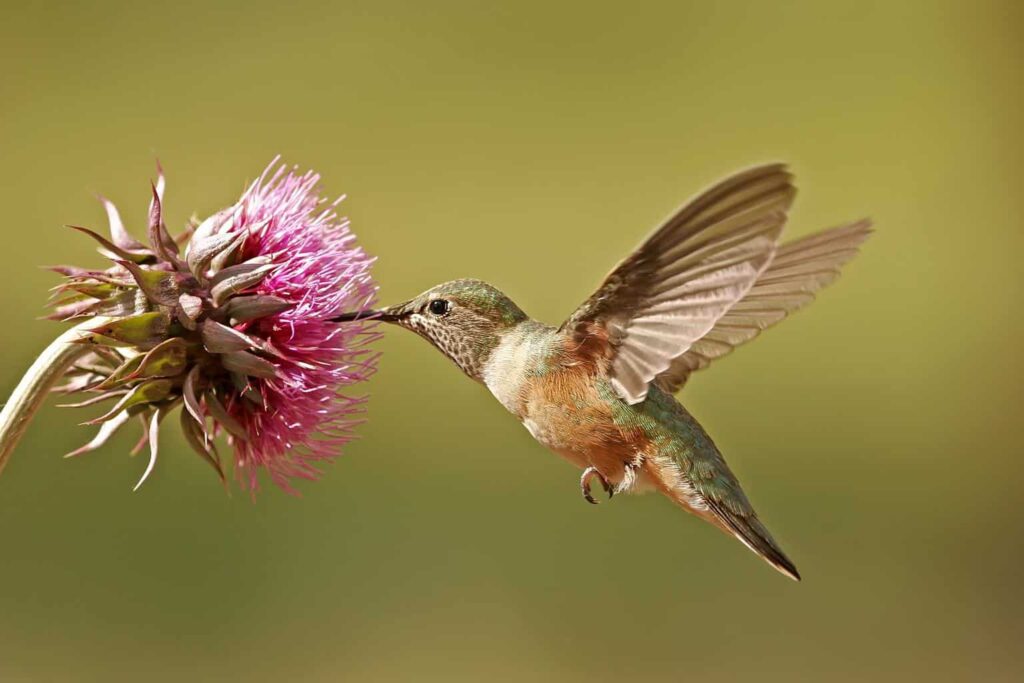

Why Males Arrive First
When the hummingbird migration begins, the males will set out first. They are seeking out the best sources of food.

The Camera Feeder We Use In Our Own Backyard
See Today's PriceWhen they find them, they will stake out a territory and defend it from other males. Male hummingbirds will arrive first.
Save this article for later so you don't lose it. Enter your email and I'll send it to you now—plus you'll get my favorite backyard birding tips delivered to your inbox.
They depart about a week before the females so that they can seek out food sources and establish territories around them. They will fiercely defend these territories from other hummingbirds and sometimes larger birds and even animals!
The males arrive first, from about the beginning of March through the beginning of May. They find the best food sources and establish territories that they guard fiercely, especially from other males.
Why do the males rush ahead? Male hummingbirds act as the advance guard for the migration season. Their primary goal is to claim the best possible territory before anyone else gets there. A good territory needs to have reliable food sources and excellent perches for keeping watch. By flying north early, males can scout out the prime real estate in your yard. Once they find a feeder or a patch of early blooming native plants, they will fiercely defend it. This early arrival gives them the best chance to impress the females when they finally show up.The Second Wave: Why Females Wait
The females have a completely different set of priorities. While males are busy fighting over territory, females are preparing for the exhausting work of building nests, laying eggs, and raising chicks entirely on their own. They wait about 10 days to migrate because they need the environment to be perfectly ready for them. By delaying their journey, females ensure that more spring flowers are blooming. They also wait for insect populations to increase, since tiny spiders and gnats provide the crucial protein they need to feed their babies. Waiting also protects them from late spring cold snaps that could drain their energy reserves.Migration Behavior Comparison
To help you understand what is happening in your yard this spring, here is a quick breakdown of how male and female hummingbirds tackle migration differently.| Feature | Male Hummingbirds | Female Hummingbirds |
|---|---|---|
| Arrival Timing | Early spring (the advance guard) | About 10 days later (the second wave) |
| Primary Goal | Claim and defend territory | Find safe nesting sites and abundant food |
| Feeder Behavior | Aggressive, chases other birds away | Cautious, visits quickly for energy |
| Energy Strategy | Burns energy fighting for dominance | Conserves energy for egg-laying and raising young |
How to Spot the New Arrivals
The male Ruby-throated hummingbirds typically arrive first, around two weeks before the females. The arrivals may be spread out over a week or two, depending on where they have traveled from and the weather conditions locally and on their migration route.
Get our free Hummingbird Attraction Guide! Plus, we'll send you our best tips for attracting more birds to your yard.
Females are not as brightly colored, but they are still wonderful to spot! Their white throats are speckled lightly, and they have greenish backs and sides that are less flashy than their male counterparts.
Unlike males, female Ruby-throated hummingbirds have a notched tail instead of a forked one. Spring is a time of new beginnings, including the return of migratory birds to New Mexico.
Hummingbirds are one of the first birds to arrive, typically showing up in early March. Ensure your hummingbird feeders are ready for the first male arrivals to set up territories for the breeding season before the females show up.
How do you know when the second wave has reached your yard? You just need to look at their feathers. Male hummingbirds are famous for their flashy, iridescent throat feathers called gorgets. Depending on the species in your area, these throats might flash bright ruby red or vibrant purple in the sunlight. Female hummingbirds look much more subtle. They typically have plain white or lightly speckled throats and softer green backs. This muted coloring is actually a survival tool. It helps them blend in perfectly with the trees and bushes while they sit on their nests. You might also notice that females behave a bit differently at your feeders. While males often hover aggressively and chase other birds away, females tend to sneak in quietly for a quick drink before darting back to the trees.Preparing Your Yard for Nesting Season
Remember, providing water sources and nesting sites as well as nectar and insects for these birds to eat is also essential in providing hummingbirds with what they need and attracting them to your New Hampshire garden.
When the second wave arrives, your yard transitions from a simple feeding station into a potential nursery. You do not need expensive equipment to help them out. A few simple adjustments to your routine will give nesting females exactly what they need.Yard Preparation Checklist for Nesting Females
- Refresh nectar frequently: Empty and refill your feeders every three to five days, or more often if the weather is hot. Spoiled nectar can make birds sick.
- Stick to the basic recipe: Mix one part plain white sugar with four parts water. Never use honey, artificial sweeteners, or red dye.
- Clean feeders thoroughly: Scrub away any black mold or cloudy residue with hot water and a bottle brush before refilling.
- Leave the spiderwebs alone: Female hummingbirds use sticky spider silk to bind their tiny nests together. Leaving a few webs in your garden provides essential building materials.
- Plant native tubular flowers: Add plants like columbine, bee balm, or cardinal flower to your garden. These provide natural nectar and attract the tiny insects females need for protein.

Zamelane Glass Hummingbird Feeders 2-Pack
Check PriceEnjoying the Season
Spring in Alabama really can put a spring in your step, with wildflowers aplenty, and plenty of wonderful wildlife to enjoy. The spring hummingbird migration is one of the wonders of the season and shows us that warmer weather is on its way.
Some hummingbirds may be early arrivals, and migration patterns can vary year to year, so you can always put your feeders out a few weeks early to ensure that you don’t miss the beginning of the season.
Watching the spring hummingbird migration unfold is incredibly rewarding. Once you understand the rhythm of the advance guard and the second wave, you will appreciate those early spring visitors even more. Keep your feeders clean, watch for those subtle female arrivals, and enjoy the busy nesting season ahead.Hummingbird arrival timing
| Spec | What our writers say |
|---|---|
| Who arrives first | Males set out first to find food and stake territory |
| Male window | From about the beginning of March through the beginning of May |
| Lead time | Males depart about a week before the females |
| Another lead time | Males typically arrive around two weeks before the females |
| Early birds | Early arrivals are usually males establishing territories |
| Feeders | Put them out a week or two before the first hummingbirds |
| Female look | White throats speckled lightly, notched tail instead of forked |
📷 Show us your feeder setup! Share a few photos of your feeders and you might be featured on Wild Bird Scoop. Share your setup →





