Winter brings a special kind of magic to our gardens when colorful feathered visitors arrive to brighten the cold, gray days. While many birds head south for warmer climates, these hardy species stick around, bringing life and movement to our dormant landscapes.

The Camera Feeder We Use In Our Own Backyard
See Today's PriceCreating a welcoming winter habitat can transform your garden into a bustling bird sanctuary during the season’s quietest months.
Save this article for later so you don't lose it. Enter your email and I'll send it to you now—plus you'll get my favorite backyard birding tips delivered to your inbox.
Pro Tip
The single best investment for winter birding is a heated birdbath. Fresh liquid water is harder for birds to find than food in winter, and a reliable water source will attract species that never visit seed feeders.
1. Northern Cardinal
The male Northern cardinals are known for their bright-red, beautiful plumage all over their body and the red crest above the head. As with other cardinal species, the Northern cardinal has a large bill that allows them to crack seeds open.
They also need a feeder that will hold their favorite foods. A cardinal’s beak is shaped for cracking larger seeds, so these are the best foods to offer them.
They enjoy black oil sunflower and safflower seeds, corn, and peanuts. Cardinals also like mealworms and suet.

Nothing brightens a winter landscape like the brilliant crimson plumage of a male Northern Cardinal against freshly fallen snow. These year-round residents are loyal to their territories and will visit reliable food sources throughout the coldest months.
Fill your feeders with black oil sunflower seeds, safflower seeds, and cracked corn to keep these beauties coming back. Cardinals particularly appreciate dense evergreen shrubs for shelter during harsh weather, so incorporating arborvitae, spruce, or juniper into your landscape will make your garden a cardinal haven.

Wagner's Black Oil Sunflower Bird Food 25lb
Check Price2. Black-capped Chickadee
The Black-Capped Chickadee is considered Maine’s state bird. It’s known for its black cap and bib, complemented by white cheeks.
Elsewhere, it is pale grey with light buffy underparts.

These plucky little birds with their distinctive black caps and white cheeks bring personality and charm to winter gardens. Their cheerful “chick-a-dee-dee-dee” calls create a soundtrack for cold winter days when most other birds are silent.
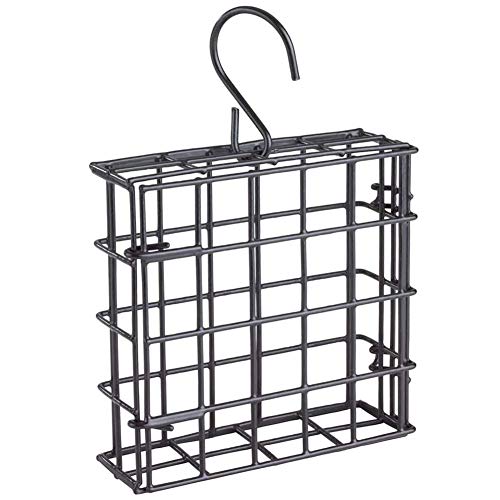
Chickadees are partial to suet, peanuts, and black oil sunflower seeds, which provide the high-energy fuel they need to maintain their body temperature during frigid nights. These curious birds will become remarkably tame over time, sometimes even eating from your hand if you have patience and stand still while holding seeds.
More Birds Suet Cage Bird Feeder Black
Check Price3. Dark-eyed Junco
The Dark-eyed Junco is a plump little sparrow that is strongly associated with winter in much of North America. They are among the birds that are called “Snowbirds,” as they are so commonly spotted at snowy backyard bird feeders.
Dark-Eyed Juncos are sometimes called “snowbirds” because they are so often associated with the arrival of winter. When winter arrives in Ohio, you will likely see these cute little birds in small flocks (15-25 birds) visiting backyard feeders.

Often called “snowbirds,” Dark-eyed Juncos arrive in most northern gardens just as winter sets in, having spent their summers in the boreal forests of Canada. These slate-gray birds with white bellies and distinctive white outer tail feathers are primarily ground feeders, hopping about beneath feeders to clean up fallen seeds.
Scatter millet, cracked corn, and black oil sunflower seeds on the ground or use a ground-level platform feeder to attract these winter visitors. They particularly appreciate brush piles or evergreen shrubs where they can quickly retreat for safety.
Did You Know?
Juncos are called ‘snowbirds’ because their arrival in backyards almost perfectly coincides with the first snowfall.

MIXXIDEA Metal Mesh Ground Bird Feeder Tray
Check Price4. American Goldfinch
One of the most familiar backyard birds, American goldfinches are ever-present at bird feeders during the winter when they love to feed on sunflower seeds and nyjer (thistle seeds). Special ‘thistle feeders’ have been developed specifically for attracting goldfinches and some of their relatives.
In winter, American goldfinches move around in flocks, often mixed with other finches, and descend on bird feeders in the countryside and in towns. Among their very favorite foods are thistle seeds and sunflower seeds.

Though they trade their brilliant summer yellow for a more subdued olive-brown winter plumage, American Goldfinches remain among our most charming garden visitors year-round. These social birds often feed in small flocks, bringing movement and life to winter gardens.
Nyjer (thistle) seed is their absolute favorite, best offered in special mesh feeders or “thistle socks” that allow the tiny birds to extract the small seeds. Leave seedheads on coneflowers, sunflowers, and other garden plants for natural foraging opportunities that goldfinches will appreciate throughout the winter.
Get our free Hummingbird Attraction Guide! Plus, we'll send you our best tips for attracting more birds to your yard.

Squirrel Buster Classic Squirrel-proof Bird Feeder w/4 Feeding Ports, 2.4-pound Seed Capacity
Check Price5. Blue Jay
Blue Jays eat almost everything! Their favorite meal is acorns.
They’re so fond of acorns that they might store them in the ground for later. This helps in forest spreading when the Blue Jay loses their acorns.
Understanding the Blue Jay’s dietary needs is essential to finding the best feeder for them. As omnivores, Blue Jays enjoy a variety of foods, including fruits, nuts, seeds, and insects.
They often eat acorns and beechnuts in the wild, but they will also readily eat peanuts, black oil sunflower seeds, and suet.

With their striking blue plumage, bold personalities, and raucous calls, Blue Jays add both color and drama to winter gardens. These intelligent birds are particularly fond of peanuts in the shell, whole corn kernels, and sunflower seeds.
They’re known for their caching behavior—carrying off multiple seeds to hide for later consumption—making them important forest regenerators as they plant trees from forgotten caches. Blue Jays are also excellent neighborhood watch birds, loudly announcing the presence of hawks, cats, or other potential threats, providing a valuable alert system for smaller birds.
6. White-breasted Nuthatch
The White-breasted Nuthatch is a small bird with a big personality. At just four inches long, this little bird is easy to miss.
But those who take the time to get to know the White-breasted Nuthatch will quickly fall in love with its energetic and playful nature. The White-breasted nuthatch is a lovely compact bird that is quite common all over the states.
The bird has a blue-gray top with a white breast and white belly.

These delightful little acrobats with their distinctive habit of walking headfirst down tree trunks bring endless entertainment to winter bird watching. White-breasted Nuthatches are particularly fond of suet, peanuts, and sunflower seeds, which they’ll often carry away to wedge into tree bark before hammering open with their sharp bills.
Their nasal “yank-yank” calls announce their presence as they inspect every nook and cranny of tree bark for hidden insects. Leaving dead trees or snags in your landscape (when safe to do so) provides natural foraging opportunities for these bark-gleaning specialists.
7. Downy Woodpecker
The downy woodpecker is the smallest in North America, and it’s one of the most likely woodpeckers to visit your backyard, especially if you fill your bird feeder with suet, peanuts, or black oil sunflower seeds. When they’re in their natural habitats — woodlots, residential areas, and parks — they like to feed on beetles, ants, gall wasps, and caterpillars.
Downy woodpeckers are common in North America, and they’re the tiniest out of all woodpeckers in the country. To identify a Downy woodpecker, look for a black-and-white striped head, white underparts, and a red spot on the back of the head.
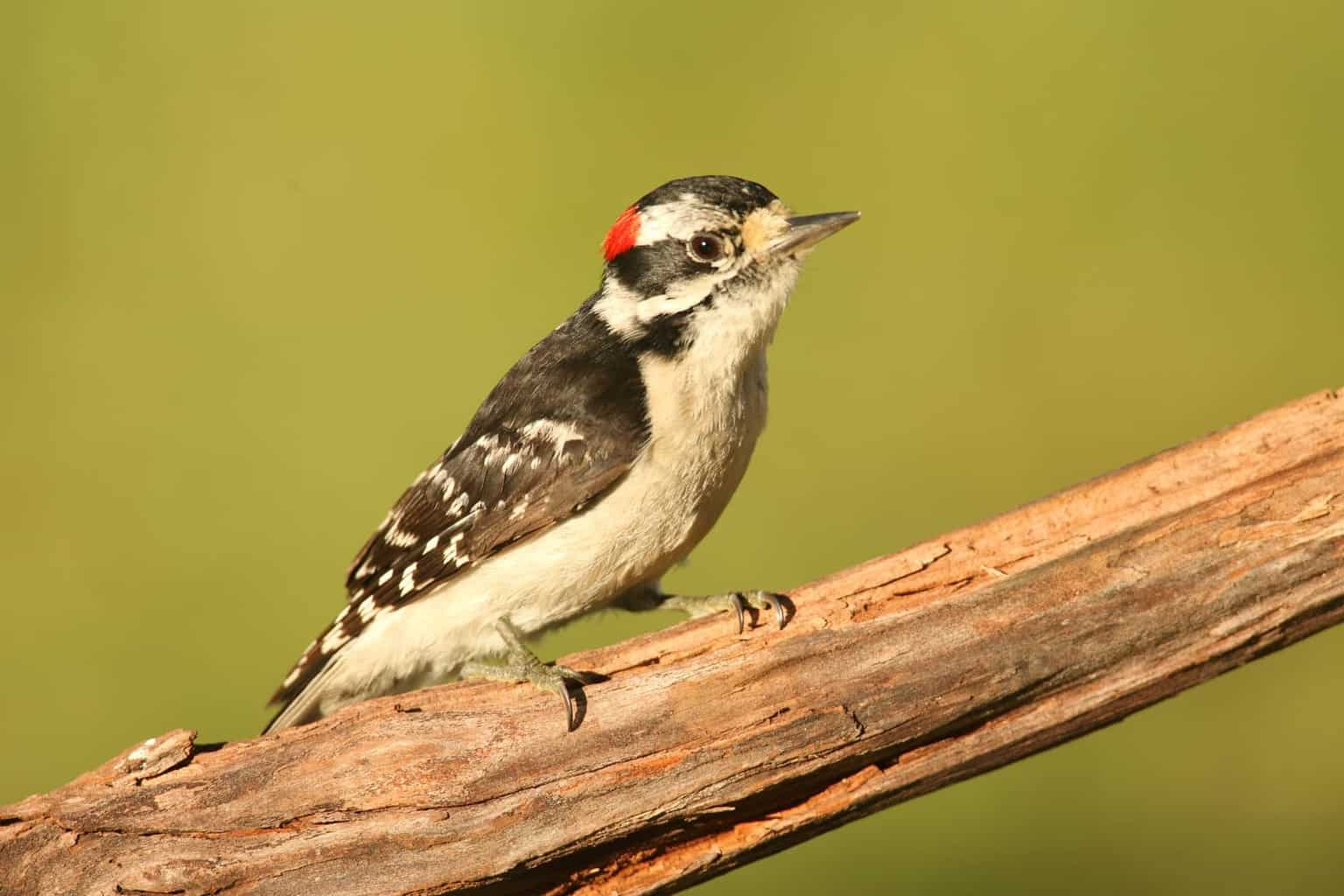
The smallest of North American woodpeckers, the Downy adds winter interest with its striking black-and-white plumage and energetic movements. Males sport a small red patch on the back of their heads, adding a welcome splash of color to winter gardens.
These birds are suet enthusiasts, visiting feeders regularly throughout the day. They also appreciate black oil sunflower seeds and peanuts.
Leaving some dead branches or stumps in your garden (when not a hazard) provides natural foraging opportunities as they search for overwintering insect larvae hidden beneath the bark.
8. Tufted Titmouse
The seed-loving tufted titmouse regularly visits backyard bird feeders, so stock up on sunflower seeds during summer and spring. Switch to a treat of suet in the winter to give them an energy boost.
Commonly found in deciduous forests and sitting at bird feeders, the Tufted Titmouse is hard to miss thanks to its gleeful grey crest, big black eyes, and echoing voice.

With their jaunty crests, large dark eyes, and soft gray plumage, Tufted Titmice bring personality and charm to winter bird feeders. These curious birds are often seen taking one seed at a time, flying to a nearby perch to crack it open while holding it with their feet.
Their clear whistled “peter-peter-peter” calls brighten quiet winter mornings. Titmice readily visit feeders offering sunflower seeds, peanuts, and suet.
They appreciate nesting boxes left up year-round, which they’ll use as nighttime roosting spots during particularly cold winter nights.
9. Red-bellied Woodpecker
Despite their name, the red-bellied woodpecker has a pale white belly with faint reddish spots. If you want to be sure you’ve identified this bird correctly, look at its head — you’ll find a bright red patch of feathers spanning across the cap and nape.
The Red-Bellied Woodpeckers are quite easy to attract into your bird feeder using a variety of nuts as well as sunflower seeds. In winter, you can also add suet to your feeder, which they love!
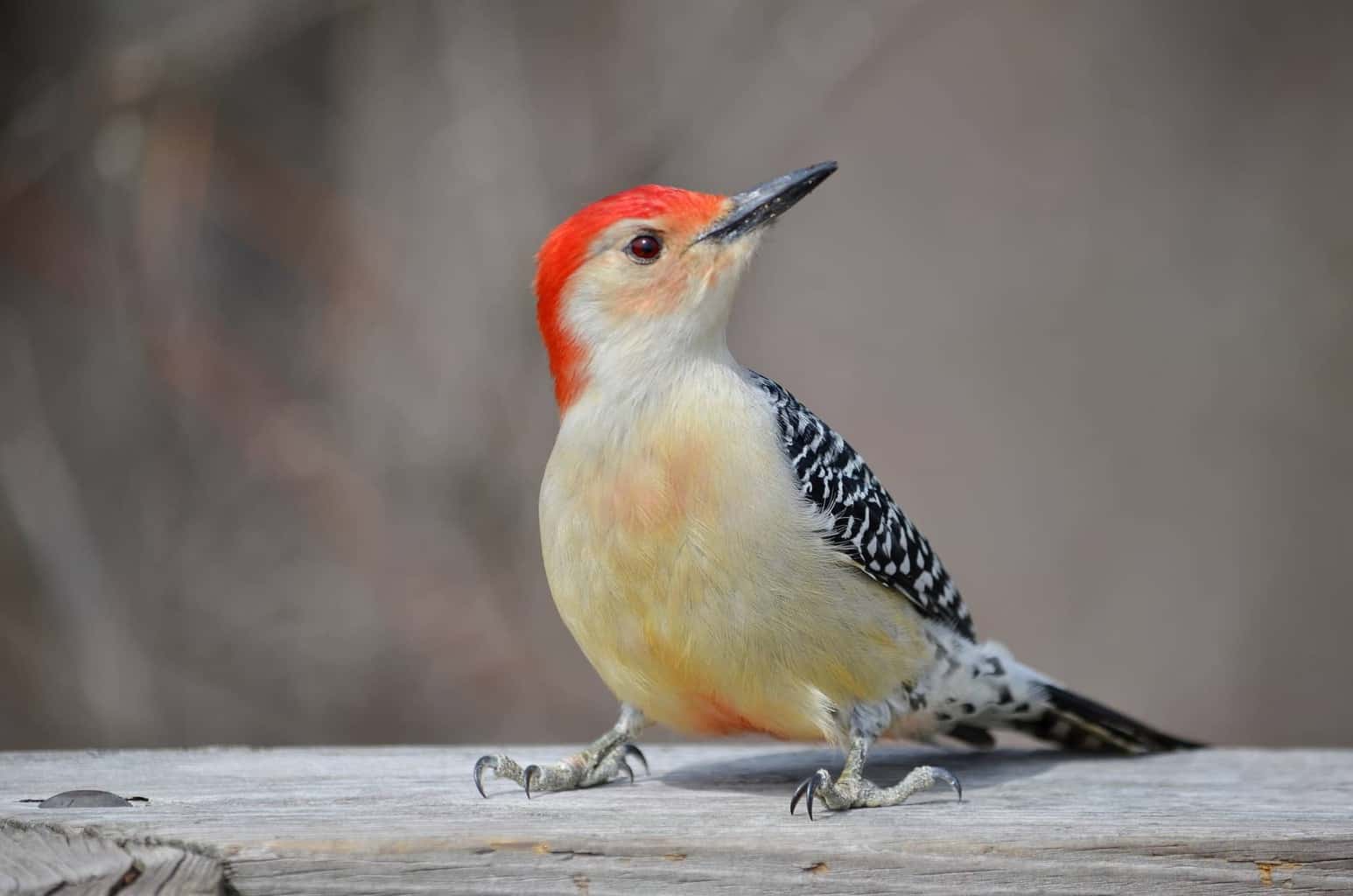
Despite their name, the most noticeable feature of Red-bellied Woodpeckers is actually the bright red cap and nape on their heads (the “red belly” is really just a faint wash of color). These medium-sized woodpeckers bring a tropical flair to winter gardens with their zebra-striped backs and distinctive rolling “churr” calls.
They’re particularly attracted to suet, peanuts in the shell, and larger seeds like sunflower and safflower. These woodpeckers can become quite bold at feeders and will often chase away smaller birds, providing some dramatic moments for winter bird watching.
10. Eastern Bluebird
Eastern Bluebirds produce more than once a year. According to the Cornell Lab, Eastern Bluebird hatchlings who mature before winter will leave their parents to become independent, but those who hatch later in the season will stay with their adults throughout the winter.
While several species of birds have blue feathers, “true” bluebirds belong to the genus Sialia. In North America, the three beautiful species of bluebirds are the Eastern Bluebird, Western Bluebird, and Mountain Bluebird.
These attractive birds stand out for their brilliant blue plumage and melodious songs.

A flash of brilliant blue against a snowy landscape is one of winter’s most magical sights. While many Eastern Bluebirds migrate south, some remain in northern areas year-round if food sources are reliable.
These thrushes are particularly attracted to gardens with berry-producing shrubs like winterberry holly, American beautyberry, and eastern red cedar. They also appreciate mealworms offered on platform feeders, especially during harsh weather when insects are scarce.
Bluebird houses left up through winter provide crucial nighttime roosting spots, with multiple birds sometimes huddling together for warmth on particularly cold nights.
Pro Tip
Up to 19 bluebirds have been recorded roosting together in a single nest box on cold winter nights. Leave your bluebird houses up year-round — they serve double duty as winter roost boxes.
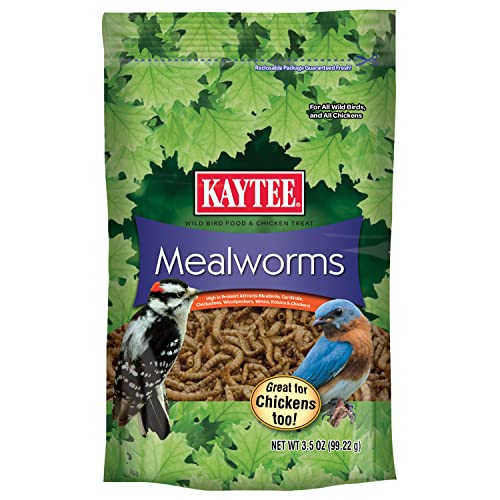
Kaytee Wild Bird Mealworms 3.5oz
Check PriceWinter garden birds at a glance
| Bird | What our writers say |
|---|---|
| Northern Cardinal | Cracks larger seeds; black oil sunflower, safflower, corn, peanuts, mealworms, suet |
| Dark-eyed Junco | Called snowbirds; Ohio winter flocks of 15-25 at feeders |
| American Goldfinch | Winter flocks on sunflower and nyjer in thistle feeders |
| Blue Jay | Favorite food is acorns; also peanuts, sunflower, and suet |
| White-breasted Nuthatch | About four inches long; blue-gray above, white breast |
| Downy Woodpecker | Smallest North American woodpecker; suet, peanuts, sunflower |
| Tufted Titmouse | Sunflower in warm months, suet in winter |
| Red-bellied Woodpecker | Pale belly with faint red; identify by the red cap and nape |
| Eastern Bluebird | Late-season young stay with adults through winter |
📷 Show us your feeder setup! Share a few photos of your feeders and you might be featured on Wild Bird Scoop. Share your setup →