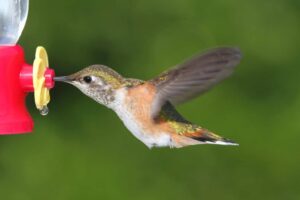
You step into the yard with a trowel and a plan: plant perennials that will bring hummingbirds to your garden by Memorial Day. These are low-fuss plants you can put in the ground this weekend and expect hummingbirds to visit within weeks. And you’ll know exactly what to plant where.

The Camera Feeder We Use In Our Own Backyard
See Today's PriceYou don’t need fancy tools or perfect soil to make this work. These plants suit beginners and small yards just fine. Think sunny spots, nectar-rich blooms, and simple care. I’ll walk you through each one and tell you what to watch out for so you’re not guessing.
Save this article for later so you don't lose it. Enter your email and I'll send it to you now—plus you'll get my favorite backyard birding tips delivered to your inbox.
Read next
More planting ideas for a hummingbird-heavy yard
1) Salvia ‘May Night’
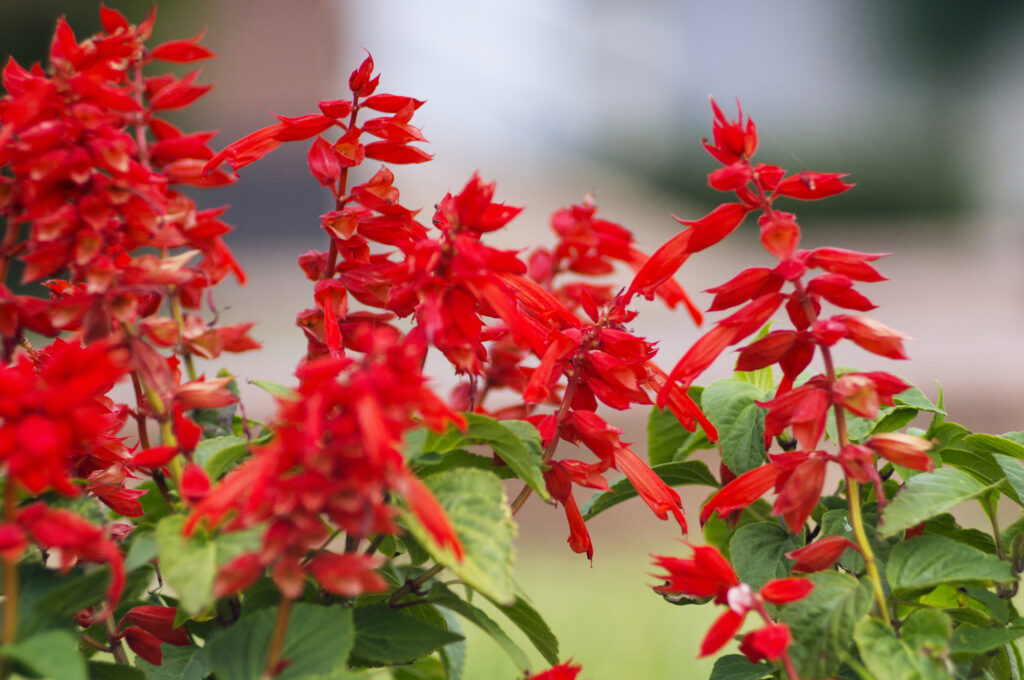
Few plants deliver the combination of reliable timing and genuine hummingbird magnetism that Salvia ‘May Night’ does. Those deep violet-blue spikes are tubular, nectar-packed, and absolutely visible from across the yard, which is exactly the kind of signal a passing hummingbird picks up on. It blooms starting in late spring and often puts on a strong flush right around Memorial Day if you get it in the ground now in a sunny spot.
Plant in full sun with well-draining soil. Space plants about 12 to 18 inches apart so air can move between them. You’ll get a clump roughly 18 to 24 inches tall and wide, and it stays tidy if you deadhead the spent bloom spikes.
Avoid overwatering and heavy clay that holds moisture. Salvia hates soggy roots and will flop if it’s crowded. Bees and butterflies will also show up for the flowers, so you’ll get a whole crowd of winged visitors, not just hummingbirds.
Bee Balm (Monarda didyma)
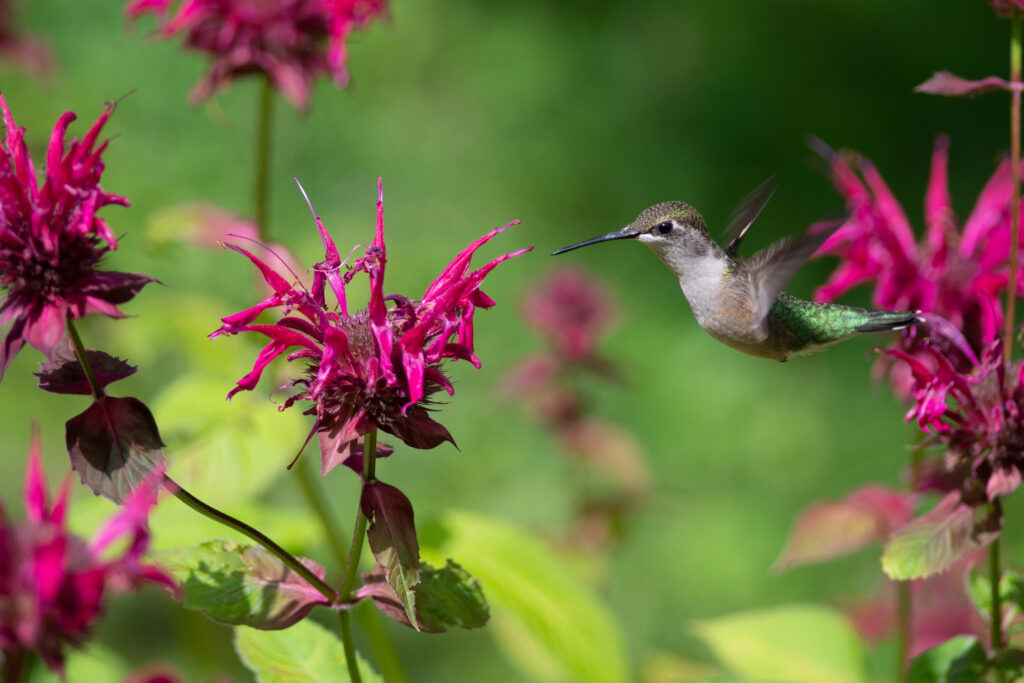
Bee Balm is one of those plants that earns its keep every single year. The tube-shaped blooms hold a lot of easy-to-reach nectar, and hummingbirds know it. Many varieties will be putting out flowers by Memorial Day if you plant healthy nursery plugs this weekend.
Give it full sun to part shade with well-draining, rich soil. Space plants 18 to 24 inches apart so air can move through and keep powdery mildew down. That mildew issue is real, especially in humid climates, but good spacing takes care of most of it. Compact cultivars like ‘Petite Delight’ are great if your yard is on the smaller side.
Expect 2 to 4 feet tall and about the same spread for standard types. Cut back crowded clumps in early spring to keep plants vigorous. Hummingbirds will visit more often when Bee Balm grows near other nectar sources, so pair it with salvia or columbine if you can.
Ruby-throated hummingbirds, the most common backyard visitor east of the Rockies, are programmed to seek out red and orange tubular flowers. But they’ll quickly learn to visit pink and violet blooms too once they’ve found a reliable yard. Color gets them there. Nectar keeps them coming back.
Trumpet Honeysuckle (Lonicera sempervirens)
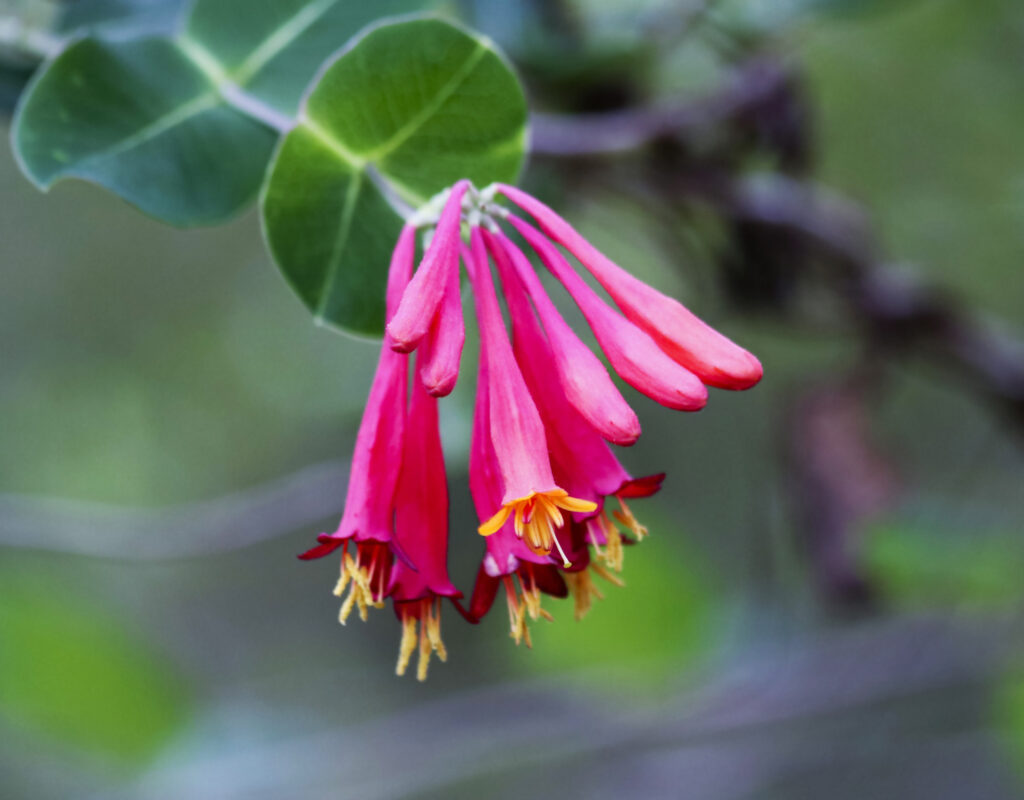
This native vine is built for hummingbirds. The long red tubes are practically designed around a hummingbird’s bill, and birds recognize them fast. Blooming typically starts in late spring and often peaks by Memorial Day in zones 6 through 9, so if you plant it this weekend, you’re working with good timing.
Put it in full sun to part shade with well-drained soil and give each vine 6 to 10 feet to climb. A trellis, fence, or arbor works well. Water regularly until it roots in, then it’s fairly self-sufficient. Don’t crowd it against a foundation wall since it needs airflow to stay healthy.
Watch for overfertilizing. Too much nitrogen pushes leafy growth at the expense of blooms, which is the opposite of what you want. Prune lightly after flowering to keep it in bounds. Bees visit too, but the long tube shape gives hummingbirds a clear advantage.
Penstemon digitalis ‘Husker Red’
That red-bronze foliage isn’t just decorative. It’s actually what makes this plant so easy to spot from the porch while you’re waiting to see who shows up. The long tubular flowers are nectar-rich and hummingbird-friendly, and the plant blooms from late spring into early summer. Planted now, it can produce flowers by Memorial Day in warmer zones, or just a week or two after in cooler spots.
Plant in full sun to part shade with well-draining soil. Give each plant 18 to 24 inches of space so air can move through the clump. Expect 2 to 3 feet tall and about 2 feet wide at maturity.
Penstemon does not like wet feet. Avoid overwatering and skip heavy clay unless you’ve amended it well with compost and coarse sand. Crown rot in poorly drained sites is the main thing to watch for. Cut back spent stems to encourage a second flush. If you want steady nectar production, plant a small group of three rather than a single specimen.
Get our free Hummingbird Attraction Guide! Plus, we'll send you our best tips for attracting more birds to your yard.
California Fuchsia (Zauschneria / Epilobium canum)
Okay, full honesty here: California fuchsia blooms late summer into fall, so it probably won’t be in full flower by Memorial Day. But healthy plants set buds now, and if your spring has been warm, you may see a few early blooms. More importantly, this plant is so valuable to late-season hummingbirds that it earns a spot in your weekend planting plan regardless.
Plant it in full sun with well-draining soil. Space starts about 18 to 24 inches apart. It forms a low mound, usually 12 to 24 inches high, with a spread up to 36 inches depending on the variety. Crown rot is the main beginner pitfall, so avoid overwatering and heavy clay.
Mulch lightly and trim back old growth in spring to keep it tidy. Hummingbirds return to the same plants day after day once they’ve found them, and this one has a way of becoming a favorite stop on their daily route through your yard.
“A yard that blooms in waves gives hummingbirds a reason to keep coming back all season, not just for one dazzling week in May.”
Columbine (Aquilegia canadensis)
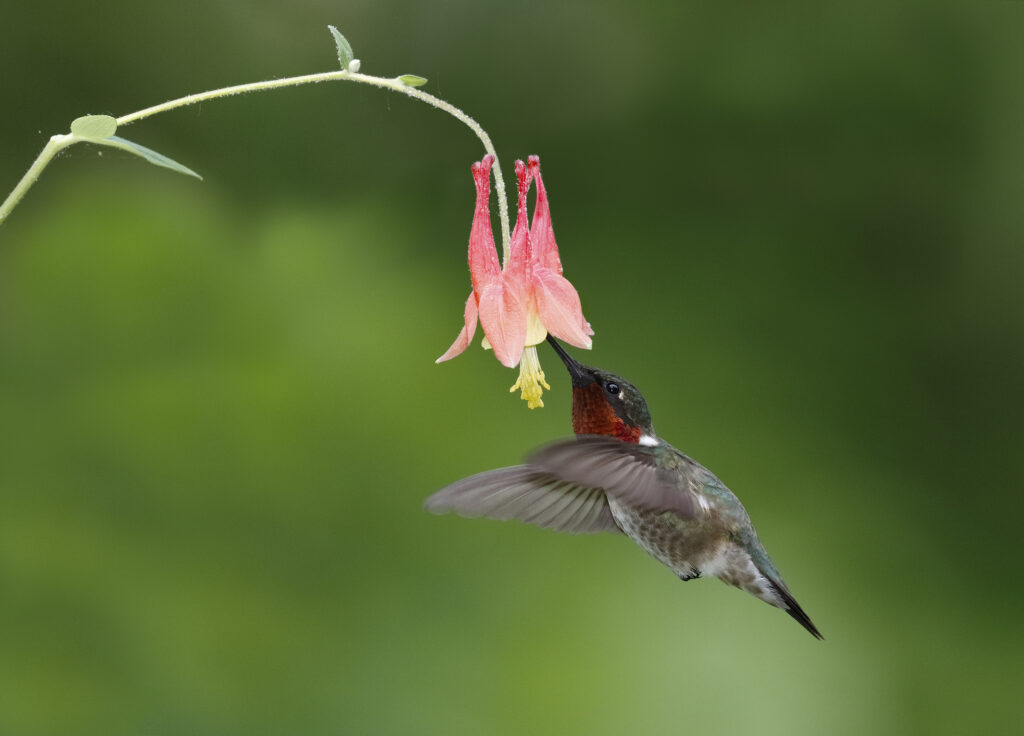
Columbine is one of those quietly perfect plants. The drooping red-and-yellow blooms have long nectar spurs that fit a hummingbird’s bill almost exactly, which is not a coincidence. These two evolved together. You’ll see flowers from late spring into early summer, and a well-established clump planted now can bloom by Memorial Day in mild zones.
Give it part shade to morning sun with rich, well-draining soil and some protection from hot afternoon light. Space plants 12 to 18 inches apart. They reach about 1 to 2 feet tall with a similar spread, and they self-seed gently if you let some spent flowers go, which means free plants next year.
Skip heavy feeding. Too much nitrogen produces lush leaves and very few flowers. Bees and butterflies use columbine for pollen and nectar too, so your patch will support several pollinators at once while you wait for the hummingbirds to find it.
Keep going
More planting ideas for a hummingbird-heavy yard
Dwarf Zinnia ‘Profusion’
Zinnias get overlooked in hummingbird planting guides, but ‘Profusion’ dwarf varieties are genuinely worth including, especially in containers or front beds where space is tight. Hummingbirds sip the shallow, bright blooms readily, and these zinnias start flowering in mid to late spring if you plant transplants now. You can have real color by Memorial Day in warmer zones.
Plant in full sun with well-draining soil, spaced about 8 to 12 inches apart. Expect 8 to 12 inches tall with a similar spread. Avoid overwatering seedlings and keep them out of heavy shade, or you’ll get leggy plants with fewer blooms. Bees and butterflies love Profusion zinnias too, so the whole corner of your yard gets livelier.
Plant dwarf zinnias in a container near your existing nectar feeder. Hummingbirds that already visit the feeder will notice the blooms immediately, and the combination of feeder plus fresh flowers can double the time they spend in that corner of your yard.
Putting It All Together: Creating a Hummingbird-Friendly Spot
The plants do most of the work, but a little thought about placement makes a real difference. Put taller flowers behind shorter ones so nothing gets shaded out. Give plants room to spread. Keep fresh water nearby.
Choosing the Right Planting Spot
Aim for at least 6 hours of direct sun for most of these plants, but a break from intense afternoon heat helps on the hottest days. Plant tubular flowers where you can actually see them from a window or porch. You want to notice the hummingbirds when they show up.
Space plants 12 to 24 inches apart depending on mature spread. In clay soil, mix in compost and coarse sand before planting so roots aren’t sitting in water. Keep feeders about 10 to 15 feet from dense shrubs, not tucked right against them. Hummingbirds like to feed where they can see clearly in most directions.
Using Mulch and Water Wisely
A thin 1 to 2 inch layer of shredded bark or leaf mulch holds moisture and keeps roots cool through warm spells. Leave a small bare ring around each stem so the mulch doesn’t smother the crown. Water deeply once or twice a week rather than a daily shallow sprinkle. You want the soil moist 3 to 6 inches down, not just damp at the surface.
A shallow bird bath or mister placed 3 to 5 feet from your flowering plants gives hummingbirds a place to drink and bathe near their food source. Clean it and any nectar feeders weekly in warm weather. Mold in a feeder can genuinely harm birds, and it takes about two minutes to rinse and refill.

FEED GARDEN Glass Hummingbird Feeder 16oz
Check PriceWhat to Realistically Expect by Memorial Day
Most of these perennials will be putting on buds by Memorial Day, with a few already open if spring warmed early in your area. Timing varies based on sun exposure, soil warmth, and whether you’re planting potted nursery starts, bareroot divisions, or something you dug from a friend’s garden this weekend.
Bloom Cycles and What Affects Them
Hummingbirds come back to yards where nectar shows up in waves rather than all at once and then nothing. Some of these plants will open their first flowers in late May if you give them full sun and warm soil right from the start. Others need a longer cool spring to set buds and may peak in June.
Plants in south-facing spots and raised beds warm faster and bloom earlier. Mulch keeps root temperatures steadier, but keep it off the crowns. If a late frost threatens after you’ve planted, cover tender new growth overnight. It only takes a few minutes and can save weeks of re-rooting.
Getting Blooms as Early as Possible
Choose 4 to 6 inch potted plants or small divisions rather than seeds if your goal is flowers by Memorial Day. Seeds just won’t get you there in time. Set plants in firm contact with the soil, water in deeply to settle the roots, and use a balanced slow-release fertilizer sparingly. Too much nitrogen and you’ll get a gorgeous leafy plant with almost no flowers.
Heat-loving species like salvia and zinnia do especially well on south-facing beds or near a gravel path that radiates warmth. Pinch spent flowers early to encourage more spikes. The goal is to signal to the plant that it needs to keep producing, not wind down.
Plant this weekend, give the roots a good deep drink, and then just watch. Hummingbirds usually find a new nectar source faster than you’d expect.
📷 Show us your feeder setup! Share a few photos of your feeders and you might be featured on Wild Bird Scoop. Share your setup →