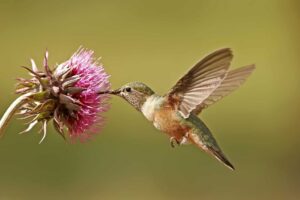
Spring is an exciting time for backyard bird watchers. You finally spot that first flash of green and hear the familiar hum at your nectar feeder.

The Camera Feeder We Use In Our Own Backyard
See Today's PriceBut if you look closely at those early arrivals, you might notice a pattern. They almost always have the bright, flashy throat feathers of a male.
Save this article for later so you don't lose it. Enter your email and I'll send it to you now—plus you'll get my favorite backyard birding tips delivered to your inbox.
If you are wondering where all the female hummingbirds are, you are not alone. There is a fascinating reason why the males show up first and the females follow in a “second wave” of hummingbird migration about 10 days later.
The Scouting Mission
Male hummingbirds are the advance guard of the migration season. Their primary goal is to fly north as quickly as possible to claim the best territories.
A prime territory needs to have abundant food sources, like early-blooming native plants and reliable backyard nectar feeders.
Hummingbirds will typically begin to arrive in West Virginia in late March. The male Ruby-throated hummingbirds usually come first, around a week or two before the females.
Their goal and mission are to establish territory before the breeding season begins in June.
The Second Wave, Why Females Wait
Male hummingbirds begin their journey before the females. They will stake out territories around good food sources, like nectar feeders and favorite flowers.
Then the females arrive about a week after the males to mate and nest. The males of the species are the first to arrive during the spring migration.
They come first to establish their territories. A week to two weeks later, the females will arrive.
Get our free Hummingbird Attraction Guide! Plus, we'll send you our best tips for attracting more birds to your yard.
Those that will nest in the state will begin their breeding period around June.
Who is at Your Feeder?
If you have more than one hummingbird feeder, you should position them at least 15 feet apart, and ensure that they are not visible to one another. Hummingbirds are highly territorial.
One male hummingbird will keep all other males away from “his” feeder!
During that 10-day gap, it is helpful to know exactly who is visiting your yard. Telling male and female hummingbirds apart is quite simple once you know what to look for.
You do not need expensive binoculars to spot the differences.

| Feature | Male Hummingbirds | Female Hummingbirds |
|---|---|---|
| Throat Color (Gorget) | Bright, iridescent colors like ruby red or vibrant purple. | Plain white, pale gray, or lightly speckled. |
| Behavior | Highly aggressive. Chases other birds away and chatters loudly. | Quieter and more focused on quickly drinking nectar and leaving. |
| Overall Size | Slightly smaller and more streamlined. | Slightly larger to accommodate egg-laying. |
Preparing for the Females
Spring is a time of new beginnings, including the return of migratory birds to New Mexico. Hummingbirds are one of the first birds to arrive, typically showing up in early March.
Ensure your hummingbird feeders are ready for the first male arrivals to set up territories for the breeding season before the females show up. Male hummingbirds usually arrive before the females so they can establish territories.
So if you see a male at your feeder, there’s a good chance more hummingbirds will be coming soon. As well as preparing planting schemes, gardeners can also add hummingbird feeders to give birds a boost and ensure they have sufficient energy throughout the key seasons.
Artificial feeders won’t replace natural food sources but can help as a supplemental addition to wild insects and nectar source options.
The 10-Day Gap Prep Checklist
- Add a second feeder: Hang at least one more feeder out of the direct line of sight of your first one. Placing one in the front yard and one in the back yard is a great strategy to outsmart a bully male.
- Mix fresh, safe nectar: Stick to the golden rule of 4 parts water to 1 part plain white sugar. Never use red dye, honey, or artificial sweeteners, as these can harm the birds.
- Clean your feeders: Wash your feeders with hot water and a splash of white vinegar every few days to prevent harmful mold growth.
- Check your native plants: Take a walk through your garden to see what is blooming. Tubular flowers like columbine, coral bells, and salvia are natural magnets for arriving females.

Zamelane Glass Hummingbird Feeders 2-Pack
Check PriceSupporting the Nesting Season
Once the females arrive and mate, they will immediately begin looking for nesting materials. You can help them by keeping your yard as natural as possible.
If you see spider webs in your garden, leave them alone. Female hummingbirds use sticky spider silk to bind their tiny nests together, allowing the nest to stretch as the babies grow.
When a female hummer begins to build her nest, she will gather nesting materials like grasses, small twigs, and other plant materials she can find within the landscape. She builds a nest layer by layer, using spider webs to bind all the materials together.
In North America, the most common type of hummingbird nest is built in trees or shrubs using plant fibers, spider webs, and other common nesting materials. No matter where they build their nests, hummingbirds are very protective of their young and will fiercely defend their nests from any perceived threat.
Enjoy the Full Flock
Understanding the rhythm of hummingbird migration makes backyard birding so much more rewarding. When you see those first aggressive males, you can smile knowing they are just setting the stage.
By taking a few simple steps to prepare your yard during that 10-day gap, you will create a welcoming, safe haven for the females when the second wave finally arrives.
Male and female hummingbird arrival
| Spec | What our writers say |
|---|---|
| Who arrives first | Males, about a week or two before females |
| Why males go first | To establish territory before breeding |
| West Virginia start | Late March; breeding begins in June |
| Female job | Arrive to mate and nest after males stake food |
| Feeder spacing | At least 15 feet apart and not visible to one another |
| At the feeder | One male will keep other males away from his feeder |
| If you see a male | More hummingbirds are likely coming soon |
| Nest materials | Grasses, twigs, plant fibers, and spider webs |
📷 Show us your feeder setup! Share a few photos of your feeders and you might be featured on Wild Bird Scoop. Share your setup →