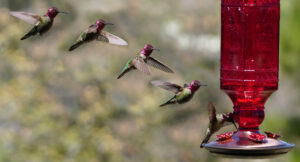
Every spring, a few adventurous hummingbirds arrive ahead of the crowd. These “scouts”—typically early males—stake out the best feeding territories before everyone else shows up.

The Camera Feeder We Use In Our Own Backyard
See Today's PriceIf you can spot the signs and act fast, you’ll have the chance to become their favorite stop. Here’s what to watch for and how to make your yard irresistible.
Save this article for later so you don't lose it. Enter your email and I'll send it to you now—plus you'll get my favorite backyard birding tips delivered to your inbox.
Unusual High-Pitched Chirps
Vocalizations, for example, are one area that might help you work out which hummingbird you have encountered. The vocalizations of Ruby-throated hummingbirds are rapid, squeaky chirps, while the male Anna’s hummingbird’s call is scratchy and metallic.
Known for its territorial behavior, the male Anna’s Hummingbird will make elaborate diving displays targeted at other birds and even in rare cases at humans. His tail produces high-pitched popping sounds at the bottom of his dives.

Hummingbirds aren’t known for elaborate songs, but they do make distinctive high-pitched chirps and squeaky calls, especially when defending territory or communicating during migration. If you’re hearing rapid, insect-like sounds near your garden or porch in early spring, there’s a good chance a scout hummingbird is checking out the neighborhood.
These calls are often quick and easy to miss if you’re not listening closely. To flag them down, put up a bright red feeder right away—even if it’s earlier than you’d normally hang one.
Hummingbirds have excellent color vision and are drawn to red, orange, and pink. Make sure the feeder is filled with fresh sugar water (one part white sugar to four parts water, no dye needed).
Place it in a visible spot near flowers or shrubs where they can perch and rest between sips.

More Birds Red Jewel Glass Hummingbird Feeder
Check Price
FEED GARDEN Glass Hummingbird Feeder 16oz
Check PriceMales Arriving First
When the hummingbird migration begins, the males will set out first. They are seeking out the best sources of food.
When they find them, they will stake out a territory and defend it from other males. The males will be the first to arrive during the spring migration of hummingbirds.
The females will follow them a week or two later once they have established their territories. Male hummingbirds begin their journey before the females.
They will stake out territories around good food sources, like nectar feeders and favorite flowers. Then the females arrive about a week after the males to mate and nest.

In most hummingbird species, males migrate north several days to two weeks ahead of females. This gives them time to claim the best feeding zones before breeding season begins.
If you spot a single hummingbird with a brightly colored throat patch—called a gorget—hovering around your yard in early spring, you’ve likely found a scout. Males are bolder and more territorial, so they’ll revisit reliable food sources again and again.
To encourage them to stay, offer multiple feeders spaced at least ten feet apart. This reduces competition and makes your yard feel more abundant.
Get our free Hummingbird Attraction Guide! Plus, we'll send you our best tips for attracting more birds to your yard.
Add native flowering plants like columbine, salvia, or bee balm to create natural nectar sources. Once a male establishes your yard as his territory, he’ll aggressively defend it, which means he’ll stick around—and other hummingbirds will follow when they arrive.
Did You Know?
A single Ruby-throated Hummingbird visits 1,000–2,000 flowers per day and can remember every flower it has visited and how long each one takes to refill.
Flowers Getting Drained

Notice your early-blooming flowers looking a little more worn than usual? Hummingbirds feed every ten to fifteen minutes throughout the day, and a single bird can visit hundreds of flowers.
If tubular blooms like penstemon, honeysuckle, or coral bells suddenly seem emptied of nectar—or if you see tiny punctures near the base of petals—a hummingbird has likely been working your garden. This is one of the most reliable signs that scouts are nearby, even if you haven’t seen them yet.
To draw them in closer, plant clusters of the same flower rather than scattering singles. Hummingbirds prefer feeding zones with abundant options in one spot.
Keep your feeders clean and filled, especially during that critical window when natural nectar is still scarce. Pair feeders with brightly colored flowers, and you’ll create an irresistible beacon for scouts passing through.
Pro Tip
Male hummingbirds are fiercely territorial. Spacing feeders 10+ feet apart and out of each other’s line of sight lets you attract more males without them chasing each other away.
Tiny Feeder Visitors

If you left a feeder up from last season or just put one out early, check it daily for signs of activity. Scout hummingbirds will sample even the smallest bit of sugar water if they’re desperate after a long migration.
Look for subtle clues: the liquid level dropping slightly, tiny bubbles in the nectar, or faint scratches near the feeding ports. You might not see the bird at first—they’re fast and easily startled—but evidence of feeding means one is nearby.
Refresh your feeder every three to five days, even if it doesn’t look empty. Hummingbirds avoid stale or fermented nectar, and clean feeders are far more attractive.
Hang your feeder where it’s visible from multiple angles and near a perch like a small branch or shepherd’s hook. Scouts will return to reliable food sources, and consistency is key to keeping them coming back.

LAKEROD Heavy Duty Adjustable Bird Feeder Pole
Check PriceEarly Spring Sightings
Start putting out your hummingbird feeders about 1-2 weeks before you expect the hummingbirds to arrive. In Kentucky, you should put your feeders out in mid-March.
Another way to figure out when to place your feeders is to watch for early Spring flowers to begin blooming. The early-arriving male hummingbirds are looking for these flowers, so you can take your cue from nature and start providing nectar feeders at this time.
When hummingbirds arrive depends on where you live. In some regions, people can see hummingbirds as early as March.
Other people will have to wait until late May. Some hummingbirds may be early arrivals, and migration patterns can vary year to year, so you can always put your feeders out a few weeks early to ensure that you don’t miss the beginning of the season.

In many regions, hummingbirds arrive weeks earlier than most people expect. Depending on where you live, scouts can show up as early as late February or March, well before the bulk of migration.
If you see a hummingbird darting around your yard when the weather is still cool and most flowers haven’t bloomed yet, you’re witnessing a true scout in action. These early arrivals are tough, but they’re also hungry and looking for any available nectar.
Have feeders ready by mid-March in southern states and early April farther north. Even if it feels too early, being prepared makes all the difference.
Combine feeders with early-blooming native plants and a clean water source like a mister or shallow birdbath. Scouts remember dependable stops, and if your yard delivers, you’ll become a regular layover spot year after year.

AISITIN 2.5W Solar Bird Bath Fountain Pump
Check Price
Mademax 1.4W Solar Bird Bath Fountain Pump
Check PriceScout hummingbird signs
| Spec | What our writers say |
|---|---|
| Ruby-throated call | Rapid, squeaky chirps |
| Anna’s dive sound | High-pitched popping at the bottom of the dive |
| Who arrives first | Males set out first and stake a food territory |
| Who follows | Females arrive about a week or two later |
| Feeder timing | Put feeders out 1-2 weeks before expected arrival |
| Kentucky cue | Mid-March, or when early spring flowers bloom |
| Range of arrival | As early as March in some regions, late May in others |
📷 Show us your feeder setup! Share a few photos of your feeders and you might be featured on Wild Bird Scoop. Share your setup →