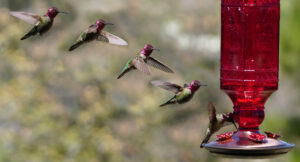
Missing the arrival of the first hummingbirds in spring isn’t just disappointing—it can cost you a full season of visitors. These tiny migrants cover thousands of miles on remarkably strict schedules, and if your feeder isn’t ready when they arrive, they’ll simply move on to a neighbor’s yard that is.

The Camera Feeder We Use In Our Own Backyard
See Today's PriceGetting the timing right means understanding migration patterns, trusting your calendar over the thermometer, and being ready before you think you need to be.
Save this article for later so you don't lose it. Enter your email and I'll send it to you now—plus you'll get my favorite backyard birding tips delivered to your inbox.
Why Timing Matters More Than You Think

Timing is very important when trying to attract hummingbirds. Make sure to have your hummingbird feeders placed (and hummingbird flowers planted, if possible) early enough to catch them as they make their annual spring migration.
The timing of the hummingbird migration can vary a little from year to year. It depends on the weather conditions and food availability in a given year.
However, you can expect migrating hummingbirds to arrive around the same time annually.
The Regional Migration Timeline

According to the South Carolina Department of Natural Resources, hummingbirds typically begin arriving in the state in mid-March to early April. However, there is some variation from year to year, and it is not unusual for them to arrive as early as February or as late as May.
Get our free Hummingbird Attraction Guide! Plus, we'll send you our best tips for attracting more birds to your yard.
Migrating Ruby-throated and Black-chinned hummingbirds will begin to arrive in Texas in early to mid-March, but could come as late as mid-May. The spring months may also offer higher numbers of Ruby-throated hummingbirds as northern populations migrate through the state on the way to their breeding grounds.
Hummingbirds begin arriving in Oklahoma in the middle of March. They continue to come through in early April.
After the spring and summer, hummingbirds begin to leave Oklahoma as early as September. The majority of hummingbirds will be gone by the middle of October.
Set Up Early, Not When the Weather Turns Warm

You should aim to put out your hummingbird feeders a week or two before you expect the first hummingbirds to arrive so that you can cater to early migrators. In the south, this might be in early March or a little later if you live at the very northern extent of their range.
You should aim to have a hummingbird feeder, or ideally more than one, in place a week or two before you expect the first hummingbirds to arrive. So in Connecticut, this means that you should aim to have hummingbird feeders in place in early April.
Turn One Feeder Into a Hummingbird Haven

Once you’ve got your hummingbird feeder, fill it with a nectar mixture that’s four parts water to one part table sugar. Don’t use artificial sweeteners or honey – keep things simple when feeding hummingbirds.
Set up a hummingbird feeder in your backyard, and prepare your own sugar water nectar by mixing one part of table sugar with four parts of water, but avoid adding food coloring.
When to put the hummingbird feeder out
| Spec | What our writers say |
|---|---|
| Lead time | Have feeders up a week or two before the first birds |
| Why early | Catch them on spring migration, including early arrivals |
| Year to year | Weather and food shift dates a little, but arrival stays near the same week |
| South Carolina | Typically mid-March to early April; sometimes February or as late as May |
| Texas | Early to mid-March, sometimes as late as mid-May |
| Oklahoma | Arrive mid-March through early April; most gone by mid-October |
| Deep south | Early March, or a little later at the north end of the range |
| Connecticut | Aim for early April |
| Nectar | Four parts water to one part table sugar |
| Skip | No artificial sweeteners, honey, or food coloring |
📷 Show us your feeder setup! Share a few photos of your feeders and you might be featured on Wild Bird Scoop. Share your setup →