Hummingbirds are drawn to yards that offer native, nectar-rich blooms throughout the season. If you want to create a hummingbird haven by spring, now’s the time to order and plant.

Two Leak-Proof Feeders, Zero Ants & Bees
Check PriceThese 11 native species will establish strong roots over winter and burst into bloom just as hungry hummers arrive from migration—giving you front-row seats to one of nature’s most dazzling shows.
Save this article for later so you don't lose it. Enter your email and I'll send it to you now—plus you'll get my favorite backyard birding tips delivered to your inbox.

Aspects HummZinger HighView 12oz Hummingbird Feeder
Check PricePro Tip
Order plants in late winter so roots establish before spring. Bare-root plants from reputable nurseries are often cheaper and establish faster than potted ones.
Cardinal Flower
The Cardinal Flower’s blooms are shaped in such a way that only Hummingbirds are able to reach inside to partake of the nectar. The Hummingbird is the only one that is able to return a favour to the plant in a significant way.
Cardinal flower: For the eastern United States and Canada, the Great Plains states, and Southwest, we have the cardinal flower, which shares a name with another North American bird but is another fantastic plant for hummingbirds.

Cardinal Flower is a showstopper, producing brilliant red flower spikes that hummingbirds simply can’t resist. Native to wetland edges and stream banks across eastern North America, this perennial thrives in moist to wet soil and partial shade, though it can tolerate full sun with consistent moisture.
The tubular blooms appear in mid to late summer, providing crucial nectar when other sources may be scarce. Cardinal Flower can reach two to four feet tall and works beautifully in rain gardens, bog gardens, or along pond edges.
While it’s a short-lived perennial, it self-seeds readily in the right conditions. Plant it in groups for maximum visual impact and to create a reliable feeding station.
Hummingbirds will visit repeatedly throughout the day, often defending their favorite Cardinal Flower patches from rivals. Pair it with other moisture-loving natives for a dynamic, hummingbird-friendly garden bed that thrives with minimal intervention once established.
Supplement blooms with a reliable hummingbird feeder to keep hummingbirds visiting between flowering cycles.
Did You Know?
Cardinal Flowers are pollinated almost exclusively by Ruby-throated Hummingbirds — the tubular blooms are too deep for most bees.
Columbine
Western columbine: Hummingbirds love a downward-facing tubular-like western columbine. For those in other states, other columbine species are native to the rest of the country, such as eastern columbine.
Columbine: Western columbine grows throughout the Pacific Northwest and down into Nevada, Utah, and Idaho, while eastern columbine has a range that encompasses pretty much every state east of the Rocky Mountains.

Columbine’s distinctive spurred flowers dangle like delicate bells, perfectly designed for hummingbird beaks. Native species like Eastern Red Columbine bloom in early to mid-spring, offering some of the first nectar sources for newly arrived hummers.
These woodland perennials prefer partial shade and well-drained soil, making them ideal for naturalizing under trees or along shaded garden borders. The nodding red-and-yellow blooms appear on stems reaching one to three feet tall, creating an airy, graceful effect.
Columbine foliage remains attractive even after flowering, with blue-green compound leaves that add texture to shade gardens. These hardy perennials readily self-sow, gradually forming larger colonies without becoming aggressive.
They’re remarkably adaptable across growing zones and tolerate rocky or poor soils once established. Plant Columbine in drifts near windows or patios where you can watch hummingbirds hover and feed.
The early bloom time makes it especially valuable for supporting migration, giving tired travelers an immediate energy boost.
Bee Balm
Bee Balm – Bee balm or Monarda is a beautiful member of the mint family. Its bright red tubular flowers can be eaten, and the whole plant can be used for tea.

Bee Balm produces shaggy, tubular flowers in shades of red, pink, and purple that act like hummingbird magnets throughout summer. This native perennial thrives in full sun to partial shade and adapts to various soil types, though it performs best with consistent moisture.
Plants reach two to four feet tall and spread gradually through rhizomes, creating robust clumps that support multiple hummingbirds feeding simultaneously. The bright red cultivars attract the most hummingbird attention, though all colors provide excellent nectar.
Bee Balm blooms for several weeks in mid to late summer, and deadheading spent flowers encourages additional flushes. Native to woodland edges and meadows across much of North America, it’s also beloved by native bees and butterflies.
Choose mildew-resistant varieties for healthier foliage throughout the season. Plant Bee Balm in groups of three or more for best effect, spacing them to allow good air circulation.
The aromatic foliage adds a pleasant fragrance to gardens and can even be harvested for tea.

Seed Needs Panorama Mixed Bee Balm Seeds
Check PriceCoral Honeysuckle
For those in the southern Great Plains and eastward, coral honeysuckle is a vibrant member of the honeysuckle family, with red tubular flowers and yellow stamen: a perfect combination for hummingbirds. Because coral honeysuckle twines over any nearby foliage, it’s a great flower to plant along a fence or other structure.
Honeysuckle: You might be hard-pressed to find a flower that just feels like a hummingbird flower than trumpet honeysuckle, also known as coral honeysuckle, most prominently native in the Atlantic States, from Maine down to Florida.

Coral Honeysuckle is a non-invasive native vine that transforms fences, arbors, and trellises into vertical hummingbird feeding stations. Unlike its aggressive exotic cousin, this well-behaved climber produces clusters of trumpet-shaped coral-red flowers from spring through fall, providing months of continuous nectar.
Get our free Hummingbird Attraction Guide! Plus, we'll send you our best tips for attracting more birds to your yard.
The blooms are unscented but visually striking, often followed by red berries that feed songbirds in autumn. Coral Honeysuckle thrives in full sun to partial shade and tolerates various soil conditions once established, making it remarkably low-maintenance.
Vines can reach 10 to 20 feet, providing both food and shelter for nesting hummingbirds. The semi-evergreen foliage offers year-round interest in warmer climates.
This native honeysuckle won’t strangle trees or overtake your yard—it’s a civilized addition that stays where you plant it. Train it along a porch railing or mailbox for up-close hummingbird encounters.
The extended bloom period makes it one of the most valuable plants you can add for consistent hummingbird activity throughout the growing season.
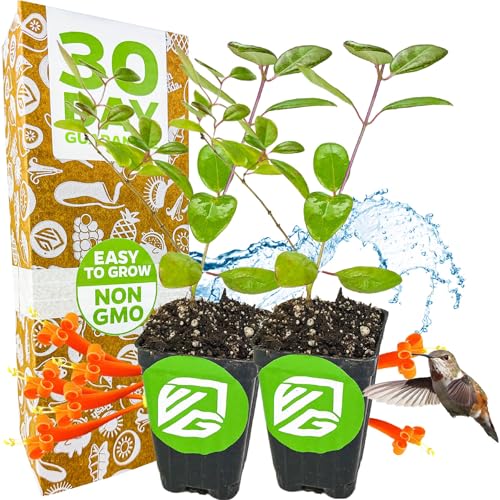
Wellspring Gardens Trumpet Honeysuckle Coral Plant
Check PriceFire Pink
Fire pink: Fire pink is a member of the carnation family that grows in the Southeast, Midwest, and Atlantic states as far north as New York. Its small, red flowers resemble stars.

Fire Pink brings vibrant scarlet star-shaped flowers to woodland gardens in late spring and early summer. This southeastern native prefers partial shade and well-drained soil, making it perfect for naturalizing in open woodlands or along forest edges.
The tubular flowers extend on tall, slender stems up to two feet high, waving gently above basal rosettes of foliage. Each bloom features five brilliant red petals with a narrow tube that’s perfectly sized for hummingbird bills.
Fire Pink is more delicate than some hummingbird plants but absolutely worth growing for its jewel-like blooms and woodland charm. It performs best in slightly acidic soil with good organic content and doesn’t tolerate soggy conditions.
While individual plants may be short-lived, Fire Pink self-seeds in favorable conditions, gradually establishing small colonies. The flowers appear just as spring migration peaks, providing crucial fuel for northbound hummers.
Plant it where morning sun reaches the flowers but afternoon shade protects plants from heat stress. Combine with ferns and other woodland natives for an authentic native plant community.
Penstemon Beardtongue

Penstemon species offer tubular flowers in shades ranging from red to pink, purple, and white, all attractive to hummingbirds. These tough native perennials thrive in full sun and well-drained soil, making them perfect for gardens where many moisture-loving plants struggle.
Flower spikes emerge in late spring through summer, depending on species, reaching heights from one to three feet. The tubular blooms cluster densely along upright stems, creating vertical feeding stations that hummingbirds visit repeatedly.
Penstemons are remarkably drought-tolerant once established and actually prefer lean soils over rich, heavily amended beds. They’re native across much of North America, with species adapted to nearly every region, so choose varieties native to your area for best results.
The foliage often remains semi-evergreen, providing winter interest in milder climates. Red-flowered species like Penstemon eatonii and Penstemon barbatus are particularly effective hummingbird attractors.
Plant in groups for visual impact and to create dependable nectar sources. These low-maintenance perennials multiply gradually, rewarding you with more blooms each year.
Wild Bergamot
Wild bergamot is native to most of the eastern United States. It’s a tall, beautiful plant with each stem topped by a collection of purple tubular flowers that make it the perfect plant for hummingbirds and your flower beds.
Wild bergamot/beebalm: Native to much of the United States, wild bergamot is a familiar plant. Even if you’re not familiar with it by name, you’ve likely seen it on a walk through a local prairie.

Wild Bergamot produces lavender-pink pompom-like flowers that hummingbirds visit regularly, though it’s especially beloved by native bees and butterflies. This prairie native thrives in full sun and adapts to various soil types, including clay and dry conditions that challenge other perennials.
Plants reach two to four feet tall, blooming throughout mid to late summer when many spring bloomers have finished. The tubular florets within each flower head provide accessible nectar for hummingbirds, and the extended bloom period ensures consistent food availability.
Wild Bergamot spreads gradually through rhizomes, creating naturalistic drifts perfect for meadow gardens or informal borders. The aromatic foliage adds fragrance to gardens and resists deer browsing.
This is one of the most adaptable native plants you can grow, succeeding in conditions from dry prairies to garden beds with regular water. It looks particularly striking planted in masses, creating waves of color that draw pollinators from across the landscape.
Deadhead spent blooms to encourage reblooming, or leave seed heads for winter bird food and architectural interest through the cold months.
Royal Catchfly

Royal Catchfly produces brilliant scarlet-red tubular flowers that seem purpose-built for hummingbird beaks. This southeastern native blooms in late spring to early summer, providing nectar during a crucial period when spring flowers fade but summer blooms haven’t yet peaked.
The vivid flowers cluster at the tops of stems reaching one to three feet tall, creating vertical accents in woodland or border gardens. Royal Catchfly prefers partial shade and rich, well-drained soil with good organic content.
While individual plants may be short-lived, they self-seed readily in favorable conditions, ensuring their return year after year. The sticky stems give this plant its “catchfly” name, occasionally trapping small insects but posing no threat to hummingbirds.
This native thrives in gardens that mimic woodland edge conditions—dappled light, leaf mulch, and protection from harsh afternoon sun. Plant Royal Catchfly where its vivid blooms stand out against darker backgrounds or combine it with woodland ferns and wild ginger for textural contrast.
The intense red color is highly visible to migrating hummingbirds.
Salvia Greggii

Salvia Greggii, or Autumn Sage, is a southwestern native that blooms prolifically from spring through fall in warm climates. The tubular flowers come in shades of red, pink, orange, white, and purple, with red varieties being particularly attractive to hummingbirds.
This compact shrubby perennial reaches two to three feet tall and wide, forming neat mounds covered in blooms. Autumn Sage thrives in full sun, well-drained soil, and heat, making it ideal for gardens where many perennials struggle.
It’s remarkably drought-tolerant once established and actually blooms more prolifically with moderate watering rather than constant moisture. The extended bloom season makes it one of the most valuable hummingbird plants for southern and western gardens.
Light pruning after major bloom flushes encourages fresh growth and more flowers. Autumn Sage works beautifully in containers, borders, or massed plantings, and the aromatic foliage deters deer.
Choose red-flowered cultivars like ‘Furman’s Red’ for maximum hummingbird appeal. This low-maintenance native delivers months of color with minimal care, providing reliable nectar throughout the growing season when hummingbirds need it most.

Perennial Farm Marketplace Arctic Blaze Salvia greggii
Check PriceRed Yucca

Red Yucca isn’t a true yucca but a hummingbird favorite native to Texas and northern Mexico. The coral-red tubular flowers bloom on tall spikes reaching three to five feet above grass-like foliage, creating dramatic vertical accents.
Blooming begins in late spring and often continues sporadically through fall, especially with regular deadheading. Red Yucca thrives in full sun, poor to average soil, and drought conditions, making it perfect for low-water gardens and challenging sites.
The evergreen foliage forms architectural clumps that provide year-round structure, while the flower stalks attract hummingbirds from considerable distances. This tough native requires virtually no maintenance once established and tolerates heat, cold, and neglect with equal grace.
It works beautifully in xeriscape designs, container plantings, or as accent plants in mixed borders. Yellow-flowering varieties are also available, though red types attract more consistent hummingbird attention.
Red Yucca rarely needs division and can remain in place for years, growing slowly into impressive specimens. For southwestern gardens, it’s nearly indispensable as a reliable, long-blooming hummingbird plant.

LAKEROD Heavy Duty Adjustable Bird Feeder Pole
Check PriceAgastache Hyssop

Agastache species produce dense flower spikes in shades of red, orange, pink, and purple that hummingbirds visit throughout summer and fall. These aromatic perennials thrive in full sun and well-drained soil, performing best in gardens with good drainage and air circulation.
Native species like Sunset Hyssop and Texas Hummingbird Mint are particularly drought-tolerant and adapted to hot climates. The tubular flowers cluster tightly along upright stems reaching two to four feet tall, providing abundant nectar over an extended season.
Agastache blooms continuously from midsummer through fall frost, offering crucial late-season fuel for migrating hummingbirds heading south. The minty, anise-scented foliage deters deer while attracting beneficial insects.
These low-maintenance perennials require little beyond occasional deadheading and rarely suffer from pest or disease problems. Choose species native to your region for best performance—western species prefer drier conditions while eastern types tolerate more moisture.
Plant Agastache in groups where hummingbirds can easily spot the colorful flower spikes. The long bloom period and drought tolerance make these natives increasingly popular for sustainable, pollinator-friendly gardens that require minimal water once established.
Native hummingbird plants our writers named
| Plant | What our writers say |
|---|---|
| Cardinal flower | Only hummingbirds reach the nectar; eastern U.S. and Canada, Great Plains, Southwest |
| Western columbine | Downward-facing tubular blooms; Pacific Northwest into Nevada, Utah, and Idaho |
| Eastern columbine | Native in most states east of the Rocky Mountains |
| Bee balm | Mint family; bright red tubular flowers; the whole plant can be used for tea |
| Coral honeysuckle | Red tubular flowers and yellow stamens; plant along a fence |
| Trumpet honeysuckle range | Atlantic states from Maine to Florida |
| Fire pink | Carnation family; small red star-shaped flowers; Southeast, Midwest, Atlantic to New York |
| Wild bergamot | Tall purple tubular flowers; native to most of the eastern United States |