


You hang a beautiful suet feeder, excited to welcome woodpeckers and chickadees to your yard. Instead, you get a noisy flock of starlings that won’t leave.

The Camera Feeder We Use In Our Own Backyard
See Today's PriceIf this sounds familiar, you’re not alone—and the good news is, there are simple fixes that really work.
Save this article for later so you don't lose it. Enter your email and I'll send it to you now—plus you'll get my favorite backyard birding tips delivered to your inbox.
Starlings Love Suet but Cannot Hang Upside Down

European starlings, particularly unpopular and aggressive birds, are also suet fans. If you don’t like to feed the starlings, the Cornell Lab of Ornithology recommends buying a feeder that requires birds to hang upside down.
Birds like woodpeckers and chickadees won’t be affected, but starlings will. A suet feeder is designed to feed suet to birds without getting it on their feathers.
Suet usually comes in flat cakes but can come in other shapes. The most common suet feeders are mesh or cage feeders.
These look like a simple cage around the suet, with a hook for hanging. Some suet feeders also offer the suet upside down.
Birds like woodpeckers and nuthatches have no problem feeding upside down, but some less favorable backyard birds like starlings aren’t comfortable doing so.
Pro Tip
The upside-down feeder trick works because starlings can’t cling and feed while hanging inverted. Woodpeckers, nuthatches, and chickadees do it naturally every day. This single swap eliminates 90% of starling visits.
Upside-Down Feeders and Recipes Keep Starlings Out

Not all suet is created equal, and switching up what you offer can make a big difference. Starlings prefer soft, easy-to-eat suet cakes, especially those mixed with seeds, nuts, or fruit.
Get our free Hummingbird Attraction Guide! Plus, we'll send you our best tips for attracting more birds to your yard.
If you want to discourage them, opt for pure suet or suet blends that are firmer and harder to grip. Some manufacturers make “no-melt” or “woodpecker-only” suet that’s denser and less appealing to starlings.
You can also try safflower-based suet mixes. Safflower seeds have a slightly bitter taste that most starlings dislike, but woodpeckers, chickadees, and nuthatches don’t mind at all.
It’s a simple swap that can shift the balance in your favor without sacrificing nutrition for the birds you want to attract.
I can’t make a list of squirrel-proof feeder recommendations without including a strong caged feeder design! This traditional cage design fits a suet cake in the center, too far away from the squirrel’s reach to become squirrel food.
Small birds can still get in and out to enjoy their suet. Even More Recipes For SuetYou can provide suet for the birds all year for lots of energy for their busy lives with “Four Season Suet” & “Leave Out the Starlings” with these additional suet recipes that backyard birds love!
Suet is an especially great option to put out in the winter when birds need extra calories!
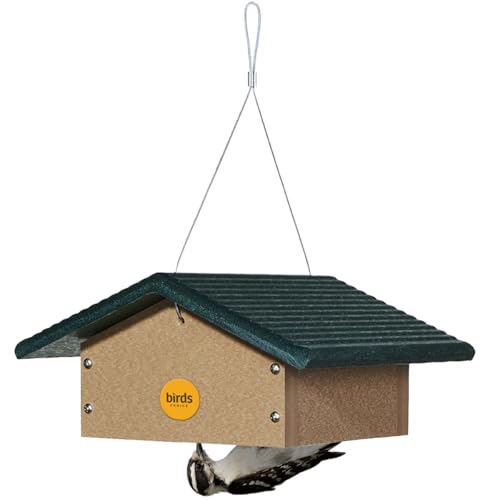
Birds Choice Upside Down Suet Feeder
Check PriceAnother excellent option is a caged suet feeder. These feeders have a wire cage surrounding the suet that allows smaller birds to slip through while blocking larger, bulkier starlings.
The cage openings are typically around 1.5 inches, which is perfect for woodpeckers and other clinging birds but too tight for starlings to navigate comfortably.
Did You Know?
European Starlings were introduced to North America in 1890 when 60 birds were released in Central Park by a Shakespeare enthusiast. Today there are over 200 million — which is why feeder design matters so much.
Caged Feeders and Careful Placement Keep Starlings Out
If you don’t see birds immediately, give it a little while before moving the feeder to a new location, or start by placing your suet feeder close to another feeder that birds frequent. Another benefit of a squirrel-proof feeder is that it also prevents larger nuisance birds like blackbirds and starlings from getting the food you intend to be saved for songbirds.

Kingsyard Squirrel Proof Suet Feeder
Check PriceSafflower and Clinging Feeders Favor Songbirds
Clean out your feeders well and then fill them with safflower seed only. Some birds love safflower, including cardinals, chickadees, and nuthatches, but most don’t, including starlings and some blackbirds.
If your backyard is full of starlings and squirrels that you’re not interested in feeding, safflower seeds may be worth a try, but there’s no guarantee that it will work as intended. The good news is that even if the starlings and squirrels still like it, so do birds like grosbeaks, sparrows, and cardinals.
There are also a variety of feeders for black-oil sunflower seeds that are “clinging” feeders. These are intended for birds that can cling to the surface.
Among these birds are woodpeckers, chickadees, nuthatches, and finches. Blackbirds and starlings find these types of feeders more difficult to navigate.
Only once you have considered how to provide natural food sources for birds through native plant selection and habitat creation should you think about adding feeders to provide supplemental food.
If starlings take over the suet
| What you see | Likely cause | What to do |
|---|---|---|
| European starlings hogging the suet | They are aggressive suet fans and are not comfortable hanging upside down | The Cornell Lab of Ornithology recommends a feeder that requires birds to hang upside down; woodpeckers and chickadees will not be affected |
| Starlings still working a standard suet cage | Starlings are not comfortable feeding upside down, unlike woodpeckers and nuthatches | Use a suet feeder that offers the cake upside down |
| Squirrels taking the suet cake | The cake is close enough to become squirrel food | Use a strong caged feeder with the suet cake in the center, too far from the squirrel’s reach; small birds can still get in |
| Blackbirds and starlings taking food meant for songbirds | Larger nuisance birds can reach unprotected suet | The same cage design keeps larger blackbirds and starlings out while small birds go in and out |
| No birds at a newly hung suet feeder | Birds may not have found the new location yet | Wait a while before moving it, or start by placing the suet feeder close to another feeder birds already frequent |
| Starlings and squirrels at the seed feeders | A backyard full of starlings and squirrels will take many common seeds | Clean the feeders well and fill them with safflower seed only; cardinals, chickadees, and nuthatches love it, but most starlings and some blackbirds do not |
| Starlings still eating after you switch seed | There is no guarantee safflower will work as intended | Even if starlings and squirrels still like it, grosbeaks, sparrows, and cardinals do too |
| Starlings on sunflower feeders | Blackbirds and starlings find clinging feeders more difficult to navigate | Use clinging feeders for black-oil sunflower seeds; woodpeckers, chickadees, nuthatches, and finches can cling to the surface |
📷 Show us your feeder setup! Share a few photos of your feeders and you might be featured on Wild Bird Scoop. Share your setup →





