

Each year, the return of spring brings with it a symphony of bird song. Awash with colorful melodies and cheerful chirps, it’s easy to get mesmerized by nature’s wonder.

The Camera Feeder We Use In Our Own Backyard
See Today's PriceBut which bird species are responsible for this splendor? There are too many to tell, but here, we’ll explore 7 of the most glorious voices that you may be lucky enough to hear around your home.
Save this article for later so you don't lose it. Enter your email and I'll send it to you now—plus you'll get my favorite backyard birding tips delivered to your inbox.
Wood Thrush

When asked their favorite of all birdsongs, many Americans will tell you: The wood thrush.
A spring and summer migrant to the Eastern United States and Southern Canada, the wood thrush’s annual arrival floods deciduous forests with its gorgeous flute-like song. Seemingly made to be a songster, the species comes equipped with a Y-shaped syrinx that allows it to sing pairs of notes at the same time!
While they are fairly reclusive birds that are unlikely to visit backyards, the wood thrush’s song is so prominent that you’re still likely to catch it if you live near a forest or even a suburban park with plenty of trees.
Sadly, the wood thrush’s melodious song is now heard less than ever before. It’s thought that the acid rain that has depleted its invertebrate prey and habitat loss could be to blame for the species’ decline.
Rose-Breasted Grosbeak

While the thrush family lays claim to many of America’s most talented singers, the red-breasted grosbeak offers them stiff competition with its tuneful and prominent warble that’s characteristic of its range.
Because they’re strictly migratory birds, you’ll only hear the sounds of the rose-breasted grosbeak in the spring and summer months. While they pass through the southeast to and fro their breeding range, they only settle down from North Carolina to the Northwest Territories of Canada for nesting.
From March to August, the male rose-breasted grosbeak dons an impressive outfit of black, red, and white colors. His plumage, along with his loud, expressive voice is a sure combination to win the charms of females, who are brown, streaky, and sparrow-like in appearance.
Mourning Dove
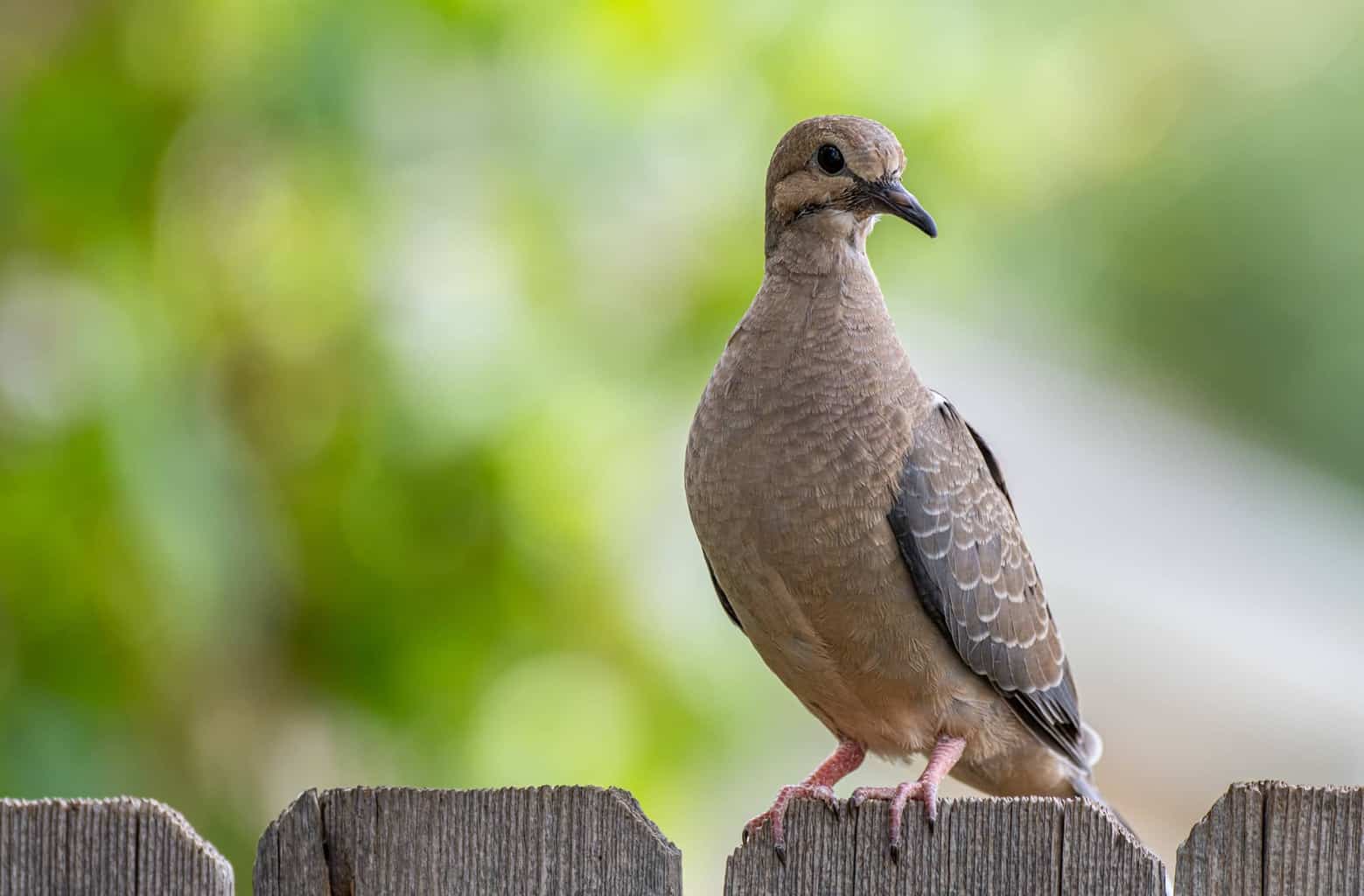
Although doves are not technically songbirds, there’s no doubt that they possess some of the most lulling, hypnotic songs of any bird family.
The mourning dove, so-called for the supposedly melancholic call, has an especially distinctive song that many find nostalgic and restful. As one of America’s most common members of the pigeon family, many people grew up with its tender cooing as part of their familiar soundscape.
Found in city suburbs as well as agricultural regions, the opportunistic mourning dove has adapted well to human development. They can be attracted to platform feeders to feast upon grains like cracked corn and millet throughout the winter.
Get our free Hummingbird Attraction Guide! Plus, we'll send you our best tips for attracting more birds to your yard.
While mourning dove numbers are relatively stable, conservationists have warned that feeding upon lead shot is causing unnecessary losses, and the species is declining in the Western States.
Winter Wren

If there was a gold medal for vocal gymnastics among birds, the winter wren would be a top contender. Leaping out of the undergrowth with head and tail cocked to the sky, the tiny bird belts out a song so complex that it begs to be listened to again and again to be fully appreciated.
The winter wren’s favorite dwellings include damp woodlands and are especially common near rivers and streams. It will also visit backyards, though, especially those with overgrown edges and brush piles for them to forage about or even nest in.
The winter wren’s almost identical Western cousin, the Pacific wren exhibits similar looks and behavior but has a slightly faster, more mechanical-sounding song.
Also worth mentioning here is the lilting song of the Canyon wren, a little bird with one of the most delightful songs on the continent, yet remains enigmatic, and is certainly not a backyard species!
Lincoln’s Sparrow

There are too many talented singers in the sparrow family to mention. The song sparrow and white-throated sparrow sing phrases that most are familiar with, yet the most soothing of all sparrow songs might just belong to Lincoln’s sparrow.
The fact that this little brown bird is not as common as many other sparrow species only makes its song more precious to hear. Like many sparrows, it breeds in Northern and mountainous regions and overwinters in the Southern States, and can be seen in every state during migration.
Scientific studies have shown that male Lincoln’s sparrows singing on cold mornings are more likely to attract females than those that are merely fair-weather singers! Presumably, singing in the cold demonstrates the superior strength and vitality that the females are looking for!
Those in the Southern States can attract Lincoln’s sparrows to their backyards during winter with sunflower seeds and cracked corn. They also appreciate brush piles and overgrown garden edges.
Western Meadowlark

Although the Western Meadowlark isn’t a frequent visitor to backyards, it’s still a common bird that you may well hear if you’re around farmlands and prairies from the Midwest to the West Coast.
A well-loved songbird that also boasts handsome looks, the virtuoso singer is the official state bird of six states: Kansas, Montana, Nebraska, North Dakota, Oregon, and Wyoming. The only bird that represents more states is the northern cardinal!
Its rich, cascading warble starts with a whistle and then tumbles into a rapid, bubbling gurgle that some say is reminiscent of a flute. When set against the silence of a sparse field or an open prairie, the song may well make your hair stand on end.
Baltimore Oriole

The sweet chirps and thrush-like trills of the Baltimore Oriole are almost as colorful as its glorious golden plumage. The diversity of its song and the long pauses between the phrases make sure its song never gets dull. Almost tantalizing, it keeps you listening for more!
Because it is only a spring and summer migrant to everywhere except Florida and Georgia, the return of the Baltimore Oriole’s warm, lilting voice is a seasonal sensation that tells us that spring is here.
Listen out for the Baltimore Oriole and you may be lucky enough to glimpse one weaving fibers of grass, animal hair, and even pieces of string into a sock-like hanging nest. How birds can craft such masterpieces of architecture without ever having witnessed it is one of nature’s great mysteries and miracles!
A firm favorite of backyard birders, the Baltimore oriole is an avid visitor at feeders. Especially fond of mealworms and orange slices, the vibrant and beautiful birds can also be fed on specially formulated nectar at oriole nectar feeders.
📷 Show us your feeder setup! Share a few photos of your feeders and you might be featured on Wild Bird Scoop. Share your setup →





