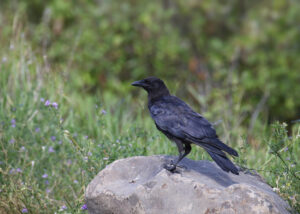
Everything below is reproduced verbatim from four classic accounts of the downy woodpecker — Forbush’s Birds of Massachusetts (1927), F. E. L. Beal’s federal Bulletin 37 on the food of woodpeckers (1911), Bendire’s Life Histories (1895) and Alexander Wilson’s American Ornithology — with nothing of ours added but the headings, the table and this sentence.

Burpee Wildflower 25
See Today's PriceThe sprightly little Downy
Haunts and Habits. The sprightly little Downy, smallest of our woodpeckers, is an admirable bird. It sports no gay plumes and sings no song, but it is a model of patient industry and perseverance, and though it may take a little sap from some maple tree occasionally in early spring, the small amount that it requires will never be missed.
Save this article for later so you don't lose it. Enter your email and I'll send it to you now—plus you'll get my favorite backyard birding tips delivered to your inbox.
It is found commonly throughout most of New England wherever trees grow, and, unlike the Hairy Woodpecker, it may be seen more often usually in settled cultivated districts than in great forests. It delights in orchards, scattered shade trees, and the borders of woods. It may be found in the lowest swamps or on the mountain tops though it may become scarce at an altitude of more than 3,000 feet.
It sports no gay plumes and sings no song, but it is a model of patient industry and perseverance

A miniature edition of the hairy
Beal’s bulletin opens the chapter — The downy woodpecker (frontispiece) is the smallest member of the family in the United States. With its various forms it occupies practically the whole country and extends north into British America and as far as Alaska. To the ordinary observer it is but a miniature edition of the hairy, as the plumage is practically the same.
It is also a quieter bird and probably the least wary and suspicious member of the family. When busy in search of food, it pays little attention to human intruders, and often the first intimation of its presence is a gentle tapping on a dead branch or knot only a few yards away, where a colony of ants or some wood-boring larvae have established themselves.
Like the hairy, it does not migrate, and may be found on its range at any time during the year. Owing, perhaps, to the absence of so many other birds and the leafless condition of the trees, it seems to be most conspicuous in winter. After the summer visitors have gone southward, the downy has a habit of associating with a mixed company of titmice, creepers, nuthatches, and sometimes a few kinglets, who seem to be bound together by a community of interest in the matter of food, for they all forage over the bark of the trunks and branches of trees and eat practically the same things.
Forbush, on its winter movements — As winter comes on, there is more or less migration of the Downy Woodpecker from the northern part of its range to the southward, and from higher to lower altitudes. Some ornithologists have regarded the species as non-migratory. This may be true in respect to individuals in a large part of the range of the species, but Major Mark Robinson says that early in October most individuals of the species leave his station in Algonquin National Park in the highlands of Ontario, and that before winter sets in they disappear and are seen very rarely or not at all during the winter. In the more southern and less elevated parts of Ontario the Downy Woodpecker is common throughout the winter.
Where Downy sleeps on winter nights
Wherever this bird spends the winter, it finds or makes a snug retreat wherein it sleeps on cold winter nights. Often it excavates a cavity in some decayed tree, at the cost of three or more days of hard labor, or it may find an unoccupied nesting hole of some woodpecker, a hollow tree or a bird-house or nesting box in some sheltered situation.
An individual occupied all winter a nesting box only five feet from the ground in my yard. The bottom of the box had a lining of sawdust. The bird entered this box daily from 4.12 to 4.30 p.m. eastern standard time, and left it from 7 to 7.20 a.m. daily, according to the length of the winter days.
Its comings and goings were almost as well regulated as the hands of the clock. Some of my correspondents also have observed this bird lodging through the winter in such a box. It is one of the birds known to take a snow bath.
Courtship, nest and eggs
After a mild winter its courting may begin in March, but if the spring is backward not until late April or early May. Then two males often may be seen following a female about. When one male, with spread wings, and the female have taken up a position on a limb facing each other and ready for the preliminaries, the other male comes in between and interrupts the ceremony, and thus the ancient comedy is reenacted with small results and little advancement for either ardent suitor.
The female may be something of a flirt, and may seem to encourage first one and then the other. In such case the rivals for her affection may be kept in suspense for a week, but when the fickle one finally makes her choice, there is little delay in beginning the domestic arrangements. First, however, there may be rather a protracted hunt for a suitable location.
A dead stub or some branch that is decayed at the heart is usually chosen. Often the birds nest in an apple tree, rarely in a building. Mr. Laurence B. Fletcher informs me that in a boat-house at Marblehead about six feet above high-water mark, a pair of these birds bored through the outer wall just above a door and a little to one side.
The boards were an inch thick and the building was sheathed inside. In the space between the inner and outer walls, the female laid her eggs on a two by four inch joist some three feet below the opening, which faced the harbor. Residences stand all about the boat-house and the locality is much frequented. Here a woodpecker family was reared and successfully launched into the outer world.
Forbush’s breeding notes — Nest: A hole excavated by the birds in tree from 5 to 50 feet up; entrance, round or oval about 1.25 in. in diameter, enlarging inwardly into a gourd-shaped hole 6 to 10 in. deep. Eggs: 4 to 6, rarely 7 or 8; white, similar to those of Hairy Woodpecker but smaller; .65 to .75 by .50 to .62 in.; illustrated in Bendire’s “Life Histories of North American Birds,” Vol. II, Plate I, Fig. 24.
Dates: May 15, Connecticut; May 20 to June 21, Massachusetts; May 27, Maine. Incubation: Period 12 days (Burns); probably by both sexes. One brood yearly.
Bendire, on the nest cavity — In the more southern portions of its range, as in Florida, nidification usually begins about the middle of April; in New England and along our northern border, from four to five weeks later, and in Alaska rarely before June 1. Apple, pear, cherry, oak, maple, poplar, alder, American linden or basswood, ash, willow, and magnolia trees appear to furnish its favorite nesting sites, and it prefers to dig out a home in some dead limb, or in the dead top of the trunk, but it also nests in live trees, usually selecting those in which the core shows signs of decay. In Florida slender dead saplings are preferred.
Both sexes assist in this work, and it takes about a week to complete a suitable excavation. After it is finished the male frequently digs out a somewhat shallower one for himself in the same tree, or in another close by. A new site is usually selected each season in the vicinity of the old one, but occasionally this is cleaned out, deepened a little, and used for several years in succession. Each pair of birds lay claim to a certain range, and intruders on this are driven away.
The Downy Woodpecker, although small in size, does not lack for courage. Mr. J. W. Preston writes me: “On May 15, 1891, a female Downy was attracted from her nest in a decaying branch of a weeping willow near our house by a Red-headed Woodpecker, which was tapping on the tree trunk. It at once attacked the larger intruder fearlessly, and several times she darted at its head without frightening it away, and at last the defense became so spirited that the Red-head seized the little one by the wing, tearing a secondary therefrom, and flew off with its trophy.”
Get our free Hummingbird Attraction Guide! Plus, we'll send you our best tips for attracting more birds to your yard.
The number of eggs laid to a set varies from three to six, sets of four or five being most commonly found; one egg is deposited daily. In the north, as a rule, only a single brood is raised in a season; in the more southern parts of its range it probably raises two. If the first set of eggs are taken, and the entrance hole has not been enlarged, it will often lay a second set in the same cavity, and occasionally a third set. Incubation lasts about twelve days, and the male performs his full share of this duty.
The average measurement of sixty specimens in the United States National Museum collection is 19.40 by 15.08 millimetres, or about 0.76 by 0.59 inch. The largest egg of the series measures 22.35 by 16.26 millimetres, or 0.88 by 0.64 inch; the smallest, 17.78 by 13.46 millimetres, or 0.70 by 0.53 inch.
Wilson’s defense of a slandered bird
In fall and winter, he associates with the Titmouse, Creeper, &c., both in their wood and orchard excursions, and usually leads the van. Of all our Woodpeckers, none rid the apple-trees of so many vermin as this, digging off the moss which the negligence of the proprietor had suffered to accumulate, and probing every crevice.
In fact, the orchard is his favorite resort in all seasons; and his industry is unequalled, and almost incessant, which is more than can be said of any other species we have. In fall, he is particularly fond of boring the apple-trees for insects, digging a circular hole through the bark, just sufficient to admit his bill, after that a second, third, &c., in pretty regular, horizontal circles round the body of the tree; these parallel circles of holes are often not more than an inch or an inch and a half apart, and sometimes so close together, that I have covered eight or ten of them at once with a dollar.
From nearly the surface of the ground up to the first fork, and sometimes far beyond it, the whole bark of many apple-trees is perforated in this manner, so as to appear as if made by successive discharges of buck-shot; and our little Woodpecker, the subject of the present account, is the principal perpetrator of this supposed mischief, —I say supposed, for so far from these perforations of the bark being ruinous, they are not only harmless, but, I have good reason to believe, really beneficial to the health and fertility of the tree.
I leave it to the philosophical botanist to account for this; but the fact I am confident of. In more than fifty orchards which I have myself carefully examined, those trees which were marked by the Woodpecker (for some trees they never touch, perhaps because not penetrated by insects) were uniformly the most thriving, and seemingly the most productive; many of these were upwards of sixty years old, their trunks completely covered with holes, while the branches were broad, luxuriant, and loaded with fruit. Of decayed trees, more than three fourths were untouched by the Woodpecker.
Here, then, is a whole species, I may say, genus, of birds, which Providence seems to have formed for the protection of our fruit and forest-trees from the ravages of vermin which every day destroy millions of those noxious insects that would otherwise blast the hopes of the husbandman, and which even promote the fertility of the tree and, in return, are proscribed by those who ought to have been their protectors, and incitements and rewards held out for their destruction!
Let us examine better into the operations of nature, and many of our mistaken opinions and groundless prejudices will be abandoned for more just, enlarged, and humane modes of thinking.
those trees which were marked by the Woodpecker (for some trees they never touch, perhaps because not penetrated by insects) were uniformly the most thriving, and seemingly the most productive
What 723 stomachs proved
In the laboratory investigation of the food of the downy woodpecker 723 stomachs were examined. They were collected in 33 States, the District of Columbia, and Canada. They are quite regularly distributed over the 12 months of the year, and probably represent fairly the average annual food. This is made up of 76.05 per cent of animal matter to 23.95 per cent of vegetable.
Animal food.—Beetles taken collectively amount to 21.55 per cent, and are the largest item of the food. Of these, a little less than 14 per cent are wood-boring larvae, principally cerambycids, with some buprestids. They were found in 289 stomachs, or about 40 per cent of all, and 10 contained no other food. This is only about half the amount found in the stomachs of the hairy woodpecker, and shows that the downy pecks wood much less than the hairy.
These larvae are eaten at all times of the year, though the most are taken in the cooler months. In November they constitute 20 per cent of the food, which is the maximum, though in the other fall months and in the winter and spring months they do not fall far below. In June the minimum of 4.5 per cent was eaten. The economic value of the destruction of these larvae is very great.
Ants are eaten by the downy to the extent of 21.36 per cent of its diet, and are taken more regularly than any other element of the food. October, with 9.85 per cent, appears to be the month of minimum consumption, but it is doubtful if this would always hold, as every other month shows at least twice this amount.
Hymenoptera other than ants are eaten very sparingly by the downy. They aggregate only 1.18 per cent, and in June, the month of greatest consumption, amount to only 2.45 per cent, while none were found in the 28 stomachs taken in May.
Hemiptera, or bugs, were found in 111 stomachs, and constitute 8.57 per cent of the food. Scales, or bark lice, were found in 41 stomachs and aphids, or plant lice, in 20. A collection of 10 stomachs taken in Maine in March contained from 90 to 100 per cent of scales, the average for 10 stomachs being 93.10 per cent.
This would seem to indicate that where these insects abound, the birds collect and feed upon them almost exclusively. Scales and plant lice together amount to 2.85 per cent of the yearly food. Four genera and two species of scales were identified. Bugs of various other species reach a little less than 6 per cent.
Caterpillars appear to be a very acceptable food for the downy woodpecker, as they constitute 16.50 per cent of the yearly diet. A large proportion of them are of the wood-boring species, and were evidently dug out of the wood, the same as the beetle larvae. Others are surface feeders taken from leaves and bark.
In this connection the greatest interest attaches to the pupae and larvae of the codling moth, generally recognized as the worst pest of the apple orchard. These insects, in one stage or the other, were identified in 8 stomachs. While this is a small number, the wonder is that the bird gets them at all.
The eggs are minute, and as soon as they hatch the larvae bore into the fruit, where they feed in security, though it is claimed by some observers that woodpeckers sometimes dig them out. When full grown, they leave the apple and crawl into some cranny, where they change to pupae. It is in this condition, i. e., as larvae full grown or pupae, that they are secured by the birds. One stomach of the downy contained 18, and another 16 of these grubs.
Vegetable food.—Fruit was eaten to the extent of 5.85 per cent of the whole food. Most of it is of useless wild varieties.
The poison Rhuses (Rhus radicans, R. vernix, R. diversiloba, and R. toxicodendron) seem to afford a favorite winter food for many birds. While the seeds themselves are so thoroughly protected by a hard, horny coating that they are seldom broken in the stomachs, they are overlaid by a white waxy pulp, which easily comes off, and is probably very nutritious.
These seeds were found in 86 stomachs of the downy woodpecker, and they amount to 5.93 per cent of the food. Unfortunately they germinate freely after they have been voided, and probably these birds are the most efficient agents in distributing these noxious plants. Mast, i. e., acorns, beechnuts, chestnuts, hazelnuts, chinquapins, with a few other smaller seeds, amounts to 8.20 per cent of the food.
This food is eaten in every month—the most in January and the least in July. A little cambium and some rubbish make up the remainder of the vegetable food, 2.31 per cent. The charge sometimes made that the downy injures trees by eating the inner bark is disproved. It eats cambium rarely and in small quantities.
Beal’s summary — Summary.—The foregoing discussion of the food of the downy woodpecker shows it to be one of our most useful species. The only complaint against the bird is on the score of disseminating the poisonous species of Rhus. However, it is fortunate that the bird can live on this food when it is difficult to procure anything else. The insect food selected by the downy is almost all of species economically harmful.
| Food | Share of the yearly diet | Detail from the bulletin |
|---|---|---|
| Animal matter, all told | 76.05 per cent | against 23.95 per cent vegetable |
| Beetles | 21.55 per cent | wood-boring larvae in 289 stomachs — about 40 per cent of all |
| Ants | 21.36 per cent | taken more regularly than any other food |
| Caterpillars | 16.50 per cent | including codling-moth grubs — one stomach held 18 |
| Bugs, including scale insects | 8.57 per cent | 10 Maine stomachs taken in March averaged 93.10 per cent scales |
| Fruit | 5.85 per cent | most of it useless wild varieties |
| Poison ivy and sumac seeds | 5.93 per cent | found in 86 stomachs — the bulletin’s one complaint |
Forbush’s verdict
Having now presented the evidence that the Downy Woodpecker has sapsucking habits, I will leave the reader to judge for himself whether a case against the bird has been made out, and will consider the effect produced by its activities. I have never been able to find any evidence that this work of the Downy Woodpecker injures the trees.
In fact it seems to benefit them and increase their growth, perhaps because it slightly weakens the bark and so gives the trunk more chance for growth, or because it stimulates growth as removing the outer bark with a scraper often does. Alexander Wilson, who took great pains to study the effect of the drilling of the Downy Woodpecker declared that uniformly he found that the trees marked with its rings of pits thrived best and were most productive.
Economic Status. Professor F. E. L. Beal of the Biological Survey, United States Department of Agriculture, reporting on the food contained in 723 stomachs of this species, found that 76.05 per cent of the food consisted of animal matter and 23.95 per cent of vegetal; the animal matter consisting chiefly of noxious insects, and the vegetal matter mainly such as to be of little or no importance economically.
It would be difficult to find a bird more useful and less harmful than the Downy Woodpecker. It should have complete protection at all times and places.
Source
Edward Howe Forbush, Birds of Massachusetts, Vol. II (1927), Downy Woodpecker. F. E. L. Beal, Food of the Woodpeckers of the United States, USDA Biological Survey Bulletin 37 (1911). Charles Bendire, Life Histories of North American Birds, Vol. II (1895). Alexander Wilson, American Ornithology (Jardine ed.), Downy Woodpecker. Public domain. Biodiversity Heritage Library / Internet Archive.
Passages reproduced verbatim from the scanned originals. Hard line-wraps joined and the scan’s doubled word spacing collapsed; page headers, plate captions and the sources’ reference footnotes omitted; footnote reference marks (superscript digits, asterisks and daggers printed after sentences) removed; OCR pipe characters removed; the printers’ space before punctuation closed up and compound hyphens the scan breaks apart closed. The OCR loses the ae ligature in Latin names (e.g. ‘larve’, ‘Carabide’); ‘ae’ restored throughout. Single-glyph OCR corrections: “found in tho lowest swamps” to “found in the lowest swamps”; “The downy woodpecker – (frontispiece)” to “The downy woodpecker (frontispiece)”; “Vegetable food —Fruit was eaten” to “Vegetable food.—Fruit was eaten”; “Seales, or bark lice” to “Scales, or bark lice”; “In this connection. the greatest” to “In this connection the greatest”; “Theeggs are minute” to “The eggs are minute”; “claimed by some. observers” to “claimed by some observers”; “Hach pair of birds lay claim toa certain range” to “Each pair of birds lay claim to a certain range”; “species ‘ve have.” to “species we have.”; “up to the ‘rst fork” to “up to the first fork”; “many apple–rees is perforated” to “many apple-trees is perforated”; “by euccessive discharges” to “by successive discharges”; “orchards which | have myself” to “orchards which I have myself”; “ought to haye been” to “ought to have been”. Cuts, always at sentence boundaries: Forbush’s long sap-pit investigation is represented only by his closing verdict (kept short here so it can stand alone later); his excavation paragraph and Beal’s weevil, grasshopper-egg, hellgramite and fruit-list passages are omitted; Bendire’s nesting paragraph is cut around a garbled fraction (his entrance-hole sentence) and his egg paragraph is trimmed after the incubation sentence; Wilson’s account is represented by the orchard-rings passage and his closing paragraph.
📷 Show us your feeder setup! Share a few photos of your feeders and you might be featured on Wild Bird Scoop. Share your setup →