While many bird species change partners each season, some are remarkably devoted—pairing up for years or even a lifetime. These faithful flyers return to the same mates, territories, and sometimes even nests year after year.

The Camera Feeder We Use In Our Own Backyard
See Today's PriceIf you know what to look for, you can spot these devoted pairs right in your own backyard.
Save this article for later so you don't lose it. Enter your email and I'll send it to you now—plus you'll get my favorite backyard birding tips delivered to your inbox.
Northern Cardinal Pairs
Northern Cardinals are one of the most recognizable monogamous pairs you’ll see at your feeders. Pairs generally stay together year-round but are not necessarily monogamous.
DNA studies of two populations of Cardinals found that between 9 and 35% of nestlings were not fathered by the female’s mate. Cardinals prefer sunflower and safflower seeds, so use those to fill your bird feeders.
If you want a genuinely hospitable garden for cardinals, get a feeder with a cardinal ring around the food access area. Cardinals prefer to face their food, and the ring will allow them to perch and eat comfortably.
Familiarizing yourself with the song and calls of a cardinal can be a great idea, mainly because you will often hear a cardinal before you see one. Learning to recognize the call will definitely help you spot more cardinals.

Northern Cardinals are one of the most recognizable monogamous pairs you’ll see at your feeders. The brilliant red male and his warm brown mate with red accents stay together year-round, often feeding side-by-side and calling to each other with their distinctive whistling songs.
Watch for the touching courtship feeding behavior, where the male gently places seeds into the female’s beak—a bonding ritual they perform even outside breeding season. Cardinals typically maintain the same territory throughout their lives, so once a pair claims your yard, they’ll likely return to the same spots day after day.
You’ll often hear them before you see them, exchanging “birdy-birdy-birdy” calls back and forth. To attract cardinal pairs, offer black oil sunflower seeds in platform or hopper feeders, and plant dense shrubs like holly or juniper where they can nest and take cover together.
Attract cardinal pairs with a hopper feeder filled with sunflower seeds.
Read next
More backyard bird behavior and habitat reads
Did You Know?
Cardinals are one of the few species where both male and female sing. If you hear a ‘birdy-birdy-birdy’ call answered by another, you’re likely hearing a bonded pair communicating.

Kingsyard Adjustable Metal Platform Bird Feeder
Check PriceMourning Dove Duos
Mourning Doves form strong pair bonds that can last for life, though they’re more social than some other monogamous species and often feed in small flocks. Mourning doves are one of the most populous birds in all of North America.
They are popular game birds who breed multiple times throughout the year. Some mourning dove pairs will even raise six broods of hatchlings in a single year!
Mourning doves are relatively small birds, and as such, they are vulnerable to predation by hawks. Thankfully, the mourning dove has several adaptations that help it to avoid being eaten.
Mourning doves are widespread across the nation, so it’s only natural to find them in abundance in Vermont. Usually, when anyone talks about doves, this type of dove will be at the forefront of their minds.
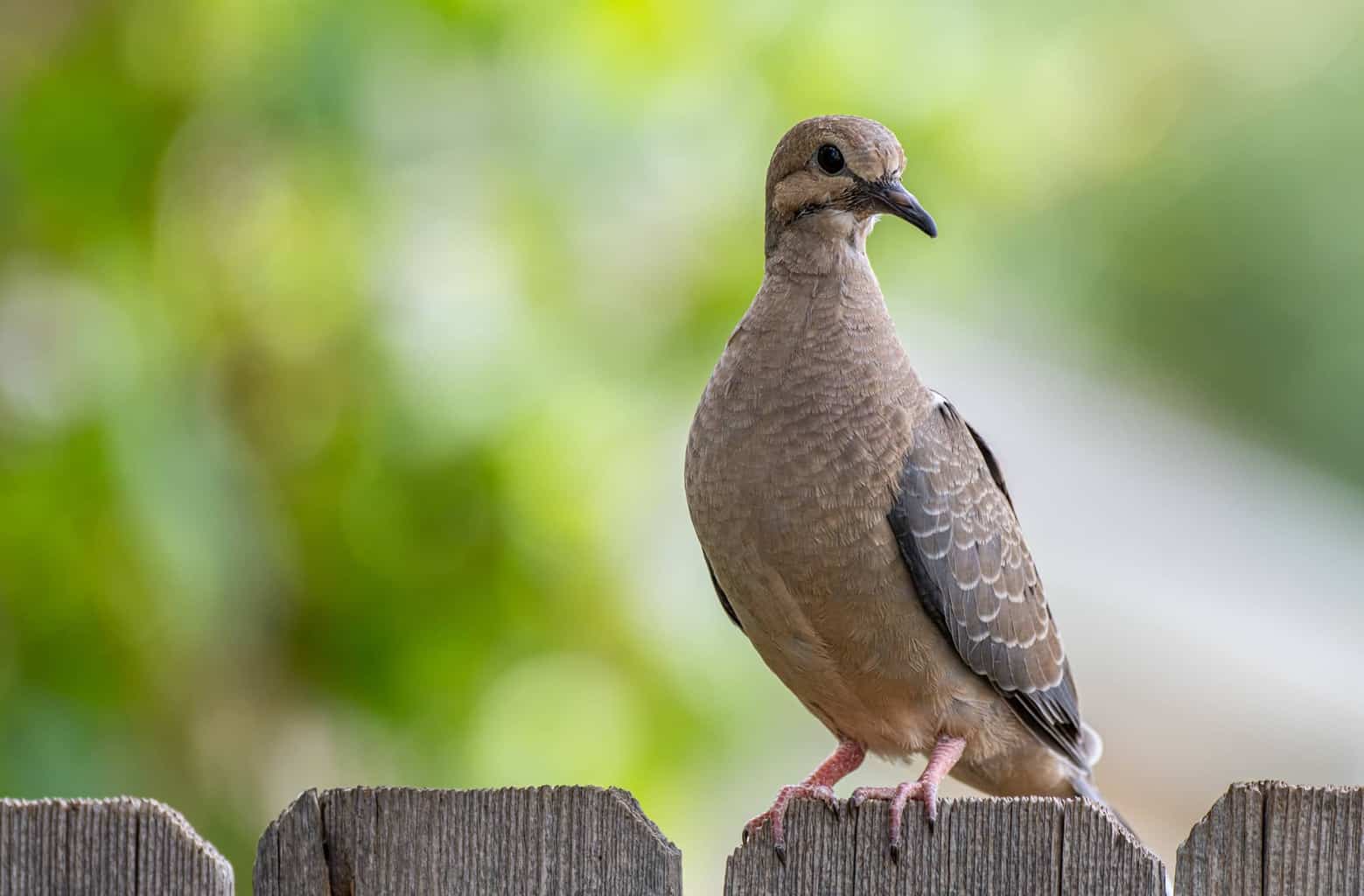
Mourning Doves form strong pair bonds that can last for life, though they’re more social than some other monogamous species and often feed in small flocks. The easiest way to spot a mated pair is during nesting season, when you’ll see them working together—the male gathers nesting materials while the female arranges them into their famously flimsy platform nest.
Both parents share incubation duties in strict shifts, with males typically sitting during midday hours. Outside breeding season, paired doves often perch closely together on power lines or fence posts, their bodies nearly touching.
Listen for the male’s soft, haunting cooing as he calls to his mate. These ground feeders appreciate scattered millet, cracked corn, and sunflower hearts on platform feeders or directly on the ground.
Providing a reliable water source is especially important, as doves drink frequently and often visit birdbaths in pairs. A low platform feeder and a solar birdbath fountain will keep dove pairs visiting all year.
Eastern Bluebird Bonds
Eastern Bluebirds typically form monogamous pairs during the breeding season, with many couples reuniting year after year if both survive migration. Bluebird mating habits are actually quite fascinating.
While a male and female bluebird will typically pair up and mate for life, there is fascinating research into the genetics of bluebirds that shows that females aren’t monogamous–and the young in a bluebird nest may or may not belong to the male defending that nest. Eastern Bluebirds produce more than once a year.
According to the Cornell Lab, Eastern Bluebird hatchlings who mature before winter will leave their parents to become independent, but those who hatch later in the season will stay with their adults throughout the winter. Many people put up nest boxes to take the place of traditional tree cavities in hopes of attracting a nesting bluebird pair to their backyards.
You might also see nest boxes in open public natural areas to provide bluebirds and other cavity nesters with cover.

Eastern Bluebirds typically form monogamous pairs during the breeding season, with many couples reuniting year after year if both survive migration. The vibrant blue male and his rusty-breasted mate are highly territorial, so if you see a pair claiming your yard in early spring, they’ll likely defend that same area throughout the nesting season.
Males perform charming courtship displays, fluttering their wings and singing softly while presenting nesting materials to potential mates. Once paired, both parents work together raising multiple broods—often three per season in southern regions.
Watch for them perching together on fence posts or low branches, scanning for insects in your lawn. The male will sometimes bring food to the female while she incubates eggs.
To encourage bluebird pairs to settle in your yard, install properly designed nest boxes facing open areas, offer mealworms in dedicated feeders, and maintain some open grassy space where they can hunt insects together. Give bonded pairs a proper bluebird house and offer dried mealworms to keep them nesting in your yard.
Pro Tip
Bluebird pairs can raise up to 3 broods per season in southern regions. Clean out the nest box after each brood fledges to encourage them to nest again immediately.

Kingsyard Bluebird House with Predator Guard
Check PriceCarolina Wren Partners
Carolina Wrens form devoted pair bonds that last year-round, with couples staying together through all seasons until one partner dies. These energetic little birds with bold white eyebrows are inseparable, moving through your yard together as they forage in brush piles, under decks, and along fence lines.
The Carolina Wren has a loud, ringing call that carries far through its territory. Its song is sometimes heard as “teakettle.” It builds domed nests of grasses, leaves, and bark strips in natural cavities or manmade sites.
The Carolina Wren may raise 2-3 broods per breeding season. Wrens are secretive little brown birds of the mostly New World family Troglodytidae.
Get our free Hummingbird Attraction Guide! Plus, we'll send you our best tips for attracting more birds to your yard.
Two of the most familiar are the house wren, primarily a winter visitor to South Carolina, and the Carolina wren, a year-round resident to which the Carolinas gave their name.

Carolina Wrens form devoted pair bonds that last year-round, with couples staying together through all seasons until one partner dies. These energetic little birds with bold white eyebrows are inseparable, moving through your yard together as they forage in brush piles, under decks, and along fence lines.
The pair maintains constant vocal contact with each other—listen for their loud “teakettle-teakettle-teakettle” duets, where the female often adds chattering notes to the male’s song. They’re cavity nesters with creative taste, often choosing unusual spots like flowerpots, mailboxes, or garage shelves for their domed nests.
Both partners defend their territory vigorously against other wrens. You’ll often see them foraging close together, flicking their tails upward as they search for insects and spiders.
To welcome Carolina Wren pairs, provide dense cover with brush piles and evergreen shrubs, offer suet and mealworms at feeders, and consider leaving a small open-fronted nest box in a protected spot. Hang a suet feeder near dense cover and mount a wren house to support wren pairs in your yard.

CEDAR ALPHA Cedar Wood Cardinal Nest Box
Check PriceBlack-capped Chickadee Couples
Black-capped Chickadees form monogamous pairs during breeding season, and many couples reunite in subsequent years, especially if their previous nesting attempts were successful. During winter, pairs join larger flocks for foraging and protection, but mated birds stay close together within the group and often roost near each other.
The Carolina Chickadee is one of the few birds that mate with a different breed. It interbreeds with Black-Capped Chickadee, giving their offspring the combined traits of both birds.
Consequently, distinguishing between the two of them is quite the head-scratcher for birdwatchers. Additionally, both the wing and the bird’s cap are colored black while the rest of the Black-capped Chickadee’s body is white, including the wings, the face, and the back.

Black-capped Chickadees form monogamous pairs during breeding season, and many couples reunite in subsequent years, especially if their previous nesting attempts were successful. During winter, pairs join larger flocks for foraging and protection, but mated birds stay close together within the group and often roost near each other.
Come late winter, you’ll notice paired chickadees separating from flocks to establish breeding territories. The courtship is subtle but sweet—males feed females and both engage in soft, high-pitched vocalizations different from their familiar “chick-a-dee-dee-dee” call.
Watch for pairs inspecting potential nest cavities together, with both partners entering and exiting holes in dead trees or nest boxes. They’re excellent excavators, often choosing soft, rotting wood to carve out their own cavities.
Attract chickadee pairs by maintaining dead snags in your yard, offering black oil sunflower seeds and suet, and installing nest boxes with one-and-a-quarter-inch entrance holes in wooded or edge habitats. Keep a feeder stocked with black oil sunflower seeds to help chickadee pairs through harsh winters.

Kettle Moraine Recycled Nest Box
Check PriceBarn Owl Lifers
The Barn owl is best known for its heart-shaped white face; so much so that it’s sometimes called the monkey-faced owl. The Barn owl is well-equipped for nocturnal hunting: it has a heightened sense of smell, and an ability to see in dim light.
Barn owls are profoundly nocturnal. They can be seen hunting during the day only during a food shortage.
These dark-eyed owls use their strong hearing sense and their excellent low-light vision to strike their prey in total darkness. A Barn owl hunting is quite a sight.
Barn owls live in open areas, like fields, grasslands, marshes, and meadows where they can hunt more easily. You might find them anywhere on the Hawaiian Islands, and sometimes, a barn owl will stay in barns or other man-made structures, hence its name.

Keep going
More backyard bird behavior and habitat reads
- Why Scarlet Tanagers Disappear From Your Yard by Noon (And Where They Go)
- The 'Second Wave' Hummingbird Arrival: Why Females Show Up 10 Days After Males
- The Tuesday-Morning Trick to Spot Baby Bluebirds Practicing Their First Flight
- The Memorial Day Weekend Bird Watcher's Window: 12 Species You'll Only Catch This Week
Barn Owls are among the most faithful birds, often pairing for life and returning to the same nesting sites year after year. These ghostly white nocturnal hunters are less common in typical backyards, but if you have open fields, farmland, or large properties nearby, you might attract a resident pair.
Males perform dramatic courtship flights and provide food to females during breeding season, a behavior that strengthens their bond. Both parents are devoted caregivers, with females incubating eggs while males hunt tirelessly to feed the family.
Paired Barn Owls often roost together during the day in barns, silos, or large nest boxes. You’re most likely to spot them at dusk or dawn, flying silently on pale wings across open areas.
Their distinctive heart-shaped faces and eerie screeching calls make them unmistakable. To encourage Barn Owl pairs, install large, specialized nest boxes on poles or in barns, maintain rodent-friendly habitat like meadows or field edges, and avoid using rodenticides that could poison these beneficial hunters.
Mount a barn owl nest box on a barn wall or large tree 12-15 feet high to attract a breeding pair.
Bald Eagle Pairs

Bald Eagles mate for life and build some of the largest nests of any bird—massive stick structures that pairs return to and add onto each year, sometimes weighing over a ton. Bald Eagles and African Fish Eagles are generally monogamous.
Well, that is to say, Bald Eagles are definitely monogamous, as they pair with a mate for their entire life. African Fish Eagles are probably monogamous, but there is less concrete evidence of that fact.
Bald Eagles also lay between one and three eggs, which incubate for 33.5 days. If a Bald Eagle nest is destroyed while the eggs are incubating, the female might lay a second clutch.
American Bald eagles, Haliaeetus leucocephalus, live in and around temperate forests and areas near large bodies of open water with an abundant food supply and old-growth trees for nesting.
Canada Goose Families

Canada Geese form strong, lifelong pair bonds and are famously devoted parents, making them easy to identify as couples in your yard or local pond. In addition to making a loud honking sound, Canada Geese are also known for their tell-tall hiss!
If they are threatened, they hiss to frighten away potential predators, including adults. Never approach a hissing Canada Goose – they will go on the offensive!
Goose eggs are large and nutritious, making them an appealing target for hawks. As a result, goose parents must be vigilant in protecting their nests from these avian predators.
The Canada goose, Branta canadensis, and cackling goose, Branta hutchinsii, might sometimes be mistaken for ducks in North America, for example, along with Branta bernicla, which has a shorter neck than other species.
American Crow Bonds

American Crows are highly intelligent birds that form monogamous pair bonds lasting for life, often assisted by their previous offspring who stay to help raise new siblings. Nestlings are young, immature crows that still live in the nest where they were born.
Unlike smaller birds that only stay in the nest for a couple of weeks, baby crows remain in the nest for about 30 days. This makes them pretty desirable prey for hawks, who are known to eat smaller birds, especially helpless crow babies.
The American Crow is one of the most common birds in the US. It looks pretty much like most species of crows, but you may be able to identify it with its straight bill and squared tail.
Crows are relatively large birds, which makes them difficult targets for hawks. Additionally, crows are intelligent birds that often evade being captured by predators.
However, if a hawk is particularly hungry or desperate, it may take the risk of attacking a crow. Ultimately, whether or not hawks eat crows depends on the individual bird and the circumstances.
Common Raven Duos

Common Ravens are remarkably intelligent and form devoted lifelong pair bonds characterized by playful aerial acrobatics and complex vocalizations. These large, all-black birds are less common in suburban yards than their crow cousins, preferring wilder, more remote areas, but they’re expanding their range in many regions.
Mated raven pairs are inseparable, often seen flying together in synchronized patterns, performing barrel rolls and dive-bombs purely for what appears to be enjoyment. They communicate with an impressive range of calls beyond the typical croaking—paired ravens develop unique vocalizations they use only with each other.
Both partners work together building substantial stick nests on cliff ledges or tall trees, returning to the same sites annually. Watch for courtship displays where males puff up their throat feathers and bow to females.
Ravens share food, preen each other, and cooperate in solving problems—their intelligence makes their pair bonds especially fascinating to observe. If you live near raven habitat, providing occasional food scraps and protecting large nesting trees supports these remarkable pairs.
Belted Kingfisher Pairs
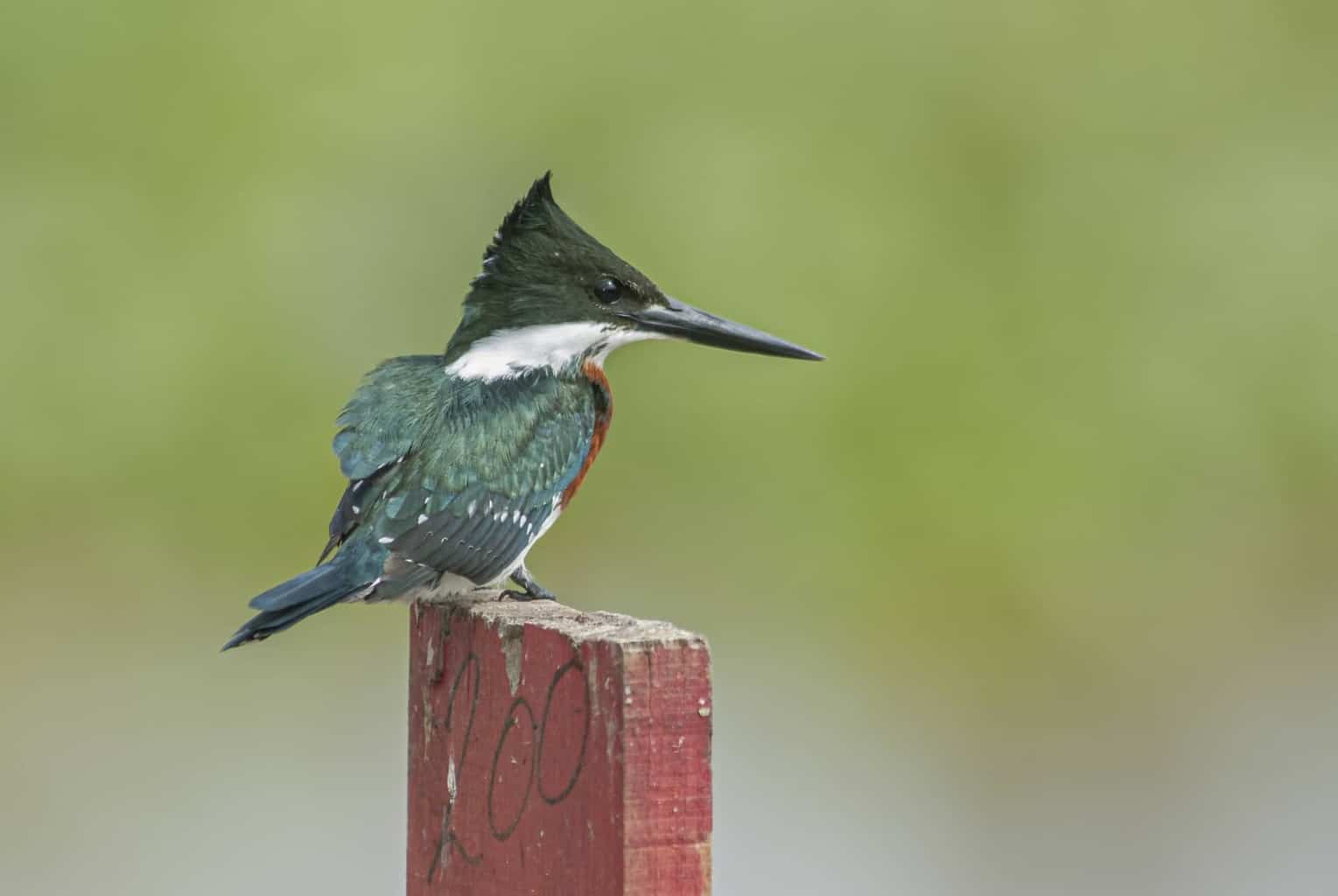
Belted Kingfishers form monogamous pair bonds during breeding season, with some pairs reuniting in subsequent years if both return to the same territory. You’re likely familiar with belted kingfishers, especially if you spend a lot of time around rivers, ponds, or streams, where they can be seen fishing or perched on a tree branch, ready to swoop down to the water.
According to the National Audubon Society, kingfisher tunnels usually stretch three to six feet into sandy banks but may be as long as 15 feet in some instances.
Great Horned Owl Partners

Great Horned Owls form monogamous pair bonds that typically last for life, with couples defending the same territory year after year through all seasons. The great horned owl’s deep hoots can be heard from a great distance, and chances are, if you follow its classic sounds, you’ll find it perched on a fence.
The best time to see these owls is at dusk when they’re about to begin hunting for prey. The Great Horned owl is also a permanent resident of Vermont.
It feeds on larger prey, including squirrels, rabbits, skunks, and other owls like the eastern screech owl. The owl’s body provides incredible camouflage as it perches among the trees waiting for its prey, but in the desert, it usually nests on cliffs.
Great horned owls can also be seen in cities frequently.
| Species | The bond | Worth knowing |
|---|---|---|
| Northern Cardinal | Pairs stay together year-round | DNA studies found 9-35% of nestlings were not fathered by the female's mate |
| Mourning Dove | Strong bonds, often lifelong | Some pairs raise six broods of hatchlings in a single year |
| Eastern Bluebird | Typically pair for life | Research shows females are not strictly monogamous |
| Carolina Wren | Devoted year-round pair | Builds domed nests of grasses, leaves and bark strips |
| Black-capped Chickadee | Monogamous, reunites in later years | Interbreeds with the Carolina Chickadee where ranges overlap |
| Barn Owl | Long-term pair | Hunts in total darkness using hearing and low-light vision |
| Bald Eagle | Mates for life | Lays one to three eggs; incubation runs 33.5 days |
| Canada Goose | Lifelong pair, devoted parents | Hisses to drive off predators; never approach a hissing goose |
| American Crow | Lifelong bond, helped by past offspring | Nestlings stay in the nest about 30 days |
| Belted Kingfisher | Pairs during breeding season | Nest tunnels run three to six feet, sometimes as far as 15 |
| Great Horned Owl | Pairs for life on one territory | Deep hoots carry a long way; look for them at dusk |
📷 Show us your feeder setup! Share a few photos of your feeders and you might be featured on Wild Bird Scoop. Share your setup →