


When natural water sources freeze over, birds face a serious survival challenge. Dehydration threatens wild birds even more than hunger during winter months—they need water for drinking and maintaining their feathers’ insulating properties. A reliable heated bird bath can make your yard a critical winter refuge, often attracting more species than feeders alone.

Two Leak-Proof Feeders, Zero Ants & Bees
Check PriceBut not all heated baths deliver on their promises. Some crack after one season, others consume excessive electricity, and a few barely keep water thawed when temperatures plunge. Let’s look at what actually works and where you shouldn’t waste your money.
Save this article for later so you don't lose it. Enter your email and I'll send it to you now—plus you'll get my favorite backyard birding tips delivered to your inbox.
Why Heated Bird Baths Matter More Than You Think

Birds don’t hibernate. Throughout winter, chickadees, cardinals, finches, and dozens of other species remain active in freezing conditions, and they desperately need accessible water. While birds can eat snow, melting it requires precious calories they can’t afford to spare.
Traditional strategies like breaking ice daily or setting out warm water provide only temporary relief—sometimes for just minutes in severe cold. Heated bird baths solve this problem by maintaining consistent water access, and the results speak for themselves. Backyard birders consistently report increased species diversity and activity around heated water sources, even when feeders sit untouched nearby.
Water also helps birds maintain feather health. Clean, properly aligned feathers create the insulation layers birds rely on for survival. A functional heated bath becomes one of the most valuable resources in your winter yard.
The 3 Types of Heated Bird Baths (And How They Actually Work)
Fully Heated Bird Baths integrate heating elements directly into the basin. These self-contained units plug in and go, requiring no additional components. The advantage? Simplicity and reliability when you choose quality models. The downside is cost—expect to pay $60-$150 for decent versions—and if the heating element fails, you’re replacing the entire unit.
Heated Inserts are electric discs that sit inside existing bird baths. These typically cost $25-$50 and transform any basin into a heated bath. They’re budget-friendly and versatile, but performance varies wildly by brand. Cheap versions often fail to prevent freezing below 20°F, and the visible cord can be unsightly. They work best in baths with good insulation and some depth.
Immersion De-icers are submersible heaters originally designed for livestock troughs, adapted by clever birders. They’re extremely effective in deep basins and cost $20-$40, but they’re often too powerful for shallow bird baths, can overheat small water volumes, and aren’t designed with bird safety as a priority. Use these cautiously and only in deeper setups.
Our Top Picks: Heated Bird Baths That Deliver
Best Value: Farm Innovators 3-in-1 Heated Bird Bath

Farm Innovators BD-75 Heated Terracotta Birdbath
Check PriceThe Farm Innovators BD-75 consistently outperforms competitors in real backyard conditions. This fully heated plastic bath withstands freeze-thaw cycles, keeps water thawed down to -20°F, and uses only 75 watts. Three mounting options (deck post, clamp mount, ground legs) give you flexibility. The shallow design is perfect for small songbirds, and the textured surface prevents slipping. At around $45, it delivers exceptional value. The cord tucks away during summer for year-round use. Main complaint in reviews: the bowl could be bigger. But honestly, smaller means birds can’t get soaked in dangerous cold.
Best for Deck Mounting: Allied Precision 650

API Heated Bird Bath with Stand or Mount
Check PriceFor a premium option, the Allied Precision 650 offers convenient cleaning with its EZ-Tilt-To-Clean deck rail mount—the basin tilts on a hinge so you can dump dirty water without removing anything. The 150-watt heating element handles extreme cold (tested to -20°F), and the thermostat prevents energy waste during warmer spells. At 20 inches diameter with a 2-inch depth, it’s sized right for most songbirds. It’s heavier and pricier at $80-$100, but the durability and that tilt mechanism justify the investment for serious birders who don’t want to mess around with frozen, dirty water.
Best with Pedestal Stand: API Heated Bird Bath

API Heated Bird Bath with Stand or Deck Mount
Check PriceIf you want a traditional pedestal look with heating built in, the API 970/600 series delivers. 150-watt thermostatically controlled heater, 20-inch basin, and a 30-inch metal stand included. The heating element is completely hidden beneath the surface, and the textured rim is designed specifically for bird talons to grip. Can also mount to a deck rail if you change your mind. Three-year warranty from a company that’s been making this stuff forever. Some reviewers mention the bowl can wobble slightly on the pedestal—add some stabilizing weight if you’re in a windy area.
Best Premium Option: Farm Innovators Scalloped Pedestal
The Farm Innovators HBC-120C combo is the nicest-looking heated bird bath I’ve come across. The compression-molded scalloped design actually looks like concrete but won’t crack like it. Comes with a heavy-duty pedestal that matches. 120-watt heater, thermostatically controlled, hidden electrical connection underneath. This is the one to get if aesthetics matter and you don’t want something that screams “plastic bird bath.” Not cheap at around $90-110, but it’ll last years and actually looks good in your garden.
Best Ground-Level Option: Farm Innovators Four Seasons
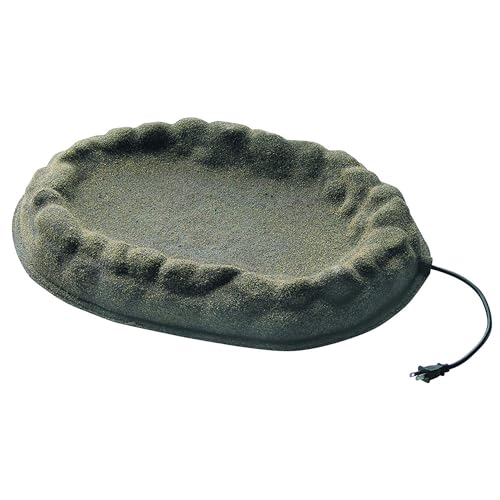
Farm Innovators Heated Bird Bath with Sand Design
Check PriceGround-level baths attract more species because drinking from the ground is natural behavior for most birds. The Farm Innovators FS-1 Four Seasons bath has a stone-like sand-coated texture that blends into the landscape. 70 watts keeps it efficient, and the hidden electrical connection keeps things tidy. Low profile means wind doesn’t blow it around. The only concern with ground baths is predators (cats), so place it where birds have clear sightlines and escape routes to nearby cover.
Best De-Icers for Existing Bird Baths
Already have a bird bath you love? A quality de-icer turns any basin into a heated winter water source.
Best Overall De-Icer: K&H Ice Eliminator
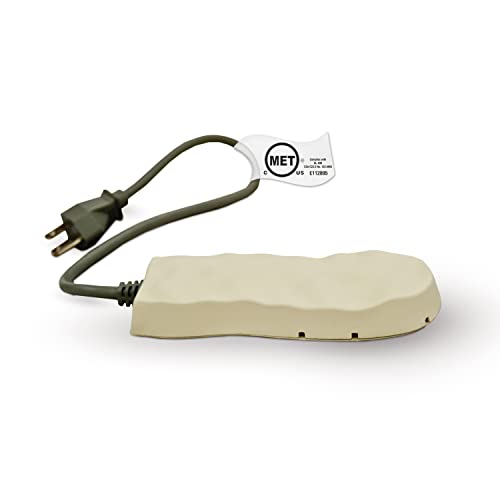
K&H Pet Products Birdbath Deicer 50W
Check PriceThe K&H Ice Eliminator is the go-to recommendation in birding communities. Only 50 watts (pennies per day to run), thermostatically controlled so it only kicks on when needed, and it works down to -20°F. The rock-like design doesn’t look terrible sitting in your bath, and you can spray paint it to match if you’re particular. Won’t rust, won’t stain your basin, safe for plastic baths. MET safety certified, three-year warranty. This is what I’d buy if I already had a nice concrete or ceramic bath I wanted to use year-round.
Get our free Hummingbird Attraction Guide! Plus, we'll send you our best tips for attracting more birds to your yard.
For Larger/Deeper Baths: API 200W De-Icer

API 200W Thermostatic Bird Bath De-Icer
Check PriceAmong heated inserts, the API 200-watt de-icer stands out for larger or deeper basins. Though designed for bird baths up to 15 gallons, it works beautifully in big pedestal baths where lower-wattage units struggle. Built-in thermostat, stainless steel guard to protect birds from the element, and auto shutoff for safety. Works in pottery, plastic, or concrete baths. Just ensure your basin has at least 3-4 inches of water depth so the element stays submerged properly.
For Harsh Winters: Farm Innovators Heated Rock

Farm Innovators HR-75 Heated Decorative Birdbath De-Icer
Check PriceThe Farm Innovators HR-75 looks like a decorative rock but packs a 75-watt heater inside. Cast aluminum construction is basically indestructible and conducts heat efficiently. Sits in your existing bath and keeps water open even in brutal conditions. The extra wattage helps when temps really plunge. Thermostatically controlled so you’re not wasting electricity on mild days.
Skip These: Heated Baths That Don’t Live Up to the Hype
Avoid bargain ceramic heated baths under $30. They look attractive in product photos but crack catastrophically after a few freeze-thaw cycles. The glazing chips, water seeps into hairline fractures, freezes, and the whole basin shatters. It’s a predictable failure pattern that wastes money and potentially harms birds with sharp edges.
Solar-powered heated baths sound eco-friendly but rarely work in winter conditions when you need them most. Limited daylight and low sun angles mean insufficient charging exactly when temperatures plunge. They might prevent ice during mild autumn days, but they’ll fail you in January.
Ultra-cheap heated inserts from unknown brands are equally problematic. Many use inadequate wattage, barely warming water enough to delay freezing by an hour or two. Others lack proper thermostats, running constantly and driving up electricity bills while still allowing ice formation in serious cold. The $15 version isn’t a bargain if it doesn’t actually work.
Ground-level heated baths with deep, slippery sides also deserve skepticism. They’re marketed as “naturalistic,” but birds struggle to access water safely, and cats find them irresistible hunting grounds. Bird safety should always trump aesthetics.
Getting the Most From Your Heated Bird Bath
Placement dramatically affects both bird use and energy efficiency. Position your heated bath within 10-15 feet of cover—shrubs or trees—so birds can quickly escape predators but maintain clear sightlines while drinking. Avoid completely exposed locations where wind accelerates heat loss and increases energy consumption.
Clean your bath every 3-4 days, even in winter. Debris, droppings, and algae accumulate quickly in heated water. A simple scrub with a stiff brush prevents bacterial growth and keeps the heating element efficient. Skip harsh chemicals; plain water and elbow grease work fine.
Energy costs are reasonable with quality units. A 60-watt heated bath running 24/7 costs roughly $6-$8 monthly in most regions—less than a single bag of premium birdseed. Thermostatically controlled models reduce costs further by cycling on only when needed.
Add stones or branches to provide secure footing, especially for smaller species. This simple addition makes birds more comfortable and reduces drowning risk.
During extreme cold snaps, check water levels daily. Heated baths lose water faster through evaporation, and running dry can damage heating elements or create hazards for thirsty birds.
A quality heated bird bath transforms winter birding from a quiet waiting game into an active, rewarding experience. Choose wisely, maintain it properly, and you’ll create an essential resource that serves your backyard birds through the harshest months.
Frequently Asked Questions
How much electricity does a heated bird bath use?
Less than you’d think. A typical 50-75 watt heated bath running 24/7 costs roughly $5-10 per month depending on your electricity rates. But here’s the thing: quality units are thermostatically controlled, meaning they only run when needed. On a 40°F day, the heater barely kicks on. It’s only during sustained cold that it runs continuously. Real-world costs are usually even lower than the math suggests.
Will birds actually use a heated bath in winter?
Absolutely. In fact, many birders report more activity at their heated bath than at feeders during winter. Birds are desperate for open water when everything else is frozen. You’ll see species you rarely see at feeders—robins, bluebirds, mockingbirds—because all birds need water, not just seed-eaters. Cardinals, chickadees, and finches will become regulars. Some birds will even bathe in subfreezing temperatures (they know what they’re doing).
Can I leave my heated bird bath plugged in all winter?
Yes, that’s exactly what you should do. Thermostatically controlled units manage themselves—they turn on around 35°F and off around 45°F. Unplugging defeats the purpose since you can’t predict when temps will suddenly drop. Just make sure you’re using a proper outdoor-rated extension cord (GFCI protected is best) and check water levels regularly since heated water evaporates faster.
Is it safe for birds to bathe when it’s freezing outside?
Yes. Birds have been doing this for millions of years. They take quick dips—splashing and fluffing rather than leisurely soaking. Their feathers are naturally water-resistant and they preen immediately after to restore insulation. You might see less bathing in extreme cold (more drinking), but birds that choose to bathe aren’t putting themselves at risk. The heated water isn’t hot—it’s just above freezing, which is actually ideal.
What if my heated bath still freezes?
If water freezes despite the heater, check a few things: Is the unit plugged in and getting power? Is the water level adequate (exposed elements can’t heat air)? Is the wattage appropriate for your climate (50W might not cut it in Minnesota)? Is the bath in a spot with brutal wind exposure? Most quality units work to -20°F, but extreme wind chill can overwhelm them. Adding a windbreak or relocating the bath often solves this. If none of that helps, the heating element may have failed.
How deep should a heated bird bath be?
Shallow is better—1.5 to 2 inches maximum in most areas. Small birds like chickadees need shallow water where they can stand safely. Deep baths are dangerous, especially in cold weather when wet feathers could compromise insulation. If your bath is deeper, add stones or pebbles to create shallow areas. The edge/rim should also provide good grip for birds’ feet—textured surfaces are ideal.
Can I use a heated bird bath in summer?
Most can be used year-round. Quality units have cords that tuck away when not in use, and since they’re thermostatically controlled, the heater simply won’t activate in warm weather. That said, some people prefer to use a different bath in summer—heated baths are often plainer-looking plastic, while decorative ceramic or concrete baths look nicer when you don’t need the heating function.
Why do heated bird baths cost so much more than regular baths?
You’re paying for the heating element, thermostat, waterproof wiring, and safety certifications (UL/CSA listed). Cheap regular baths are just molded plastic or concrete. A heated bath is essentially a small appliance with weather-resistant electrical components that need to operate safely outdoors for years. The price difference is actually reasonable when you consider what’s involved. Cutting corners on these components is how cheap heated baths fail or become hazards.
Should I add anything to the water to prevent algae?
No. Don’t add anything to bird bath water—no chemicals, no algaecides, no enzymes. Just clean the bath regularly (every 3-4 days in winter, more often in summer). A stiff brush and plain water work fine. If you’re getting rapid algae growth, the bath probably needs more frequent cleaning or less direct sunlight. Heated water does encourage algae growth, but it’s manageable with basic maintenance.
What extension cord should I use for a heated bird bath?
Use an outdoor-rated extension cord (jacket should say “W” for weather-resistant) with at least 16-gauge wire for most heated baths. For runs over 50 feet or higher-wattage units, step up to 14-gauge. Ideally, use a GFCI-protected outlet or a cord with built-in GFCI protection. Keep the connection point off the ground and protected from snow/ice—those snap-together cord covers work well. Never use indoor extension cords outdoors in winter.
Happy birding!





