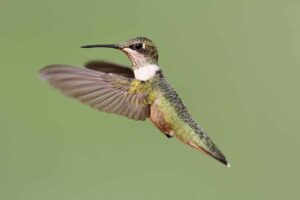
Keeping hummingbirds coming to your feeder while battling persistent ant invasions is a common challenge for backyard birders. Nothing spoils the joy of hummingbird watching like discovering tiny invaders overtaking your feeders. Fortunately, you don’t need harsh chemicals – these ten natural, science-backed solutions work effectively while keeping your tiny visitors safe.

Bring Woodpeckers & Nuthatches To Your Yard
Check Price1. Install an Ant Moat

An ant moat creates a water barrier ants cannot cross to reach your hummingbird feeder. According to Audubon Society, these simple devices effectively prevent ant invasions without harming birds. You can purchase commercial moats or make your own using jar lids or small plastic cups with a hole in the center. Just hang the water-filled moat above your feeder, and ants will be stopped in their tracks by this simple physical barrier.
Save this article for later so you don't lose it. Enter your email and I'll send it to you now—plus you'll get my favorite backyard birding tips delivered to your inbox.
2. Apply Fishing Line

Research from the Cornell Lab of Ornithology confirms that ants struggle to navigate across thin, slippery surfaces. Use monofilament fishing line to hang your feeder instead of string or wire. Ensure the line extends at least 12 inches above the feeder without touching nearby branches. The slick surface confuses ants’ navigational abilities, causing them to turn back rather than risk the treacherous journey.
3. Create a Mint Barrier

Studies published in the Journal of Economic Entomology show ants have a strong aversion to mint compounds. Create a mint barrier by rubbing fresh leaves around hanging wires or making a mint-water spray to apply to the hanging apparatus (never near feeding ports). The University of California’s Integrated Pest Management Program confirms that mint disrupts ants’ pheromone trails while remaining completely safe for hummingbirds.
4. Apply Food-Grade Diatomaceous Earth

Diatomaceous earth (DE) is a natural powder made from fossilized algae that deters ants effectively. Penn State Extension explains that food-grade DE damages ants’ exoskeletons, causing dehydration. Apply a small ring around your feeder pole or hanging wire, avoiding feeding ports. This creates a barrier ants won’t cross while remaining harmless to birds. Remember to use only food-grade DE and reapply after rain.
Get our free Hummingbird Attraction Guide! Plus, we'll send you our best tips for attracting more birds to your yard.
5. Use Cinnamon Powder

Research from the USDA Agricultural Research Service confirms cinnamon contains compounds that naturally repel ants. Sprinkle ground cinnamon around your feeder pole or create a paste to apply to hanging wires. The strong scent disrupts pheromone trails and creates confusion among ant colonies. Cinnamon is non-toxic to hummingbirds but requires reapplication every few days as the scent diminishes.
6. Apply Food-Grade Vegetable Oil

Hummingbird Central recommends a light application of vegetable oil as an effective ant barrier. Using a cotton swab, apply a thin ring of oil around the hanging wire or pole, avoiding feeding ports. The slippery surface prevents ants from crossing while being safe if accidentally contacted by birds. National Wildlife Federation advises using only food-grade oils and reapplying every few days as dust accumulates.
7. Relocate Your Feeder Regularly

Entomologists at University of Arizona Extension explain that ants follow established pheromone trails to food sources. Moving your feeder just a few feet periodically disrupts these chemical highways. Relocate your feeder weekly during peak ant season. Hummingbirds will quickly find the new location, while ants must restart their trail-building process. This simple method works especially well combined with other deterrents.
8. Keep Feeders Clean and Leak-Free

The Hummingbird Society emphasizes that prevention is key to ant management. Clean feeders with hot water every 2-3 days during warm weather and inspect for leaks that might attract ants. Research shows even minute amounts of spilled nectar can attract ant scouts from surprising distances. Use a funnel when filling and handle feeders away from hanging locations to prevent nectar drips that create ant highways.
9. Create a Bay Leaf Barrier

Studies in the Journal of Stored Products Research confirm bay leaves contain compounds that naturally repel ants. Tie a few dried bay leaves around your feeder’s hanging wire or place them in a small cloth pouch secured nearby. World of Hummingbirds notes that these aromatic compounds disrupt ants’ ability to follow pheromone trails while being completely harmless to birds. Replace leaves weekly as they lose potency.
10. Grow Ant-Repelling Plants Nearby

The Xerces Society recommends strategic gardening to create natural ant barriers. Plants like lavender, tansy, mint, and catnip naturally repel ants while attracting beneficial insects. U.S. Forest Service research shows many of these plants also attract hummingbirds with their flowers, creating a dual-purpose garden that both feeds hummers and protects their nectar from ant invaders.
With these natural solutions, you can enjoy ant-free hummingbird feeding while maintaining a safe, chemical-free environment for your tiny visitors!
📷 Show us your feeder setup! Share a few photos of your feeders and you might be featured on Wild Bird Scoop. Share your setup →