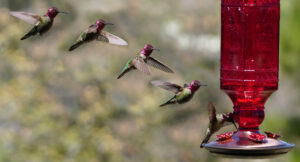
The best way to attract hummingbirds into your yard is to fill your garden with food sources such as the nectar-producing flowers that are vital to their survival.

The Camera Feeder We Use In Our Own Backyard
See Today's PriceHowever, in order to thrive, these little birds need a balanced diet. You should also plant other flowers and other plants that attract the insects that hummingbirds enjoy.
Save this article for later so you don't lose it. Enter your email and I'll send it to you now—plus you'll get my favorite backyard birding tips delivered to your inbox.
And if you’d like to go one step further, you can also set out hummingbird feeders full of hummingbird food.
While you can buy hummingbird food in the store, it’s way too easy to make your own! Some people boil a sugar-water solution for hummingbirds on their stoves, but if you prefer, you can also use a microwave for this job.
Keep reading for a complete guide on how to make hummingbird food in the microwave, plus a few other relevant tips!
How Do You Make Homemade Hummingbird Food?
The homemade hummingbird nectar recipe is very simple: one part white cane sugar to four parts water.
Need help? Check out our hummingbird food calculator.
After you’ve mixed your sugar and water, boil the mixture to make sure it’s combined properly and also to reduce the chance of the mixture spoiling too quickly.

Be sure to not deviate from this recipe. Brown sugars, powdered sugars, molasses, honey, beet sugar, or any other kind of sugar substitute and unrefined sugar, can encourage mold and bacteria growth and pose a major threat to the birds that you want to help.
Avoid any recipes that include red dye in hummingbird nectar.
While it’s true that red attracts hummingbirds, red dye (as well as other food coloring)is dangerous for them to consume. Red feeders, however, are OK!
When it comes to ready-made hummingbird mix, many contain harmful additives. Therefore, it’s best to stick to a simple sugar and water mix to supplement the natural hummingbird food sources in your garden.
Should You Boil Sugar Water for Hummingbirds?
You don’t necessarily have to boil your sugar mixture, as long as you fully dissolve the sugar in your water.
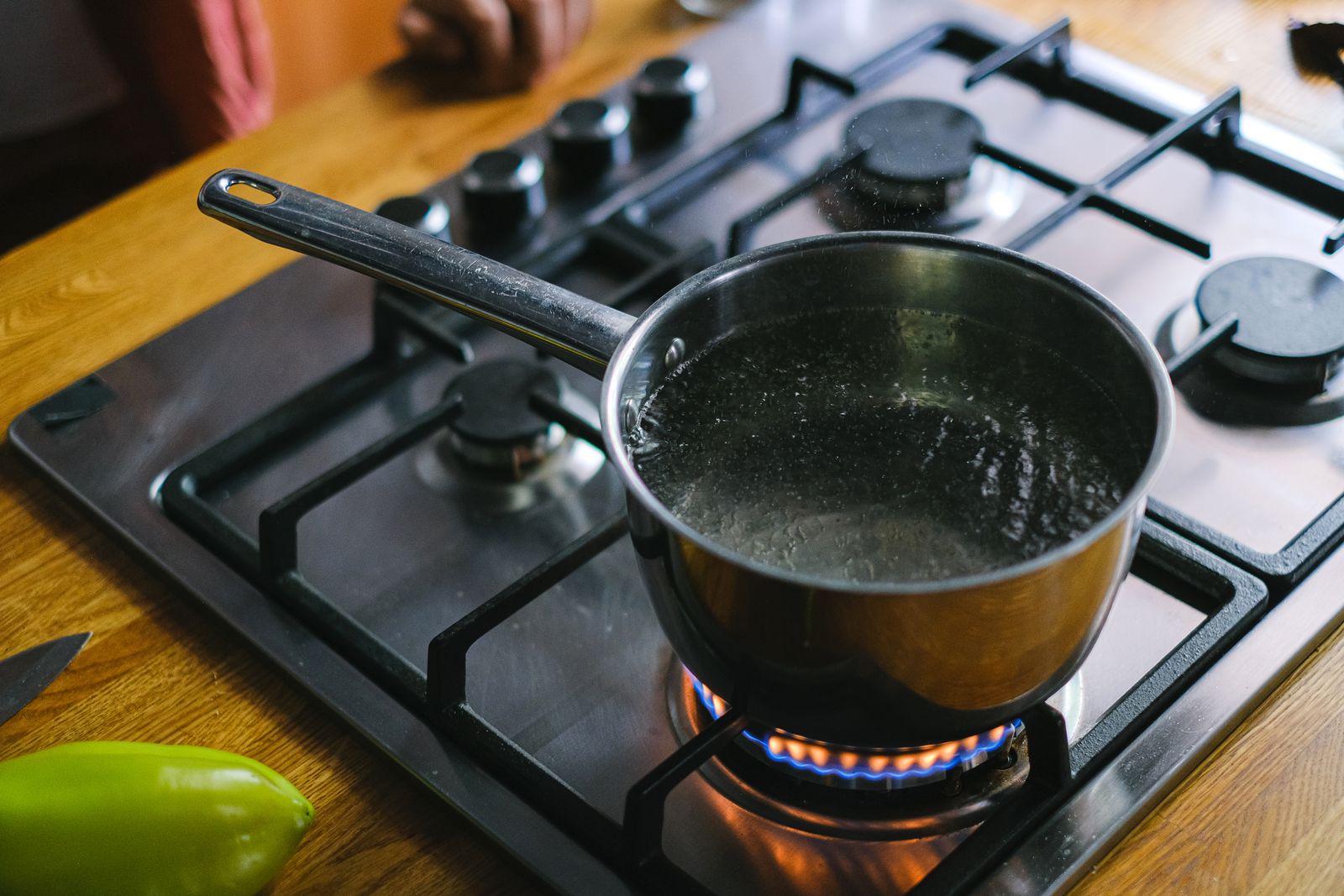
However, boiling the hummingbird food is a great way to slow down bacterial growth, which could cause the mixture to spoil quicker.
It should be noted that boiling water helps the sugar to dissolve quicker in the water.
Does All Hummingbird Food Need To Be Boiled?
As stated above, you don’t have to boil hummingbird food. Boiling just ensures that the mixture won’t spoil as quickly, as any existing bacteria will be killed.
If you think that your water isn’t pure and clean, boiling might make the best sense. However, freshwater requires no boiling.
Can You Use Tap Water to Make Hummingbird Food?
Unlike humans, hummingbirds are not picky!
Tap water is perfectly acceptable as a base for your hummingbird food. Where possible, however, natural spring water is best.
Get our free Hummingbird Attraction Guide! Plus, we'll send you our best tips for attracting more birds to your yard.
Just be sure to avoid waters filled with iron and other harmful chemicals.
There are some cases where tap water may not be an acceptable option. You have to consider how your water is treated, and the overall quality and composition of the water in your area. But most of the time, using tap water will be just fine.
Think about the environmental costs of buying bottled water and avoid this where possible. Remember, in most instances, tap water works. If you drink the water from your tap, it should usually be fine for hummingbirds too.
How To Use a Microwave to Make Hummingbird Food

Most people use stovetops to make hummingbird food, but you can totally use a microwave if you wish!
Just make sure that you add the sugar mixture to a microwave-safe container with a lid. After it’s boiled, stir it to make sure all of the sugar grains are dissolved.
It’s also important that you do not use a clean, high-grade dish so that harmful substances do not leech into the food.
Here’s a full breakdown of what to do:
Ingredients and Equipment
- 1 part white cane sugar
- 4 parts water
- 4-cup microwave-safe glass measuring cup
- Spoon for stirring
- Hot pad
- Airtight container for storage (optional)
Step-by-Step Instructions
- Measure the Ingredients:
- Use the ratio of 1 part sugar to 4 parts water.
- For example, if you need 3 cups of nectar, measure 3/4 cup of sugar and 3 cups of water.
- Place the sugar and water into a microwave-safe glass measuring cup.
- Initial Stir:
- Stir the sugar and water mixture briefly to start dissolving the sugar.
- Microwave the Mixture:
- Place the measuring cup with the sugar-water mixture in the microwave.
- Heat the mixture on high for about 7 minutes, or until it comes to a boil.
- Keep an eye on the mixture to ensure it doesn’t boil over.
- Final Stir and Dissolve:
- Carefully remove the measuring cup from the microwave using a hot pad, as the mixture will be very hot.
- Stir the mixture thoroughly until all the sugar is completely dissolved.
- You’ll know it’s ready when the liquid becomes clear and there are no sugar granules settled at the bottom.
- Cool the Nectar:
- Allow the nectar to cool completely to room temperature before filling your hummingbird feeders. This step is crucial to avoid harming the birds with hot liquid.
- Fill the Feeders:
- Once cooled, pour the nectar into your hummingbird feeders.
- Store Leftover Nectar:
- If you have any leftover nectar, store it in an airtight container and place it in the refrigerator. The nectar can be stored for up to a week.
How Often Do You Need to Replace Hummingbird Food in Hummingbird Feeders?
Making hummingbird feed in the microwave is a much quicker and easier solution than doing it on the stove. Given that you’ll have to make food semi-regularly (perhaps as often as every couple of days in warmer areas in summer), this is an easy alternative.
Any sugar-based dish can become a breeding ground for bacteria, so cleaning and changing your feeders regularly is a must to avoid spoilage.

How frequently you replace hummingbird food and clean feeders depends on a range of factors, including the environmental conditions, where you live, and the time of year.
You might only need to change the food in your feeder once a week or so when it is cooler, perhaps even every 10 days in some areas. But mostly, you will have to change it more frequently – especially in warmer weather and when a feeder is placed in full sun.
Should You Feed Sugar Water to Hummingbirds?
Is feeding your homemade hummingbird food to hummingbirds really a good idea? Even if you do get the process and ingredients just right – does setting feeders up really help the hummingbirds in the long run?
The answer is yes!

Hummingbirds have fast metabolisms that require a constant supply of food. Sugar water is an excellent supplement to their diet. And when you correctly fill and maintain hummingbird feeders, they can only ever be a boon for the birds!
Will Feeding Sugar to Hummingbirds Prevent Them From Migrating?
There’s some concern that feeding sugar water to hummingbirds too late in the year will keep them from migrating as they should.
The good news, however, is that hummingbirds will naturally migrate most of the time even when there are abundant natural or man-provided food sources around.

Migrating hummingbirds will arrive sometime in the spring, depending on where you live, and will head back south in the fall. The only reason that birds will not migrate is that they are, for some reason, not up to taking the journey.
Providing food will not negatively affect them. However, it can definitely help to migrate hummingbirds build up their energy reserves after the spring migration, or before the fall trip to their wintering grounds to the south.
Sugar Water Is an Additional Food – Not the Only Food Source for Hummingbirds
Supplementing your hummingbird friends’ diets is a great way to support their diet and help them to make their labor-intensive journeys each season.
However, the extra hummingbird nectar should only ever be an addition to their diet.

The local ecosystem should be able to support them without human assistance. Do your part to aid the hummingbirds by adding diverse plants to your garden.
If you’d like to do everything you possibly can, consider supplying water and places within your garden for them to perch and shelter.

Do these things, and your yard should soon be filled with these gorgeous little birds!
Additional Hummingbird Tips
If you’ve read this far, I know you’re interested in seeing as many hummers as possible. So here are some useful tips from Noah in our article about the best potted plants to attract hummingbirds:
Choose the Right Flowers
Attracting hummingbirds is as much about the type of flowers as it is about their placement. Here’s a breakdown:
Annuals that Attract Hummingbirds
- Cleomes: These flowers have a striking appearance and are easy to grow.
- Impatiens: Perfect for shaded areas, they add vibrant color to your garden.
- Petunias: Available in many colors, they are a classic favorite.

Perennials that Attract Hummingbirds
- Bee Balms: Known for their beautiful blooms and ability to attract both hummingbirds and bees.
- Columbines: These flowers add charm and are a magnet for hummingbirds.
- Daylilies: Their sturdy structure makes them a reliable choice.
- Lupines: With their tall spires, they are hard to miss.

Biennials that Attract Hummingbirds
- Foxgloves: These tall beauties are irresistible to hummingbirds.
- Hollyhocks: Their classic look makes them a garden staple.
Importance of Color and Shape
- Bright Colors: Hummingbirds are drawn to red, purple, and blue flowers.
- Tubular Blooms: Long, tubular flowers are perfect for their feeding style.
Native Plants Matter
Planting native species is one of the best ways to attract hummingbirds because these plants are adapted to your local climate and soil. Most regions in the US have native versions of each of the flowers listed above.
Combination of Plants
- Annuals: Provide immediate nectar sources.
- Perennials & Biennials: Ensure a consistent food supply throughout the season.
Fuchsias for Long Bloom Time
- Fuchsias: Known for their long bloom period, from June to Thanksgiving, providing a steady nectar source.
Utilizing Space Effectively
Window Boxes and Containers
- Elevation: Place window boxes higher than potted plants to catch the hummingbirds’ attention.
- Terracing: Create levels in your garden to provide various feeding spots.
Climbing Vines and Hanging Baskets
- Climbing Vines: Add depth and more feeding options.
- Hanging Baskets: Use them to take advantage of vertical space.
Symbiosis with Hummingbirds
Hummingbirds not only add beauty to your garden but also help control insect populations. Their diet consists of nectar as well as insects, making them natural pest controllers.
Enjoy the Beauty and Benefits
Creating a hummingbird-friendly garden is not only about enjoying their beauty but also about fostering a balanced ecosystem. Happy gardening!
For more detailed advice, check out our full articles on attracting hummingbirds and other birding tips.
📷 Show us your feeder setup! Share a few photos of your feeders and you might be featured on Wild Bird Scoop. Share your setup →