While feeders can be a quick fix, there’s nothing quite like the allure of native plants to draw hummingbirds to your garden. These plants provide natural nectar, enhance the garden’s beauty, and support local ecosystems.

The Camera Feeder We Use In Our Own Backyard
See Today's PriceLet’s explore 12 native plants that attract these delightful birds more effectively than any feeder.
Save this article for later so you don't lose it. Enter your email and I'll send it to you now—plus you'll get my favorite backyard birding tips delivered to your inbox.
1. Trumpet Honeysuckle Is Also Coral Honeysuckle

Honeysuckle: You might be hard-pressed to find a flower that just feels like a hummingbird flower than trumpet honeysuckle, also known as coral honeysuckle, most prominently native in the Atlantic States, from Maine down to Florida. The trumpet-shaped flowers of the honeysuckle vine are a favorite of all types of hummingbirds.
You can often find these vines growing wild in woods or along fences.
For those in the southern Great Plains and eastward, coral honeysuckle is a vibrant member of the honeysuckle family, with red tubular flowers and yellow stamen: a perfect combination for hummingbirds. Because coral honeysuckle twines over any nearby foliage, it’s a great flower to plant along a fence or other structure.

Coral Honeysuckle, a climbing vine, produces stunning coral-red flowers perfect for hummingbirds. Unlike its invasive relatives, this native plant is well-behaved and thrives in sunny locations.
It’s an excellent choice for fences or trellises.
2. Bee Balm Seeds Itself and Makes Tea

Kentucky native vines like trumpet honeysuckle, passionflower, and trumpet creeper are sure-fire hummingbird favorites. Bee Balm (Monarda didyma) is an interesting-looking, spiky flower that hummingbirds love.
It will seed itself in your garden and you can divide it every three to four years. Bee Balm – Bee balm or Monarda is a beautiful member of the mint family.
Its bright red tubular flowers can be eaten, and the whole plant can be used for tea.
Read next
More ways to keep hummingbirds moving through the yard
- 7 Perennials to Plant This Weekend That Will Be Full of Hummingbirds by Memorial Day
- How to Make “Super Nectar” That Mimics High-Energy Spring Flowers
- 11 Perennials That Actually Thrive in Deep Shade (Plus the Secret to Making Them Bloom Like Champions)
- 8 Toxic Plants That Are Secretly Killing Your Hummingbird Garden
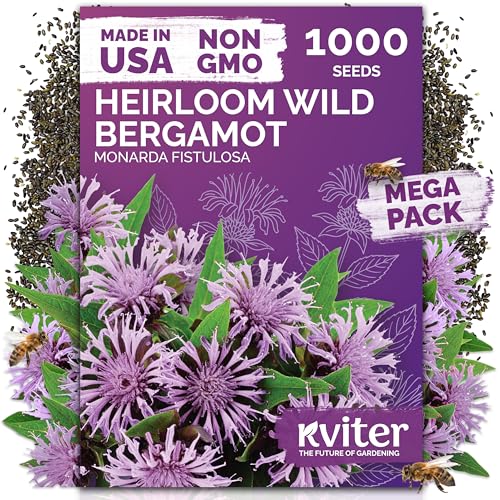
KVITER Wild Bergamot Seeds - 1,000 Count
Check Price3. Only Hummingbirds Reach Cardinal Flower Nectar
Cardinal flower: For the eastern United States and Canada, the Great Plains states, and Southwest, we have the cardinal flower, which shares a name with another North American bird but is another fantastic plant for hummingbirds. The Cardinal Flower’s blooms are shaped in such a way that only Hummingbirds are able to reach inside to partake of the nectar.
The Hummingbird is the only one that is able to return a favour to the plant in a significant way.

The Cardinal Flower’s bright red petals are like a beacon for hummingbirds. This perennial plant thrives in wet areas, making it ideal for garden edges or alongside water features.
Its long-lasting blooms ensure hummingbirds keep coming back.
Get our free Hummingbird Attraction Guide! Plus, we'll send you our best tips for attracting more birds to your yard.
4. Eastern Columbine Grows East of the Rockies
Western columbine: Hummingbirds love a downward-facing tubular-like western columbine. For those in other states, other columbine species are native to the rest of the country, such as eastern columbine.
Columbine: Western columbine grows throughout the Pacific Northwest and down into Nevada, Utah, and Idaho, while eastern columbine has a range that encompasses pretty much every state east of the Rocky Mountains.

Red Columbine blooms in early spring, offering one of the first nectar sources of the season. Its unique, bell-shaped flowers are a visual treat and provide essential nourishment for migrating hummingbirds.
Plant it in partial shade for best results.
5. Fireweed Spreads Fast After a Fire
According to the U.S. Forest Service, fireweed got its name from its ability to take over areas quickly after a fire, and it can quickly take over your garden if left to its own devices.
But there’s nothing wrong with that if you’re looking to attract hummingbirds!

Fireweed’s tall spires of pinkish-purple flowers are beautiful and a magnet for hummingbirds. This plant spreads easily and is perfect for naturalized garden areas.
Its blooms last from mid-summer to early fall.
6. Indian Paintbrush Feeds Rufous Hummingbirds
Rufous hummingbirds chiefly feed on nectar for energy, sourcing it from gilia, penstemons, and Indian paintbrush, but they also eat arthropods caught during flight or from spider webs. The Texas A&M University Extension offers a list of suggestions for Texas property owners, from trees like Red Buckeye (Aesculus pavia) and Desert Willow (Chilopsis linearis) to flowers like Indian Paintbrush (Castilleja coccinea) and Bluebonnet (Lupinus texensis).

The bright red spikes of the Indian Paintbrush are a natural draw for hummingbirds. This semi-parasitic plant often grows alongside grasses, making it a unique addition to meadows or wildflower gardens.
Keep going
More ways to keep hummingbirds moving through the yard
7. Salvia Coccinea Takes Sun or Partial Shade

Salvia Coccinea is a more affordable salvia than Black-and-Blue. It thrives in both full sun and partial shade.
Finally, Coral Honeysuckle boasts that tubular flower shape that hummingbirds love!
8. Wild Bergamot Tops Stems With Purple Tubes

Wild bergamot is native to most of the eastern United States. It’s a tall, beautiful plant with each stem topped by a collection of purple tubular flowers that make it the perfect plant for hummingbirds and your flower beds.
Wild bergamot/beebalm: Native to much of the United States, wild bergamot is a familiar plant. Even if you’re not familiar with it by name, you’ve likely seen it on a walk through a local prairie.
9. Penstemon (Penstemon spp.)

Penstemons feature tubular flowers in various colors, including pink and purple, that are highly attractive to hummingbirds. These perennials are drought-tolerant and thrive in well-drained soils, making them ideal for rock gardens.
10. Texas Sage (Salvia texensis)

Texas Sage produces vibrant red flowers that are a hummingbird’s delight. This hardy plant is perfect for hot, arid climates and needs little care once established.
Its long blooming season is a bonus for bird watchers.
11. Agastache (Agastache spp.)

Agastache, or Hummingbird Mint, offers tall spikes of fragrant flowers in shades of blue, purple, or pink. Its long-lasting blooms and drought tolerance make it a top choice for attracting hummingbirds in various garden settings.
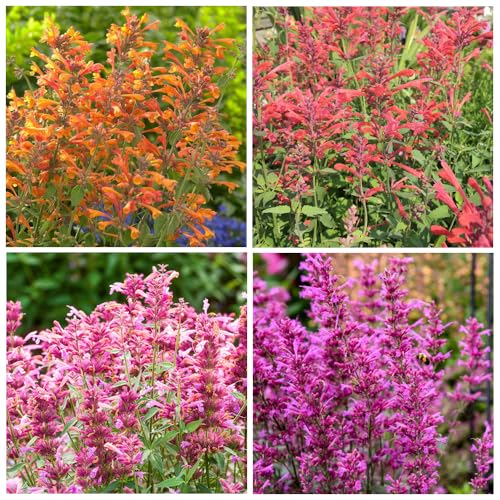
Carpet Creeping Agastache Hummingbird Mint Seeds
Check PriceNative plants hummingbirds actually use
| Spec | What our writers say |
|---|---|
| Trumpet honeysuckle | Also called coral honeysuckle; most prominently native in the Atlantic States from Maine to Florida, with trumpet-shaped flowers favored by all types of hummingbirds |
| Kentucky vines | Trumpet honeysuckle, passionflower, and trumpet creeper are Kentucky native vines that hummingbirds favor |
| Bee balm | Monarda didyma is a mint-family plant with bright red tubular flowers; it seeds itself and you can divide it every three to four years |
| Bee balm uses | The flowers can be eaten, and the whole plant can be used for tea |
| Cardinal flower | Native to the eastern United States and Canada, the Great Plains, and the Southwest; only hummingbirds can reach inside the blooms for nectar |
| Columbine range | Western columbine grows in the Pacific Northwest and down into Nevada, Utah, and Idaho; eastern columbine covers pretty much every state east of the Rockies |
| Columbine shape | Hummingbirds love the downward-facing tubular western columbine |
| Coral honeysuckle look | In the southern Great Plains and eastward it has red tubular flowers and yellow stamen and twines over nearby foliage, so plant it along a fence |
| Fireweed | The U.S. Forest Service says fireweed takes over quickly after a fire and can take over a garden if left alone |
| Rufous hummingbirds | They take nectar from gilia, penstemons, and Indian paintbrush, and eat arthropods caught in flight or from spider webs |
| Texas A&M list | Red Buckeye (Aesculus pavia), Desert Willow (Chilopsis linearis), Indian Paintbrush (Castilleja coccinea), and Bluebonnet (Lupinus texensis) |
| Salvia and bergamot | Salvia coccinea is more affordable than Black-and-Blue and thrives in full sun or partial shade. Wild bergamot is a tall eastern plant with purple tubular flowers topping each stem |
Match plants to your region
Planting native wildflowers will provide significantly more nectar for Hummingbirds to eat. Native plants are hardier, more drought resistant and require less care than hybrids. They support native pollinators better and the environment.
From our Hummingbird Plants Attract Birds Especially If Wildflowers.
📷 Show us your feeder setup! Share a few photos of your feeders and you might be featured on Wild Bird Scoop. Share your setup →